Home Care After Stroke: Physiotherapy, Exercises and Recovery Tips
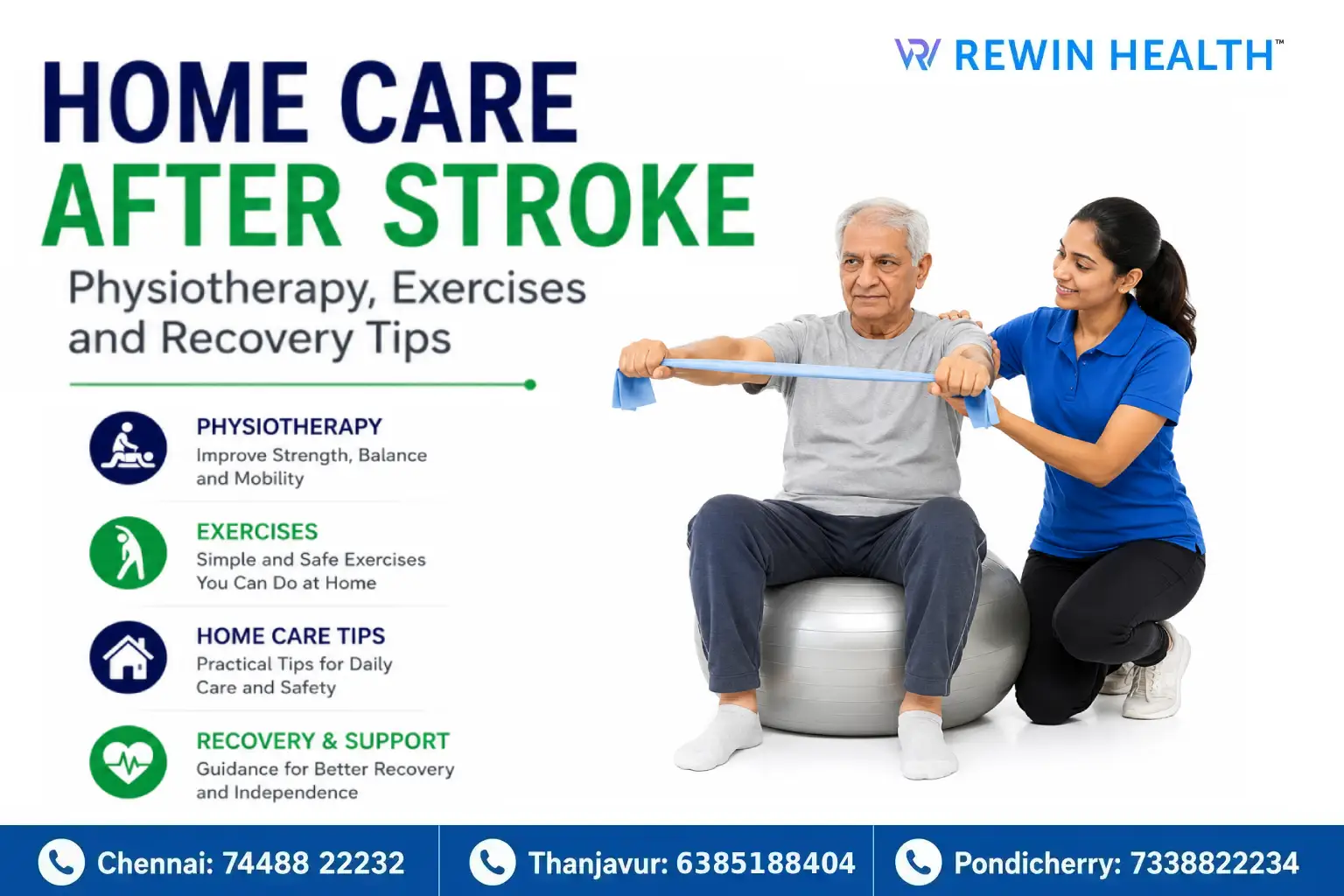
Home Care After Stroke
A stroke can suddenly affect movement, balance, coordination, speech, hand function and independence. While emergency medical treatment is the first priority, recovery does not stop after hospital discharge. For many stroke survivors, home care after stroke becomes an important part of continuing rehabilitation and returning to everyday life.
But what does effective stroke care at home actually involve? Is home physiotherapy enough? Which exercises are safe? How can caregivers support recovery? And when should a stroke survivor receive rehabilitation at a clinic or hospital instead?
The answer depends on the person’s stroke severity, medical stability, functional limitations, rehabilitation goals and home environment.
Current stroke rehabilitation guidance supports continued access to specialized rehabilitation after discharge, including in-home, outpatient and virtual rehabilitation, when appropriate for the individual’s needs. A 2025 systematic review and meta-analysis also found that home-based rehabilitation produced activities-of-daily-living outcomes comparable to hospital-based rehabilitation, although the researchers noted that the available evidence has limitations.
The goal of home care after stroke is not simply to exercise at home. It is to create a structured, safe and personalized rehabilitation routine that helps the person regain function and independence
What Is Home Care After Stroke?
Home care after stroke refers to rehabilitation, exercise, personal support and health-related care provided in the person’s home after a stroke.
Depending on the patient’s needs, home-based stroke care may involve:
Physiotherapy
Mobility and walking training
Balance exercises
Strengthening exercises
Arm and hand rehabilitation
Functional movement training
Occupational therapy
Speech and communication support
Caregiver education
Home safety modifications
Home exercise programmes
Virtual or technology-assisted rehabilitation
Regular progress assessments
Home-based rehabilitation is particularly useful when a patient has difficulty travelling to a rehabilitation centre or when practising movement in the actual home environment can improve functional independence.
According to Stroke Best Practices, people with ongoing rehabilitation goals should continue to have access to specialized stroke services after leaving hospital, including facility-based outpatient and/or in-home rehabilitation. The setting should be selected according to the person’s functional needs, goals, family support and preferences.
Why Is Home Care Important After Stroke?
Recovery after stroke is often a gradual process. A patient may improve in one area while continuing to struggle with another.
For example, a person may be able to stand independently but still require assistance to walk safely. Another patient may walk reasonably well but have difficulty using the affected hand to hold a cup, button clothing or use a mobile phone.
This is why rehabilitation should focus on function rather than simply muscle strength.
A structured home programme can help patients practise meaningful movements repeatedly in an environment where they need to use those skills every day.
For example:
Bed → Sitting → Standing → Walking → Bathroom → Dressing → Eating → Household activities
These everyday tasks can become opportunities for functional rehabilitation when performed safely and under appropriate professional guidance.
NICE recommends that stroke rehabilitation continue for as long as it continues to help a person achieve their treatment goals and emphasizes the importance of a safe, enabling home environment before transfer from hospital to home.
Is Home Physiotherapy Effective After Stroke?
Yes, home physiotherapy can be an effective component of stroke recovery for appropriately selected patients.
The important distinction is between structured home rehabilitation and simply exercising without professional guidance.
A 2025 systematic review involving randomized controlled trials found that activities-of-daily-living independence was not significantly different between home-based and hospital-based rehabilitation. The study concluded that home-based rehabilitation can be considered after discharge, while also cautioning that the overall risk of bias in the evidence means the findings should be interpreted carefully.
A home physiotherapy programme may include:
Assessment of movement and functional limitations
Strength and flexibility exercises
Balance training
Walking and gait training
Transfer practice
Upper-limb exercises
Hand function exercises
Functional task practice
Caregiver education
Home safety recommendations
Progress monitoring
For patients who need stroke rehabilitation, a personalized programme is generally more useful than following a generic exercise video because the affected side, movement pattern, balance, muscle tone and functional abilities can differ significantly from one person to another.
You can learn more about structured Advanced Stroke & Neuro Rehabilitation at ReWin Health and how a rehabilitation programme can be adapted according to the patient’s stage of recovery.
Who Can Benefit From Home Care After Stroke?
Home-based rehabilitation may be particularly suitable for stroke survivors who:
Are medically stable
Can participate safely in therapy
Have difficulty travelling
Have mild-to-moderate functional limitations
Have family or caregiver support
Have a reasonably safe home environment
Need continued rehabilitation after hospital discharge
Need functional training within their everyday environment
Early Supported Discharge is one model in which medically stable patients transition home while continuing coordinated rehabilitation in the community. Canadian Stroke Best Practices describes this approach as particularly suitable for people recovering from mild-to-moderate stroke.
However, home rehabilitation is not automatically suitable for every stroke survivor.
Patients with significant medical instability, severe functional limitations, high safety risks or complex multidisciplinary needs may require inpatient rehabilitation or a more intensive rehabilitation setting.
What Physiotherapy Is Done at Home After Stroke?
1. Mobility and Walking Exercises
Stroke can cause weakness on one side of the body, poor coordination, altered muscle tone and balance problems.
A physiotherapist may work on:
Bed mobility
Sitting balance
Sit-to-stand practice
Weight shifting
Standing balance
Walking with appropriate assistance
Gait retraining
Stair practice when appropriate
Use of mobility aids
The objective is not simply to make the patient walk. It is to help them walk more safely and efficiently while reducing dependence on caregivers.
2. Balance Training
Balance problems can increase the risk of falls after stroke.
Depending on the patient’s abilities, rehabilitation may include controlled weight shifting, reaching activities, standing exercises and functional balance tasks.
Exercises should be selected based on the patient’s assessment rather than copied from a general online programme.
3. Strengthening Exercises
Muscle weakness is common after stroke.
Depending on the patient’s condition, a physiotherapist may prescribe progressive strengthening activities such as:
Sit-to-stand repetitions
Supported leg exercises
Upper-limb strengthening
Resistance exercises
Functional strengthening activities
Hand and Arm Exercises After Stroke
Hand function recovery is an important part of home care after stroke because the affected hand may remain weak even when walking has improved.
Patients may experience:
Difficulty opening the hand
Weak grip
Finger stiffness
Poor coordination
Difficulty reaching
Trouble holding objects
Difficulty writing
Problems using a spoon or cup
Difficulty dressing independently
A home programme may include carefully selected reaching, grasping, releasing, finger movement and functional activities.
The goal should be to connect exercise with meaningful activities.
For example:
Reach → grasp → lift → hold → release
This can eventually translate into activities such as holding a bottle, using utensils, turning pages or handling personal belongings.
For patients requiring specialized upper-limb rehabilitation, [Hand Function Recovery]ReWin Health Hand Function Recovery combines physiotherapy with technology-assisted rehabilitation approaches.
How Can Caregivers Help With Stroke Recovery at Home?
Family members can play an important role in stroke rehabilitation, but caregivers should not be expected to become physiotherapists.
Their role is primarily to support the rehabilitation plan safely and consistently.
Caregivers can help by:
Encouraging the patient to follow the prescribed exercise programme
Supporting safe mobility
Helping with recommended daily activities
Maintaining a safe environment
Attending therapy sessions when appropriate
Learning safe transfer techniques
Encouraging independence instead of doing everything for the patient
Monitoring changes and communicating concerns to the rehabilitation team
NICE recommends training willing and able family members and caregivers in aspects of care such as moving, dressing and supporting the person after stroke, with their support needs reviewed over time.
One important principle is:
Help the patient when help is necessary—but allow them to do what they can safely do independently.
Too much assistance can unintentionally reduce opportunities for active practice.
How to Make the Home Safer After Stroke
Home safety is an important part of stroke rehabilitation.
Potential hazards include loose rugs, cluttered walkways, poorly positioned furniture, inadequate lighting and bathroom surfaces that increase fall risk.
Depending on the patient’s needs, families may consider:
Removing loose floor mats
Keeping walkways clear
Improving lighting
Installing bathroom grab bars when recommended
Using appropriate non-slip surfaces
Positioning frequently used objects within safe reach
Making the bed and chair height appropriate
Using prescribed walking aids correctly
Creating adequate space for walking practice
NICE recommends establishing a safe and enabling home environment before transferring a person from hospital to home, including appropriate equipment, adaptations and caregiver support.
How Often Should Stroke Physiotherapy Be Done at Home?
There is no single number of sessions that is right for every stroke survivor.
Therapy frequency should depend on:
Stroke severity
Current functional ability
Rehabilitation goals
Fatigue
Medical status
Ability to participate
Available caregiver support
Progress over time
Canadian Stroke Best Practices recommends that outpatient and in-home rehabilitation be individualized and delivered by appropriately trained interdisciplinary professionals. Its recommendations describe therapy sessions and frequency based on the required discipline and individual rehabilitation needs.
The important principle is consistent, purposeful practice rather than performing a large number of exercises without proper assessment.
Can Technology Be Used for Home Stroke Rehabilitation?
Technology is increasingly being used to complement therapist-guided rehabilitation.
Depending on the patient’s condition and available equipment, technology-assisted rehabilitation may include:
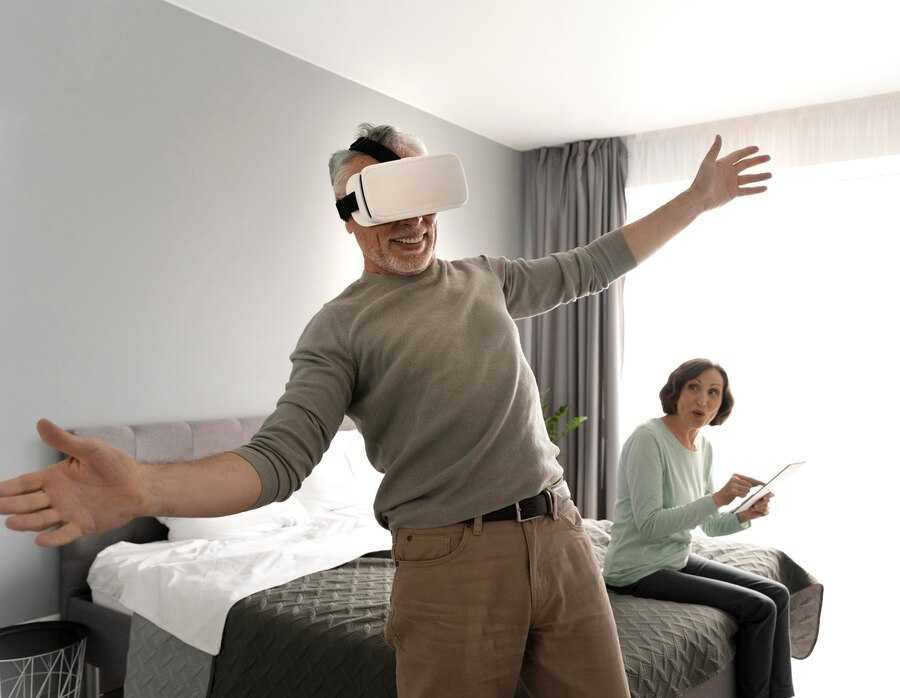
Virtual reality exercises
Motion sensors
Video-based therapy
Remote monitoring
Interactive exercise programmes
Digital progress tracking
Research into technology-supported home rehabilitation has investigated virtual reality, robotic devices and game-based rehabilitation, with evidence suggesting potential benefits, although outcomes vary according to the technology and rehabilitation target.
Technology should therefore support—not replace—clinical assessment and professional rehabilitation.
ReWin Health combines physiotherapy with AI-enabled motion sensors and immersive VR-based exercise technology for selected rehabilitation programmes. Home physiotherapy services
and ReWin Health Online Physiotherapy can also help reduce travel barriers for suitable patients.
Home Care After Stroke: When Should You Choose a Rehab Centre?
Although home rehabilitation can be valuable, some patients may require more intensive rehabilitation.
A rehabilitation facility may be more appropriate when a stroke survivor has:
Significant mobility limitations
Severe balance problems
High fall risk
Complex medical needs
Significant cognitive or communication difficulties
Major assistance requirements
Limited caregiver support
An unsafe home environment
A need for intensive multidisciplinary rehabilitation
NICE recommends needs-based multidisciplinary rehabilitation and states that appropriate patients should receive coordinated specialist stroke rehabilitation.
Therefore, home care after stroke should not be viewed as a replacement for inpatient rehabilitation in every situation. The appropriate setting should be determined by the patient’s medical and rehabilitation needs.
Home Care After Stroke in Chennai
For families searching for home care after stroke in Chennai, the decision should go beyond simply finding a therapist who makes home visits.
Ask whether the rehabilitation service provides:
Neurological physiotherapy assessment
Personalized rehabilitation goals
Walking and balance training
Upper-limb and hand rehabilitation
Functional movement training
Caregiver education
Home safety assessment
Regular progress monitoring
Communication between therapist and family
Appropriate technology-assisted rehabilitation when required
ReWin Health provides stroke and neurological rehabilitation in Chennai, including home visits from its Chennai clinic. Its rehabilitation services focus on mobility, balance, gait and hand function, with technology-assisted rehabilitation available where appropriate.
For patients who cannot safely travel to a clinic, home-based physiotherapy can be an important way to maintain continuity of rehabilitation.
Frequently Asked Questions
Can a stroke patient recover at home?
Yes. Medically stable stroke survivors who can participate safely may continue rehabilitation at home. Recovery depends on stroke severity, affected functions, medical condition, rehabilitation quality, consistency and individual response to therapy.
Is home physiotherapy good for stroke patients?
Home physiotherapy can be effective for appropriately selected stroke patients. Research indicates that home-based rehabilitation can produce outcomes comparable to hospital-based rehabilitation for certain measures, while professional assessment and individualized treatment remain important.
What exercises can a stroke patient do at home?
Depending on the patient’s condition, exercises may include sit-to-stand practice, mobility exercises, balance activities, strengthening, walking practice and upper-limb exercises. A physiotherapist should determine which exercises are safe and appropriate.
How can I improve hand movement after stroke at home?
Hand recovery may involve repetitive, goal-oriented movement practice such as reaching, grasping, releasing and finger-control activities. The exercises should be adapted to the patient’s level of movement, sensation, muscle tone and functional goals.
How long does stroke recovery take at home?
There is no fixed recovery timeline. Some improvements may occur relatively early, while other functional gains can take months or longer. Rehabilitation should continue as long as it is helping the person work toward meaningful functional goals.
Should a stroke patient stay in a rehabilitation centre or recover at home?
It depends on the patient’s needs. Home rehabilitation may suit medically stable patients who can safely participate at home, while patients with complex medical or functional needs may require inpatient or intensive rehabilitation.
Can caregivers do physiotherapy for stroke patients?
Caregivers can support prescribed exercises and daily activities, but they should not replace a qualified physiotherapist. They should receive appropriate instruction on safe movement, transfers and assistance.
Home Care After Stroke Should Be Structured, Not Passive
Home care after stroke is more than keeping the patient comfortable at home.
Effective recovery requires the right combination of professional assessment, individualized physiotherapy, regular practice, functional activities, caregiver support, safety and ongoing progress monitoring.
The home can become an important rehabilitation environment because it allows patients to practise skills where they actually need them—getting out of bed, walking to the bathroom, dressing, eating, using their hands and participating in family life.
At the same time, not every stroke survivor is suitable for home-only rehabilitation. Some patients need inpatient or intensive multidisciplinary care before transitioning to home-based therapy.
The right question is therefore not simply:
“Can stroke recovery happen at home?”
It is:
“What level of rehabilitation does this stroke survivor need, and how can that rehabilitation be delivered safely and consistently?”
With the right plan and professional support, home can become more than a place to recover—it can become part of the rehabilitation process itself.
Recovery is not about doing more exercises. It is about doing the right therapy, consistently, safely and with a clear functional goal.
About

Making Rehabilitation affordable, Accessible & Patient Centric for 2 Billion People