How Hospitals Can Build Advanced Stroke & Neuro Rehab Services?
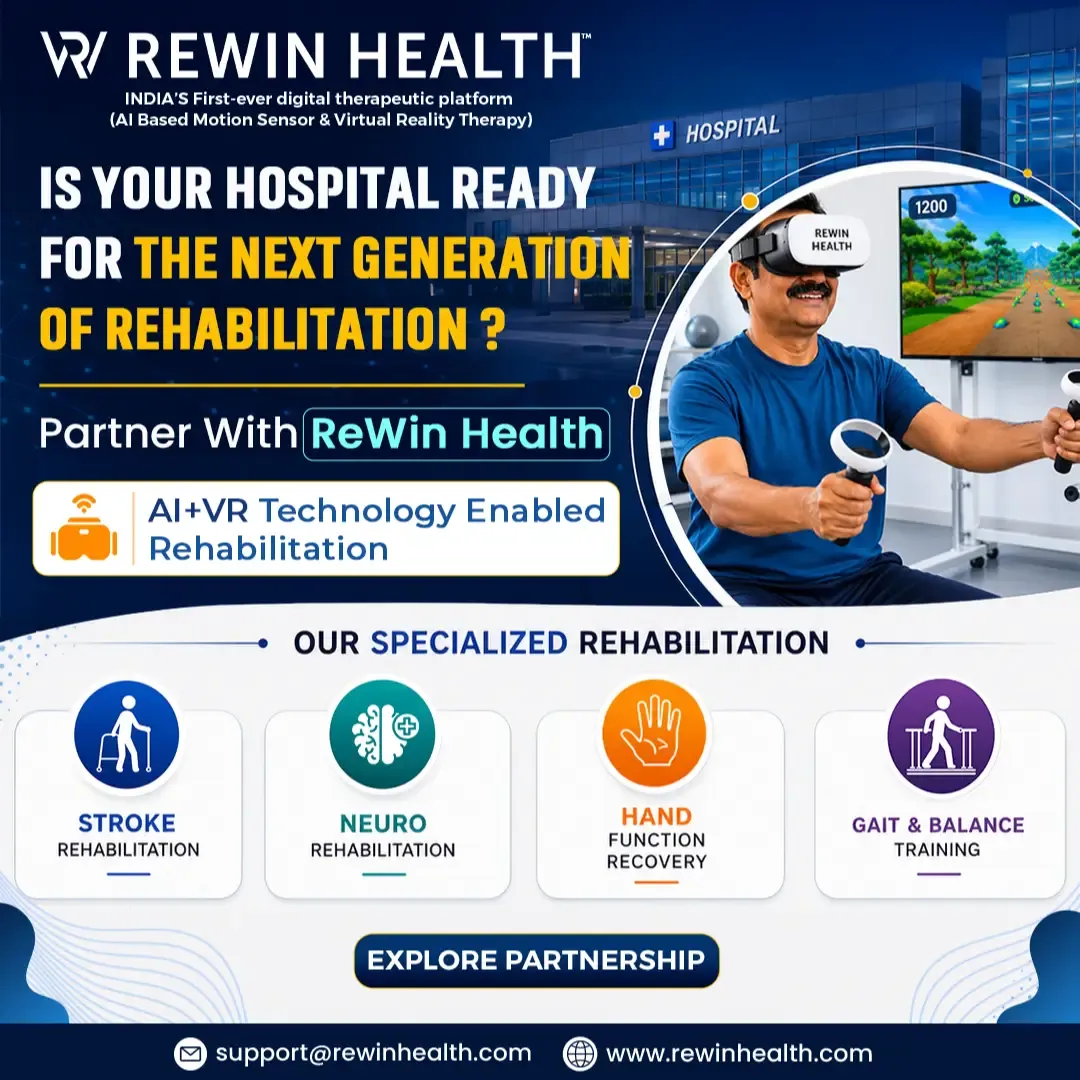
Advanced AI and VR Powered Rehabilitation Partnership in Hospitals
For a hospital, treating a stroke or neurological condition does not end when the acute medical treatment is completed.
For many patients, that is when the next important phase begins — rehabilitation.
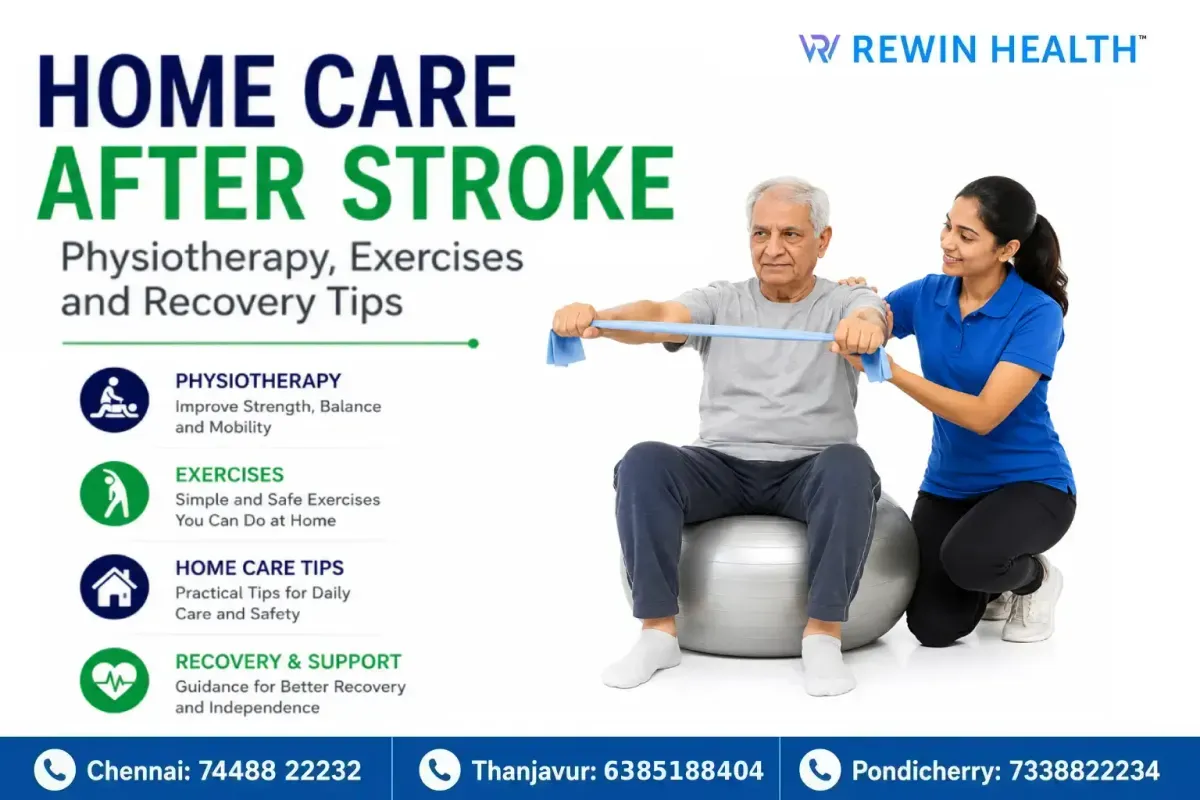
Regaining hand function, improving walking ability, developing balance, restoring coordination and becoming independent in daily activities can require structured, repetitive and goal-oriented rehabilitation over time.
This creates an important opportunity for hospitals and healthcare organisations in building or strengthening advanced neuro rehabilitation services within their existing care ecosystem.
A neuro rehabilitation partnership in hospitals can help hospitals combine their clinical infrastructure with specialised physiotherapy expertise and emerging technologies such as AI-assisted therapy and immersive virtual reality.
That is where ReWin Health can support healthcare organisations looking to expand or upgrade their rehabilitation capabilities.
Why Neuro Rehabilitation Is Becoming an Important Part of Hospital Care
Stroke and neurological conditions can affect much more than movement.
Patients may experience difficulties with:
- Walking and mobility
- Hand and arm function
- Balance and coordination
- Muscle strength
- Functional independence
- Performing everyday activities
Traditional physiotherapy remains an important part of rehabilitation. However, modern rehabilitation is increasingly focused on structured repetition, measurable progress, patient engagement and functional training.
For hospitals, this means having a rehabilitation pathway that can continue beyond the acute stage and support patients throughout their recovery journey.
A well-developed neuro rehabilitation program can also help create a more connected patient experience — from hospital treatment to rehabilitation and long-term functional recovery.
What Can a Hospital Rehabilitation Partnership Include?
A partnership does not necessarily mean building an entirely new department from the ground up.
Depending on the hospital’s existing infrastructure and objectives, a hospital rehabilitation partnership can be designed around different requirements.
1. Strengthening an Existing Physiotherapy Department
Hospitals that already have physiotherapy services can explore ways to expand their capabilities in stroke, neurological and functional rehabilitation.
Technology-enabled rehabilitation can complement the existing clinical team rather than replacing conventional physiotherapy.
2. Establishing a Neuro Rehabilitation Program
Hospitals looking to develop a dedicated neuro rehabilitation pathway can explore a structured model covering areas such as stroke rehabilitation, hand function recovery, gait and balance training and functional rehabilitation.
3. AI + VR Rehabilitation
Immersive VR-based therapy can make repetitive exercises more engaging while technology-assisted systems can support structured assessment and training.
The objective is not simply to introduce technology. The goal is to use technology meaningfully within a clinically guided rehabilitation program.
4. Stroke Rehabilitation Services
Stroke recovery often requires ongoing rehabilitation targeting different aspects of function.
A hospital can explore a dedicated stroke rehabilitation program that integrates physiotherapy, functional training and technology-assisted rehabilitation according to individual patient needs.
5. Referral & Continuity-of-Care Partnerships
Hospitals may also explore referral-based models where patients requiring continued rehabilitation can access specialised rehabilitation services after discharge.
This can help create a more connected recovery pathway for patients.
How AI and Immersive VR Can Complement Rehabilitation?
One of the challenges in rehabilitation is maintaining patient engagement during repetitive exercises.
Technology can help make therapy more interactive and measurable.
At ReWin Health, technology-enabled rehabilitation includes approaches such as AI-assisted physiotherapy and immersive VR-based therapy, combined with therapist-led rehabilitation.
Depending on the patient’s condition and clinical goals, technology may support activities related to:
Hand Function Recovery:
Repetitive, task-oriented exercises designed to encourage functional hand movement.
Gait & Balance Training:
Exercises focused on movement, balance and functional mobility.
Neuro Rehabilitation:
Structured rehabilitation for patients recovering from neurological conditions.
Functional Rehabilitation:
Training that connects therapy exercises with everyday activities.
The important point is that technology should support clinical decision-making and patient therapy — not replace qualified healthcare professionals.
Who Can Benefit From a Stroke and Neuro Rehabilitation Partnership?
A partnership model can be relevant for:
- Multispeciality hospitals
- Neurology hospitals
- Orthopaedic hospitals
- Existing rehabilitation centres
- Physiotherapy centres
- Healthcare organisations planning a new rehabilitation unit
- Hospitals looking to introduce AI or VR rehabilitation
- Organisations exploring patient referral partnerships
For hospital leadership, the key question is not simply “Do we need new technology?”
A better question is:
“How can we build a stronger rehabilitation pathway for our patients?”
Why Hospitals Should Explore Advanced Rehabilitation Models?
Chennai has a strong healthcare ecosystem with multispeciality hospitals, specialist centres, rehabilitation providers and a growing demand for organised post-acute care.
For hospitals, developing rehabilitation as an integrated part of the patient journey can create an opportunity to provide more comprehensive care.
Instead of viewing rehabilitation as a separate service, hospitals can consider it as part of the continuum of care — from diagnosis and acute treatment to rehabilitation and functional independence.
This is particularly relevant for patients recovering from stroke and other neurological conditions, where recovery can continue well beyond the initial hospitalisation.
Why Partner With ReWin Health?
ReWin Health combines physiotherapy expertise with AI-assisted and immersive VR rehabilitation approaches to help healthcare organisations explore technology-enabled rehabilitation models.
The partnership discussion can be tailored according to the hospital’s current requirements.
This may include:
- Strengthening an existing rehabilitation department
- Developing a neuro rehabilitation program
- Creating an AI + VR therapy room
- Introducing technology-enabled physiotherapy
- Developing stroke rehabilitation services
- Exploring hand function recovery programs
- Building referral partnerships
Rather than following a one-size-fits-all approach, the first step is understanding the organisation’s existing infrastructure, patient profile, rehabilitation goals and business requirements.
Looking to Build or Upgrade Stroke and Neuro Rehabilitation Services in Your Hospitals?
If your hospital or healthcare organisation is considering a Stroke and neuro rehabilitation partnership in your cities?, ReWin Health can help you explore the possibilities.
Whether you already have a physiotherapy department or are planning to establish a new rehabilitation service, our team can understand your requirements and discuss a suitable partnership approach.
Start the Conversation
Are you a Hospital CEO, Medical Director, Hospital Administrator, Head of Physiotherapy, Rehabilitation Head or Healthcare Business Leader i your cities?
Tell us what you are looking to build or improve.
Explore a potential partnership with ReWin Health for:
✓ Neuro Rehabilitation
✓ Stroke Rehabilitation
✓ AI + VR Therapy
✓ Hand Function Recovery
✓ Gait & Balance Training
✓ Technology-enabled Physiotherapy
✓ Referral Partnerships
Frequently Asked Questions
What is a neuro rehabilitation partnership?
A neuro rehabilitation partnership is a collaboration between a hospital or healthcare organisation and a specialised rehabilitation provider to develop, strengthen or support neurological rehabilitation services.
Can hospitals with an existing physiotherapy department partner with ReWin Health?
Yes. A partnership can be explored even when a hospital already has a physiotherapy department. The objective can be to complement existing services with specialised neuro rehabilitation expertise and technology-enabled approaches.
What rehabilitation services can be included?
Depending on the organisation’s requirements, the partnership can explore stroke rehabilitation, neuro rehabilitation, hand function recovery, gait and balance training, functional rehabilitation and AI + VR-assisted therapy.
Is AI or VR intended to replace physiotherapists?
No. Technology should complement qualified rehabilitation professionals. Clinical assessment, treatment planning and supervision remain important parts of safe and personalised rehabilitation.
Can a hospital start with an AI + VR therapy room?
Yes. Hospitals exploring technology-enabled rehabilitation can discuss the possibility of developing an AI + VR therapy space based on their infrastructure, patient requirements and rehabilitation objectives.
Who should contact ReWin Health for a partnership?
Hospital owners, CEOs, COOs, medical directors, hospital administrators, doctors, heads of physiotherapy, rehabilitation heads and healthcare business-development teams can initiate a partnership discussion.
Build the Next Generation of Rehabilitation Services
The future of rehabilitation is not simply about adding more equipment.
It is about creating better rehabilitation pathways, meaningful patient engagement, measurable therapy and stronger continuity of care.
For hospitals in Chennai looking to strengthen stroke and neuro rehabilitation, the right partnership can help bring together clinical expertise, technology and structured rehabilitation under one approach.
If your organisation is ready to explore what advanced rehabilitation could look like, start the conversation with ReWin Health today.