Rewin Health

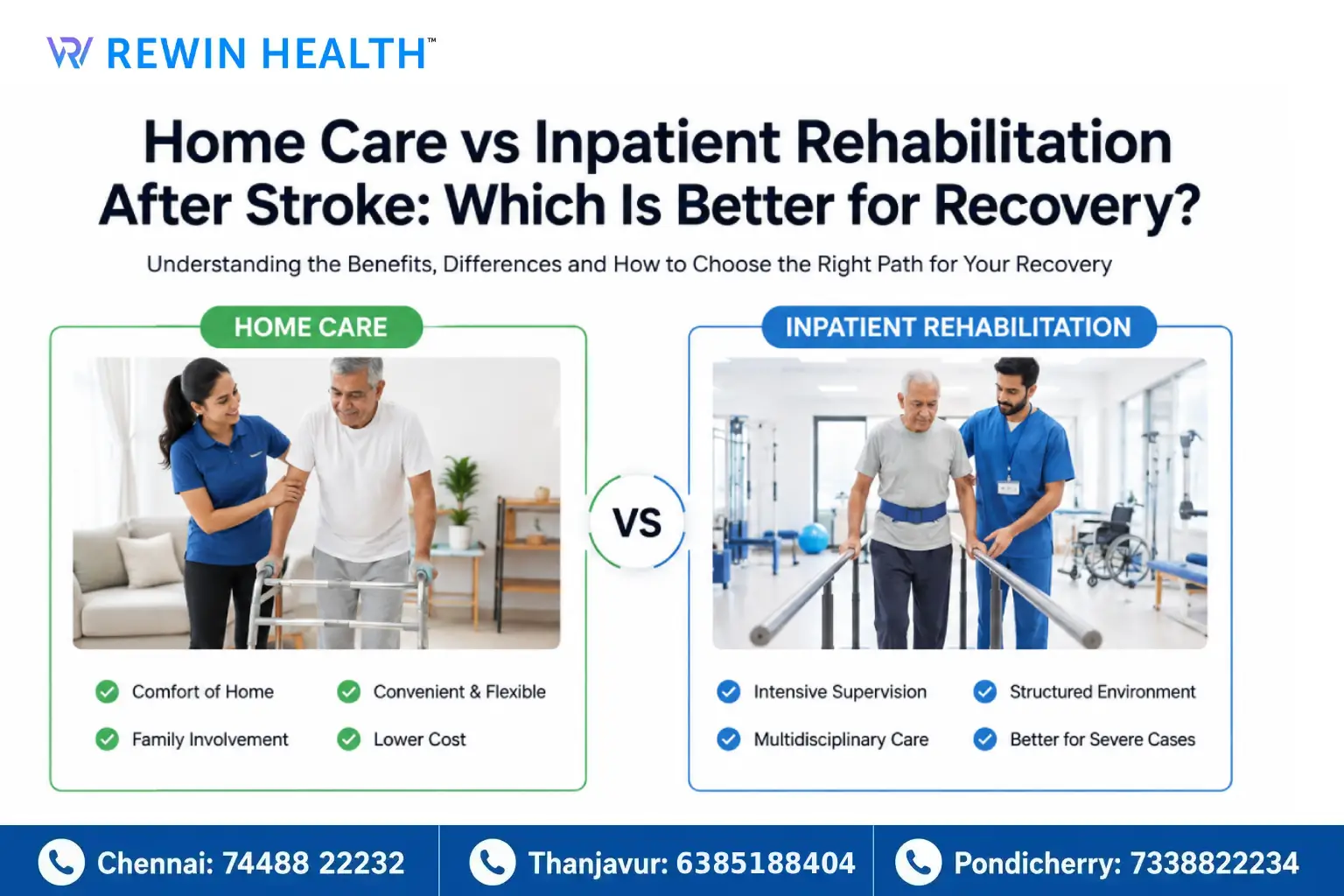
Home Care vs Inpatient Rehabilitation After Stroke: Which Is Better for Recovery?

Home Physiotherapy for Stroke Patients

A stroke can change a person’s ability to walk, use their hand, maintain balance, communicate, and perform everyday activities. Rehabilitation is therefore an important part of recovery—but one question many families face after hospital discharge is:

Should stroke rehabilitation continue at home, or is it better to stay in an inpatient rehabilitation facility?

The answer is not the same for every stroke survivor.

Both home-based stroke rehabilitation and inpatient rehabilitation can play an important role in recovery. The right choice depends on the person’s medical stability, severity of disability, mobility, cognitive and communication needs, caregiver support, safety at home, and the intensity of therapy required.

Research increasingly suggests that appropriately selected stroke survivors can benefit from structured, professionally supervised rehabilitation at home. A 2025 systematic review and meta-analysis found that home-based rehabilitation produced activities-of-daily-living outcomes comparable to hospital-based rehabilitation, although the researchers noted limitations in the quality of the available evidence.

So, rather than asking “Is home care or inpatient rehabilitation better?”, a more useful question is:

“Which rehabilitation setting can provide the right level of therapy, supervision and support for this patient’s recovery needs?”

What Is Home Care for Stroke Recovery?

Home-based stroke rehabilitation involves a qualified physiotherapist or rehabilitation professional providing treatment in the patient’s home.

The programme may include:

  • Mobility and walking exercises
  • Balance training
  • Strengthening exercises
  • Arm and hand rehabilitation
  • Transfer training
  • Functional movement practice
  • Exercises for activities of daily living
  • Caregiver education
  • Home safety recommendations
  • Progress assessment and modification of the rehabilitation plan

One major advantage is that therapy happens in the environment where the patient actually lives.

For example, instead of practising only on a therapy table, the therapist can work on activities such as getting out of bed, walking to the bathroom, using a chair safely, reaching for household objects, or navigating obstacles within the home.

This can make rehabilitation highly relevant to everyday independence.

Is Home Rehabilitation Effective After Stroke?

Yes, home-based rehabilitation can be effective for appropriately selected stroke survivors when it is professionally supervised and structured.

A systematic review of 49 studies found that home-based rehabilitation did not show a significant difference from institution-based rehabilitation for short-term basic activities of daily living. The researchers concluded that home rehabilitation combined with usual care may provide additional benefits compared with usual care alone, while also noting that the evidence quality was limited.

Research specifically examining upper-limb recovery is also encouraging. A systematic review and meta-analysis of eight trials involving 488 participants found that prescribed home-based exercises produced outcomes similar to centre-based exercises for upper-limb motor recovery, dexterity and activity performance after stroke.

This is particularly relevant for stroke survivors working on hand function, arm movement and functional independence.

However, home rehabilitation does not simply mean giving the patient a list of exercises and asking them to practise alone.

Professional assessment, appropriate exercise selection, progression and monitoring are important.

What Are the Benefits of Home Stroke Rehabilitation?

1. Rehabilitation happens in a familiar environment

A stroke survivor may feel more comfortable at home than in an unfamiliar rehabilitation facility.

The therapist can also identify practical difficulties within the home and adapt therapy accordingly.

2. Easier family involvement

Family members and caregivers can learn how to support safe transfers, mobility, exercises and daily activities.

This can help create consistency between therapy sessions.

3. Functional training can be highly practical

The therapist can incorporate real-life activities into the rehabilitation programme.

For example:

Bed → standing → walking → bathroom → sitting → reaching → dressing

These activities directly relate to independence.

4. Reduced travel burden

For patients with significant weakness, poor balance or difficulty travelling, getting to a rehabilitation centre several times per week can be challenging.

Home physiotherapy can reduce this burden and allow therapy to continue without regular transportation.

5. Technology can support home rehabilitation

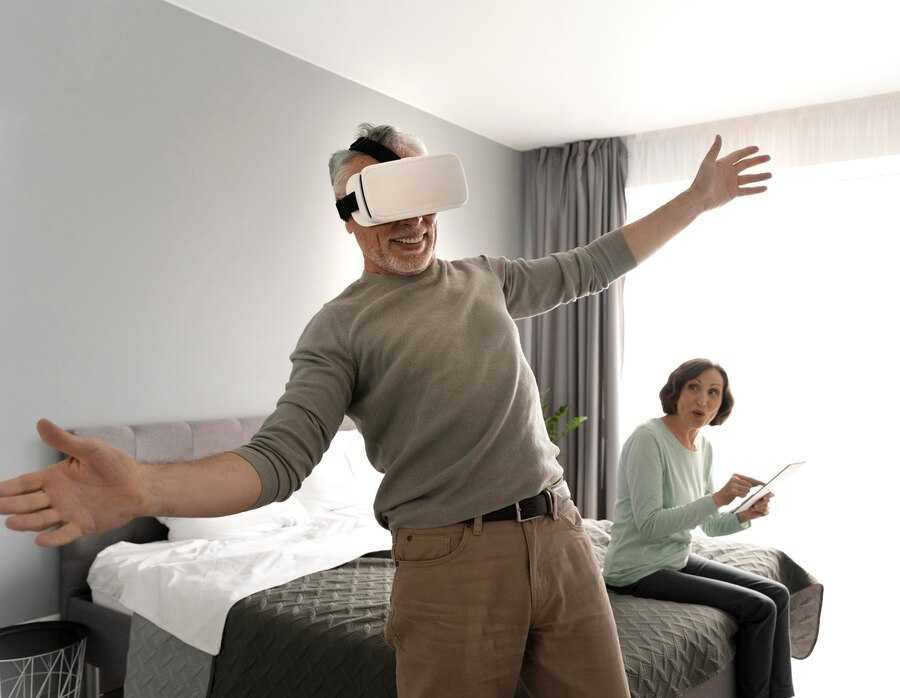
Technology-assisted rehabilitation is another developing area. Research on technology-supported home rehabilitation—including virtual reality, robotic devices and game-based systems—has reported potential benefits for physical function, although results vary by technology and outcome.

Technology should therefore be viewed as a tool that complements professional rehabilitation, rather than replacing a qualified therapist.

When Is Inpatient Stroke Rehabilitation Better?

Home rehabilitation is not suitable for everyone.

Some stroke survivors require a higher level of medical supervision, intensive therapy or multidisciplinary rehabilitation that may be more readily available in an inpatient setting.

Inpatient rehabilitation may be appropriate when a patient has:

  • Severe mobility limitations
  • Significant balance problems
  • Major weakness or paralysis
  • High fall risk
  • Complex medical needs
  • Significant cognitive difficulties
  • Difficulty safely transferring
  • Communication or swallowing difficulties requiring multidisciplinary management
  • Limited caregiver support
  • An unsafe home environment
  • A need for intensive, coordinated rehabilitation

For these patients, a rehabilitation facility can provide a structured environment where physiotherapists, occupational therapists, speech and language professionals, nurses and doctors can work together according to the patient’s needs.

Home Care vs Inpatient Rehabilitation: What Is the Difference?

FactorHome RehabilitationInpatient Rehabilitation
EnvironmentPatient’s own homeRehabilitation facility
Family involvementUsually highVariable
TravelMinimalNot required during admission
Home-specific trainingExcellentLimited
Medical supervisionDepends on serviceGenerally higher
Therapy intensityDepends on programmeCan be intensive
Best suited forMedically stable patients who can safely participate at homePatients needing intensive supervision or multidisciplinary care
Caregiver involvementOften importantMay be less hands-on initially

The important point is that neither option is automatically superior for every stroke survivor.

The quality, intensity and consistency of rehabilitation often matter more than simply the location where therapy takes place.

How Do You Decide Between Home Care and a Rehab Facility?

Families should discuss the decision with the patient’s doctor and rehabilitation team.

Consider these questions:

Is the patient medically stable?

If the patient still requires significant medical monitoring, inpatient care may be more appropriate.

Can the patient participate safely at home?

A therapist should assess mobility, transfers, balance and fall risk.

Is the home environment safe?

Stairs, bathrooms, beds, chairs and narrow spaces can all affect rehabilitation safety.

Is a caregiver available?

Some stroke survivors require assistance between therapy sessions.

What type of recovery is the patient working toward?

Someone primarily working on walking may have different needs from someone requiring intensive hand function recovery, balance training or communication rehabilitation.

Can the required therapy intensity be delivered at home?

The rehabilitation plan should be based on the patient’s goals rather than convenience alone.


Can Home Rehabilitation Help With Hand Function After Stroke?

Hand and arm recovery can be one of the biggest challenges following stroke.

A structured programme may include repetitive task practice, reaching activities, grasp-and-release exercises, coordination training and functional tasks.

Research suggests that appropriately prescribed home-based upper-limb exercises can produce outcomes comparable to centre-based exercise for several upper-limb outcomes.

For patients with limited movement, however, the therapist may need to modify exercises carefully and monitor progress.

This is particularly important because stroke rehabilitation should be individualized rather than based on a generic exercise programme.


Home Rehabilitation Does Not Mean Rehabilitation Alone

One common misconception is that choosing home rehabilitation means managing recovery without professional support.

That is not the case.

A well-designed home programme can involve:

Assessment → Personalized treatment plan → Therapist-guided sessions → Home exercises → Caregiver education → Progress monitoring → Programme modification

This structure helps ensure that exercises evolve as the patient’s abilities change.

At ReWin Health, home and technology-enabled physiotherapy services are designed to support patients who may have difficulty travelling, including stroke survivors. The organization states that its Chennai service provides home visits, while its online physiotherapy programme combines therapist guidance with technology-assisted monitoring.


What About Stroke Rehabilitation in Chennai?

For families looking for stroke rehabilitation in Chennai, the decision should not be based solely on whether a service is offered at home or in a clinic.

Instead, ask:

  • Does the therapist have experience in neurological rehabilitation?
  • Is the patient’s recovery assessed regularly?
  • Is there a personalized rehabilitation plan?
  • Are walking, balance and upper-limb function addressed?
  • Is caregiver education included?
  • Can therapy intensity be increased as the patient progresses?
  • Is technology available when clinically appropriate?
  • Can the rehabilitation team coordinate home and clinic-based care?

A hybrid approach may sometimes be useful—for example, combining clinic-based intensive rehabilitation with a structured home exercise programme.

ReWin Health offers stroke and neurological rehabilitation in Chennai, including in-clinic therapy, home visits and technology-assisted hand rehabilitation.


Frequently Asked Questions  

Is home physiotherapy as effective as inpatient rehabilitation after stroke?

For some appropriately selected patients, evidence suggests that professionally supervised home rehabilitation can achieve outcomes comparable to institution-based rehabilitation for certain functional and upper-limb outcomes. However, patients with greater medical or rehabilitation needs may benefit from inpatient care.

How long should stroke rehabilitation continue at home?

There is no universal duration. Rehabilitation should continue according to the patient’s functional goals, progress and clinical needs. The programme may change over time as mobility and independence improve.

Can a stroke patient recover completely at home?

Recovery varies significantly between individuals. Home rehabilitation can support improvements in mobility, balance, arm and hand function and independence, but outcomes depend on factors such as stroke severity, affected brain area, medical condition, rehabilitation intensity and consistency.

Is home physiotherapy safe for stroke patients?

It can be safe when the patient has been appropriately assessed and the programme is supervised by a qualified rehabilitation professional. Patients with significant medical instability, severe safety risks or complex rehabilitation needs may require facility-based care.

Should stroke patients choose home care or a rehabilitation centre?

There is no single answer. Medically stable patients who can safely participate at home may benefit from structured home rehabilitation, while patients requiring intensive supervision or multidisciplinary care may benefit from inpatient rehabilitation.

The Right Rehabilitation Setting Is the One That Supports the Patient’s Needs


The choice between home care and inpatient rehabilitation after stroke should not be treated as a simple either-or decision.

For some patients, inpatient rehabilitation provides the intensive supervision and multidisciplinary care they need. For others, structured home rehabilitation can provide effective therapy while allowing them to practise meaningful activities in their own environment.

The most important factors are clinical safety, rehabilitation intensity, professional supervision, consistency, individualized goals and measurable progress.

If a stroke survivor is medically stable and able to participate safely at home, home-based physiotherapy can be an effective component of recovery. If the patient has complex medical, functional or safety needs, inpatient rehabilitation may be more appropriate.

The goal is not simply to choose home or hospital. The goal is to choose the rehabilitation pathway that gives the patient the best opportunity to regain movement, function and independence.

About

Rewin Health Logo: Gamification in Physical Therapy

Making Rehabilitation affordable, Accessible & Patient Centric for 2 Billion People

Featured Blogs