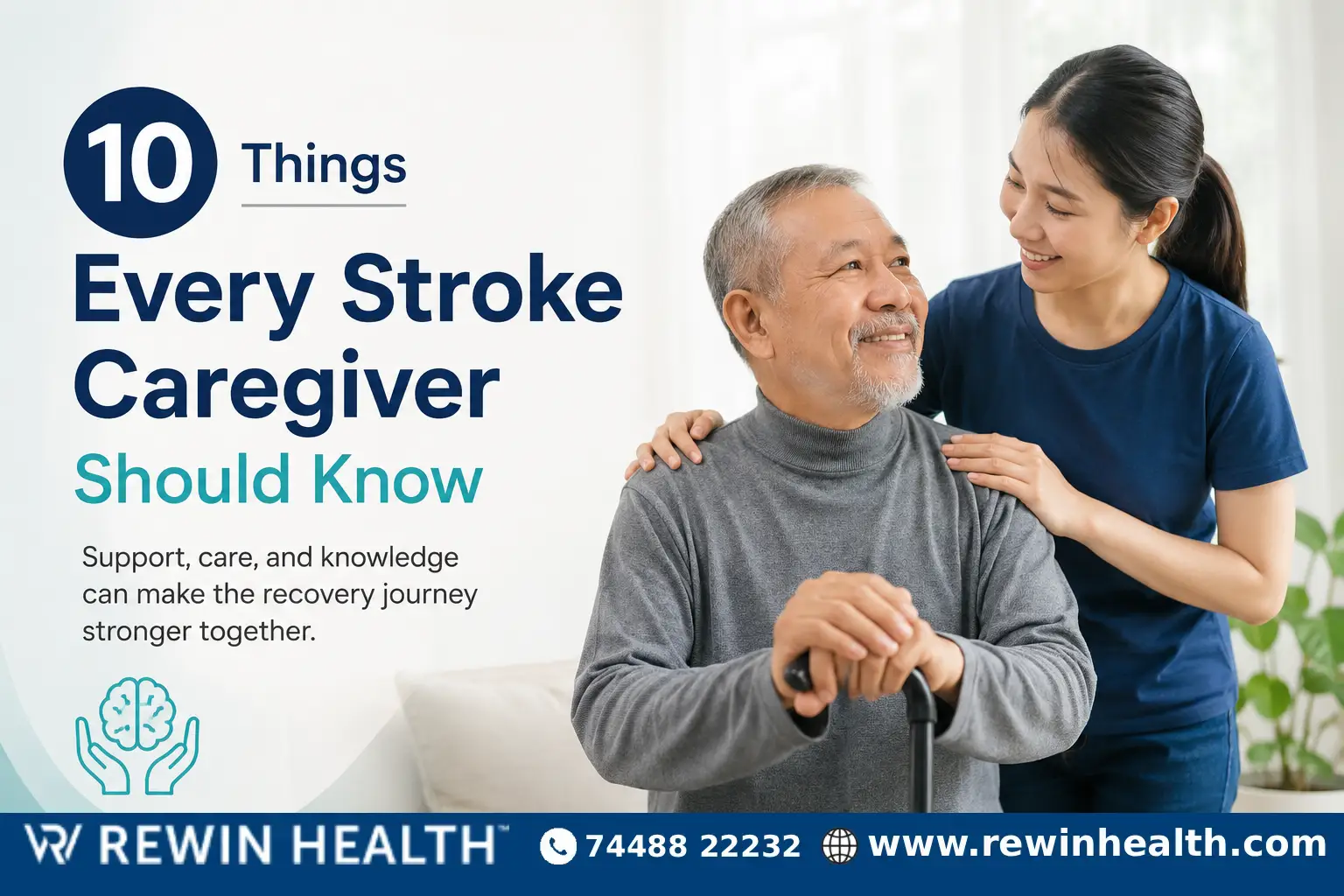
Stroke affects more than physical abilities. Many survivors experience emotional and psychological challenges, including:
- Depression
- Anxiety
- Frustration
- Mood swings
- Fear of another stroke
- Reduced self-confidence
These emotions are a normal part of the recovery journey. Caregivers should provide reassurance, listen without judgment, and encourage open communication.
Supporting emotional well-being is just as important as supporting physical recovery.
6. Learn the Warning Signs of Another Stroke
Stroke survivors may have a higher risk of experiencing another stroke. Caregivers should be familiar with the FAST warning signs:
F – Face Drooping
One side of the face appears uneven or droops.
A – Arm Weakness
Difficulty lifting one arm or sudden weakness.
S – Speech Difficulty
Slurred speech or difficulty speaking clearly.
T – Time to Seek Emergency Help
Immediate medical attention can save brain cells and improve outcomes.
Recognizing symptoms early can make a significant difference in recovery and survival.
7. Create a Safe Home Environment
Safety becomes especially important after a stroke due to balance problems, muscle weakness, and reduced mobility.
Consider:
- Removing loose rugs and clutter
- Installing grab bars in bathrooms
- Using non-slip mats
- Improving lighting throughout the home
- Keeping frequently used items within easy reach
A safer environment helps reduce fall risks and allows survivors to move more confidently.
8. Communication May Require Patience
Some stroke survivors develop communication disorders such as aphasia or dysarthria.
Helpful communication strategies include:
- Speaking slowly and clearly
- Using simple language
- Giving extra time for responses
- Maintaining eye contact
- Using visual cues when necessary
Avoid interrupting or completing sentences unless requested. Patience and encouragement can help reduce frustration and improve confidence.
9. Caregiver Burnout Is Real
Caring for a stroke survivor can be physically and emotionally demanding. Many caregivers focus entirely on their loved one’s needs while neglecting their own health.
Common signs of caregiver burnout include:
- Exhaustion
- Sleep disturbances
- Stress and anxiety
- Irritability
- Feeling overwhelmed
Caregivers should:
- Take regular breaks
- Ask family members for support
- Join caregiver support groups
- Maintain healthy eating and exercise habits
- Prioritize adequate sleep
Remember, taking care of yourself is not selfish—it is necessary for providing effective long-term care.
10. Celebrate Every Small Victory
Stroke recovery is often measured through small but meaningful milestones.
A survivor may celebrate:
- Moving a finger
- Standing independently
- Taking a few steps
- Improving speech
- Completing daily tasks without assistance
These moments represent significant achievements and should never be overlooked.
Recognizing progress helps maintain motivation and reminds both caregivers and survivors that recovery is possible.
The Caregiver’s Role in Stroke Recovery
Caregivers are often the unsung heroes of stroke recovery. Your patience, encouragement, and support can have a profound impact on a survivor’s rehabilitation journey. While challenges are inevitable, understanding the recovery process and working closely with rehabilitation professionals can help create the best possible environment for progress.
Every stroke survivor’s journey is different, but one thing remains constant: recovery is most effective when patients receive consistent therapy, emotional support, and evidence-based rehabilitation interventions.
ReWin Health: Supporting Stroke Survivors and Caregivers
At ReWin Health, we understand that stroke recovery is a journey that involves both patients and caregivers. Our comprehensive neuro rehabilitation programs combine expert physiotherapy, advanced VR-based rehabilitation, functional training, and personalized recovery plans designed to help stroke survivors regain independence and improve their quality of life.
Whether you are a stroke survivor or a caregiver seeking guidance and support, ReWin Health is committed to providing compassionate, evidence-based rehabilitation solutions that empower recovery, restore confidence, and help patients achieve meaningful progress every step of the way.
ReWin Health – Recover Better. Live Better.