Hip Replacement Rehabilitation
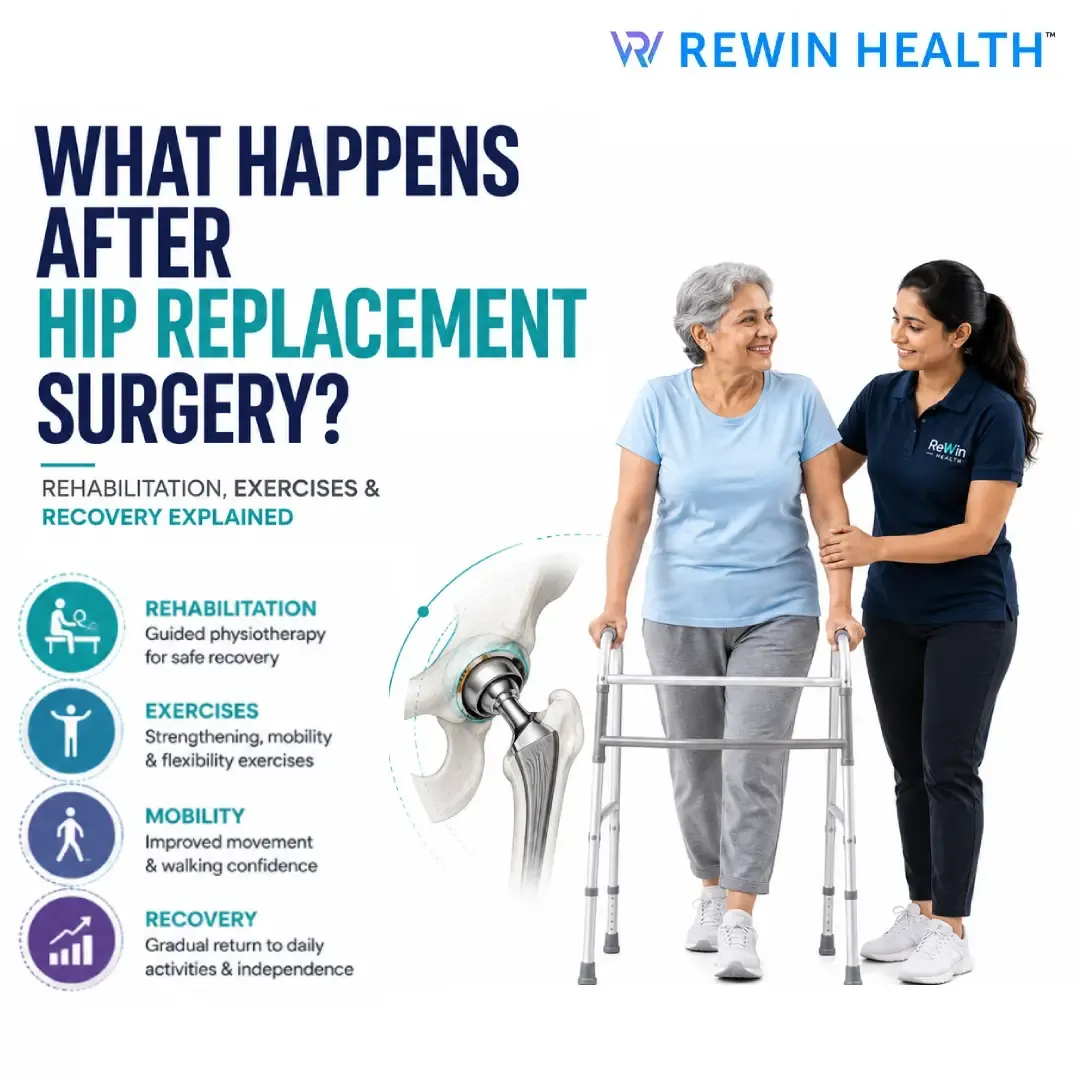
Hip replacement rehabilitation is an important part of recovery after hip replacement surgery. While surgery replaces damaged parts of the hip joint, rehabilitation helps restore movement, muscle strength, balance, walking ability and confidence so that a person can gradually return to everyday activities.
Recovery is different for every individual. Age, general health, pre-surgery mobility, strength, surgical approach and personal rehabilitation goals can all influence recovery. It may take several months to fully recover, making structured and progressive rehabilitation an important part of the journey.
What Is Hip Replacement Rehabilitation?
Hip replacement rehabilitation, also known as post-hip replacement physiotherapy, is a structured programme designed to help restore physical function after surgery.
It may focus on:
- Improving hip mobility
- Building hip and leg strength
- Improving balance and stability
- Retraining walking
- Increasing functional mobility
- Developing confidence with movement
- Returning to everyday activities
The rehabilitation programme should be individualised rather than based on a fixed timeline.
Why Is Physiotherapy Important After Hip Replacement?
Following surgery, it is common to experience soreness, swelling, stiffness and temporary muscle weakness. These can affect walking and everyday activities.
Physiotherapy helps patients gradually regain movement and strength through appropriately prescribed exercises and functional training.
Early rehabilitation commonly includes getting out of bed, standing, walking with an appropriate aid and learning exercises for home. NHS guidance recommends regular walking and following prescribed exercises as part of recovery.
The goal isn’t simply to heal the hip.
The goal is to restore useful movement.
What Happens During Hip Replacement Rehabilitation?
1. Early Mobility
The initial stage focuses on safe movement and independence.
A physiotherapist may help with:
- Getting in and out of bed
- Standing safely
- Walking with a walker or crutches
- Basic hip and leg exercises
- Safe movement techniques
- Managing everyday activities
Early mobilisation is an important part of modern hip replacement recovery.
2. Strength and Mobility
As recovery progresses, rehabilitation can focus more on strengthening the muscles supporting the hip.
Exercises may target the:
- Gluteal muscles
- Quadriceps
- Hamstrings
- Hip stabilisers
- Core and lower-limb muscles
Progressive strengthening can support stability and functional movement. The American Academy of Orthopaedic Surgeons notes that strengthening muscles supporting the hip can improve joint stability and support return to daily activities.
3. Balance and Walking Training
Walking requires more than hip movement.
It involves:
Strength + Balance + Coordination + Mobility + Control
Physiotherapy may therefore include gait training, balance exercises, weight shifting and progressive walking.
As confidence improves, walking aids may be reduced according to the patient’s progress and clinical advice.
4. Functional Rehabilitation
The final goal is not simply completing exercises in a clinic.
It is being able to perform everyday activities more confidently.
Rehabilitation may progress towards:
Standing → Walking → Stairs → Household activities → Community mobility → Independence
How Long Does Hip Replacement Rehabilitation Take?
There is no single recovery timeline for everyone.
Many people improve significantly during the first several weeks, while strength, mobility and endurance can continue improving over several months. NHS guidance notes that recovery can take several months and varies according to factors such as age and general health.
Your surgeon and physiotherapist should determine when activities and exercises can safely progress.
What Exercises Are Done After Hip Replacement?
Depending on the individual’s condition and clinical guidance, rehabilitation may include:
- Ankle and circulation exercises
- Hip and leg muscle activation
- Range-of-motion exercises
- Progressive strengthening
- Sit-to-stand training
- Balance exercises
- Walking practice
- Functional exercises
Exercises should not be selected solely from online information. Hip precautions and exercise restrictions can differ depending on the surgical procedure and the surgeon’s instructions.
Can Technology Support Hip Replacement Rehabilitation?
Modern rehabilitation can combine conventional physiotherapy with technology-assisted approaches.
At ReWin Health, AI-assisted physiotherapy and immersive VR rehabilitation can be incorporated where clinically appropriate to make rehabilitation more engaging, goal-oriented and measurable.
Technology-assisted rehabilitation may support:
Movement practice • Repetition • Performance feedback • Goal-oriented exercises • Progress monitoring
Technology does not replace the physiotherapist.
It gives rehabilitation teams additional tools to support therapy.
At ReWin Health, rehabilitation can follow:
ASSESS → PLAN → TRAIN → MONITOR → PROGRESS
The focus remains on individualised physiotherapy and functional recovery.
When Should You Seek Medical Advice?
Some soreness, swelling and stiffness can occur during recovery. However, worsening or severe symptoms should be discussed with your healthcare team.
Seek prompt medical advice if you experience concerning symptoms such as significant worsening pain, increasing swelling, wound problems, fever, sudden calf pain or swelling, or sudden breathing difficulties.
Always follow the specific post-operative instructions provided by your surgeon and rehabilitation team.
Frequently Asked Questions
How long does hip replacement rehabilitation take?
Recovery varies between individuals. Many people continue improving for several months after surgery.
When should physiotherapy start after hip replacement?
Physiotherapy commonly begins very soon after surgery, often while the patient is still in hospital, with a focus on safe mobility and exercises.
Is physiotherapy necessary after hip replacement?
A structured rehabilitation programme can help restore mobility, strength, balance, walking and functional independence.
What exercises are recommended after hip replacement?
Exercises vary according to the individual but can include mobility, muscle activation, strengthening, balance, walking and functional exercises.
Can VR be used after hip replacement?
Immersive VR may be incorporated into rehabilitation when clinically appropriate. It should complement professional physiotherapy rather than replace clinical assessment and supervision.
The Goal of Hip Replacement Rehabilitation Is Bigger Than the Knee
Hip replacement surgery changes the joint.
Rehabilitation helps rebuild the movement around it.
From the first assisted step to walking more confidently, every stage of rehabilitation has a purpose.
At ReWin Health, advanced physiotherapy combines clinical rehabilitation with technology-assisted approaches such as AI-assisted physiotherapy and immersive VR rehabilitation, where appropriate.
Assess -> Train -> Monitor -> Progress
If you are recovering from hip replacement surgery, consult a qualified physiotherapist for an individual assessment and rehabilitation plan.