Rewin Health

How long will I need Physiotherapy after Spine surgery?

    Spine Surgery Rehabilitation

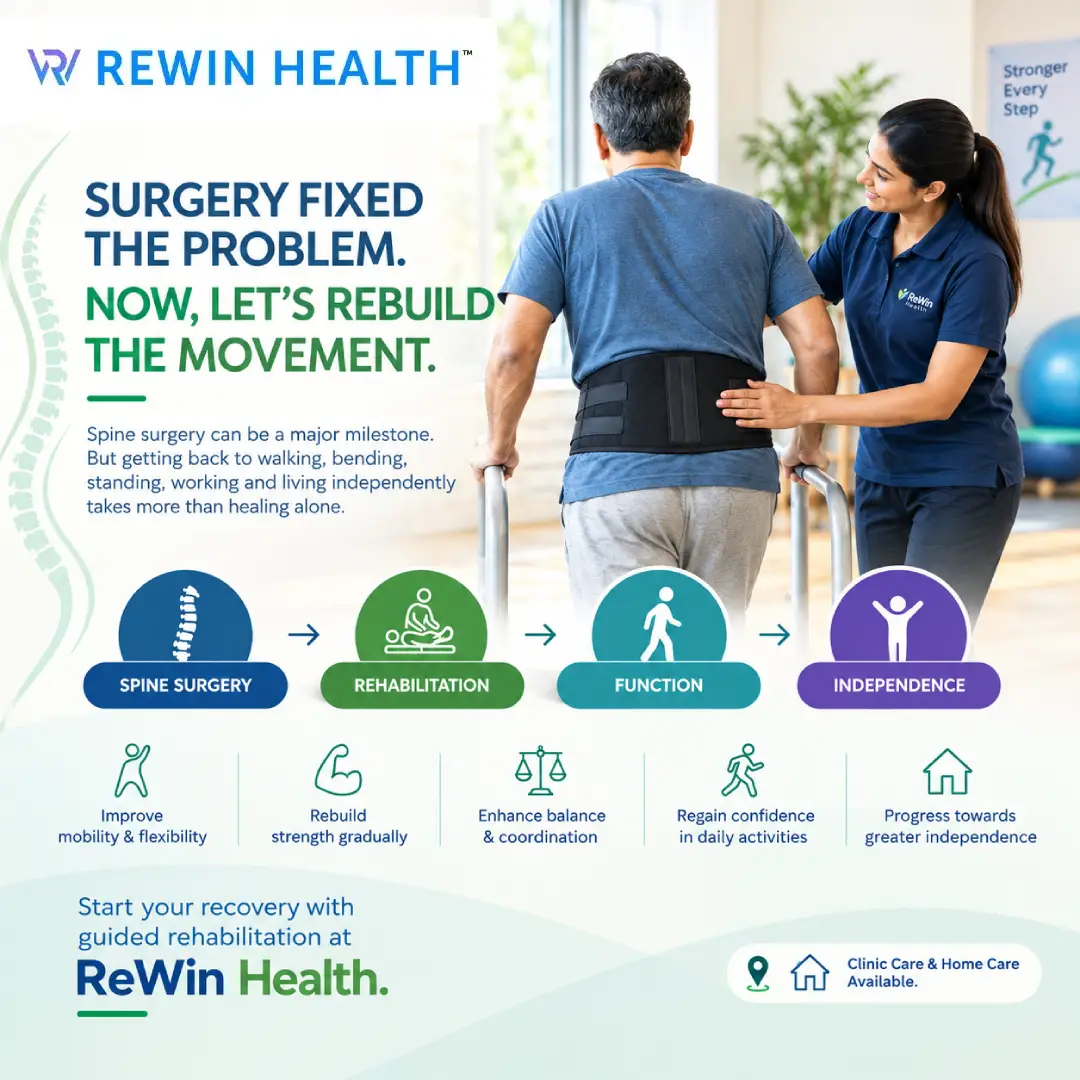
    Surgery fixed the problem. Now, let’s rebuild the movement.

    Spine surgery can be an important step in managing certain spinal conditions, but the recovery journey does not necessarily end when the operation is over.

    After surgery, many people still need to gradually rebuild strength, mobility, balance, walking ability and confidence in everyday movement. This is where spine surgery rehabilitation and physiotherapy can become an important part of recovery.

    Whether you have undergone lumbar spine surgery, cervical spine surgery, spinal decompression, disc surgery or another spinal procedure, rehabilitation should be based on your surgery, symptoms, healing stage, medical advice and functional goals.

    At ReWin Health, the focus is not simply on exercising after surgery. It is about helping patients progressively work towards better movement, improved function and greater independence through guided rehabilitation.

    What Happens After Spine Surgery?

    It is common for recovery after spine surgery to involve more than wound healing.

    Depending on the procedure and the individual, you may experience:

    • Back or neck stiffness
    • Reduced mobility
    • Muscle weakness
    • Reduced walking tolerance
    • Difficulty changing positions
    • Reduced balance or movement confidence
    • Difficulty performing everyday activities
    • Reduced strength and endurance
    • Fear of moving after surgery

    These experiences can vary significantly from person to person.

    For example, rehabilitation following a lumbar decompression may differ from rehabilitation after spinal fusion or cervical spine surgery. Your surgeon and rehabilitation professional can determine what movements and exercises are appropriate for your specific stage of recovery.

    Recovery is not about doing everything quickly. It is about progressing safely and appropriately.

    Why Is Rehabilitation Important After Spine Surgery?

    Spine surgery addresses a specific surgical problem, but the body may still need time and guided rehabilitation to return to everyday function.

    Physiotherapy after spine surgery may help you progressively work on:

    1. Mobility

    Gentle, appropriate movement can help you gradually restore functional mobility after a period of reduced activity.

    2. Strength

    Reduced activity after surgery can contribute to weakness. A progressive strengthening programme can help rebuild the muscles needed for movement and daily activities.

    3. Walking

    Walking is often an important part of recovery. Depending on the surgery and medical advice, walking distance and activity may be gradually increased rather than progressed suddenly.

    4. Balance and Movement Control

    Some patients may feel unsteady or less confident after surgery. Rehabilitation can include appropriate exercises to improve balance, coordination and movement control.

    5. Functional Independence

    The ultimate goal of rehabilitation is not simply to complete exercises.

    It is to help you work towards everyday activities such as:

    Getting out of bed → Standing → Walking → Using stairs → Performing daily tasks → Returning to work or normal activities

    The exact timeline depends on the type of surgery and your individual recovery.

    When Should Physiotherapy Start After Spine Surgery?

    There is no single rehabilitation timeline that applies to every spine surgery.

    The appropriate time to begin or progress physiotherapy depends on factors such as:

    • Type of spinal surgery
    • Surgical findings
    • Healing status
    • Pain and symptoms
    • Muscle strength
    • Mobility
    • Medical precautions
    • Your surgeon’s instructions
    • Your individual functional goals

    Some patients receive physiotherapy guidance soon after surgery, including assistance with mobility and basic exercises. For other procedures, more structured outpatient rehabilitation may begin later.

    For example, hospital guidance for different spinal procedures describes gradual progression of sitting, standing and walking, followed by appropriately timed physiotherapy and exercise progression.

    The right question is not “How soon can I exercise?”

    It is:

    “What level of movement is appropriate for my stage of recovery?”

    What Does Spine Surgery Rehabilitation Include?

    A structured rehabilitation programme may include different components depending on the individual’s needs.

    Early Mobility

    The initial focus may include safe movement, transfers, walking and maintaining general mobility where medically appropriate.

    Flexibility and Mobility

    Gentle mobility exercises may be introduced progressively to help restore comfortable movement.

    Strengthening

    Strengthening may gradually target the muscles required for posture, walking, transfers and everyday activities.

    Balance and Coordination

    Appropriate balance exercises may be incorporated when needed to improve confidence and movement control.

    Functional Training

    Rehabilitation should eventually connect exercises to real-life activities.

    This could include:

    • Walking longer distances
    • Climbing stairs
    • Getting in and out of a chair
    • Performing household activities
    • Returning to work
    • Resuming appropriate recreational activities

    Education

    A physiotherapist can also help you understand how to progress activity, manage your rehabilitation programme and work within the precautions provided by your surgical team.

    AAOS guidance similarly emphasizes that a structured conditioning programme after injury or surgery can support a return to daily activities, while exercises should be selected with appropriate professional supervision.

    Spine Surgery Recovery: What Should You Avoid?

    One of the biggest mistakes after surgery is assuming that more exercise always means faster recovery.

    That is not necessarily the case.

    Depending on your procedure, your surgeon may temporarily restrict activities such as:

    • Heavy lifting
    • Repeated bending
    • Twisting
    • High-impact exercise
    • Contact sports
    • Certain stretches or movements

    The restrictions vary according to the operation and individual circumstances.

    For example, guidance following lumbar surgery commonly recommends gradually increasing activity while avoiding heavy lifting and excessive bending or twisting during the early recovery period.

    Do not copy exercises from the internet simply because they are labelled “post-spine surgery exercises.”

    An exercise that is appropriate for one patient may not be appropriate for another.

    Your rehabilitation programme should be based on your specific surgery and recovery stage.

    Can Physiotherapy Help After Lumbar Spine Surgery?

    Yes, some patients may benefit from physiotherapy or supervised rehabilitation following lumbar spine surgery.

    Lumbar procedures may include surgeries for conditions such as disc problems, nerve compression or spinal stenosis.

    Rehabilitation may focus on progressively improving:

    Mobility + Strength + Walking + Balance + Functional Activity

    After lumbar decompression surgery, for example, patient guidance commonly encourages gradually increasing walking and activity while following the surgical team’s restrictions.

    The rehabilitation plan should always be individualized.

    What About Rehabilitation After Cervical Spine Surgery?

    Cervical spine surgery involves the neck region, so rehabilitation requirements can differ from those following lower-back surgery.

    Depending on the procedure, rehabilitation may address:

    • Neck and upper-body mobility
    • Postural control
    • Upper-limb function
    • Strength
    • Balance
    • Walking
    • Functional activities

    The timing and type of exercises should be determined according to the surgical procedure and the treating team’s instructions.

    Current clinical guidance for cervical spine surgery emphasizes gradual recovery and individualized progression rather than applying one fixed timeline to everyone.

    How Long Does Spine Surgery Rehabilitation Take?

    There is no universal recovery timeline for spine surgery.

    Your recovery may depend on:

    • Type of surgery
    • Reason for surgery
    • Age and general physical condition
    • Pre-surgery strength and mobility
    • Presence of nerve-related symptoms
    • Pain and stiffness
    • Surgical healing
    • Consistency with the rehabilitation programme
    • Your functional goals

    Some people may return to certain activities within weeks, while others require a longer rehabilitation period.

    For example, NHS guidance notes that recovery after lumbar decompression can take several weeks and that returning to usual activities may take up to around 12 weeks for some patients. Other spinal procedures can have substantially different timelines.

    Your recovery timeline should come from your surgical and rehabilitation team—not from someone else’s recovery story.

    When Should You Contact Your Doctor After Spine Surgery?

    Some discomfort can occur during recovery, but certain symptoms require prompt medical assessment.

    Seek medical advice if you develop concerning or worsening symptoms such as:

    • New or worsening weakness
    • New numbness
    • Significant worsening pain
    • Problems controlling your bladder or bowel
    • New symptoms affecting your limbs
    • Signs of wound infection or abnormal wound discharge

    For example, NHS guidance specifically advises urgent assessment for new limb weakness, genital numbness or bowel/bladder problems after lumbar decompression surgery.

    Always follow the emergency and follow-up instructions provided by your surgical team.

    Spine Surgery Rehabilitation Is About More Than Exercise

    One of the most important goals of rehabilitation is function.

    Imagine the journey:

    SPINE SURGERY

    REHABILITATION

    MOVEMENT

    FUNCTION

    INDEPENDENCE

    The end goal is not simply to say:

    “I completed my exercises.”

    The bigger goal is:

    “I can do more of my everyday life again.”

    That could mean walking to the kitchen independently, climbing stairs, getting back to work, performing household activities or gradually returning to activities you enjoy.

    How ReWin Health Approaches Spine Rehabilitation

    At ReWin Health, spine rehabilitation is approached around the individual’s functional needs and recovery stage.

    The rehabilitation journey may focus on:

    Assessment → Individualised Plan → Guided Exercise → Functional Training → Progressive Recovery

    Our physiotherapy approach focuses on helping patients progressively work towards:

    • Better mobility
    • Improved strength
    • Better balance and movement control
    • Increased walking tolerance
    • Improved functional ability
    • Greater confidence in everyday movement

    Where appropriate, rehabilitation can be provided through clinic care or home care, depending on the patient’s needs and rehabilitation plan.

    Looking for Spine Surgery Rehabilitation in Chennai?

    If you or a family member has recently undergone spine surgery and needs help planning the next stage of recovery, a physiotherapy assessment can help determine what rehabilitation may be appropriate for your current condition.

    ReWin Health provides physiotherapy and rehabilitation support in Chennai, including clinic and home-care options.

    Start your recovery with guided rehabilitation.

    Book an assessment with ReWin Health today.

    Frequently Asked Questions  

    Is physiotherapy necessary after spine surgery?

    Not every patient requires the same type or amount of physiotherapy. Some patients may benefit from supervised rehabilitation depending on their surgery, symptoms and functional needs. Your surgeon or physiotherapist can advise you on the appropriate rehabilitation plan.

    When can I start walking after spine surgery?

    Walking may be introduced early for many types of spine surgery, but the amount and progression should follow your surgical team’s instructions. Hospital guidance commonly recommends gradually increasing walking and activity rather than suddenly returning to previous activity levels.

    Can physiotherapy reduce stiffness after spine surgery?

    Rehabilitation may include appropriately selected mobility exercises to help restore movement. However, the exercises and timing should be individualized according to the surgery and healing stage.

    Can I exercise after spinal fusion surgery?

    Exercise may be part of recovery after spinal fusion, but the type, intensity and timing need to be determined according to your surgeon’s precautions and rehabilitation plan.

    How long will I need physiotherapy after spine surgery?

    There is no fixed duration. Some patients may require a shorter period of rehabilitation, while others may need longer-term support depending on their surgery, symptoms, strength, mobility and functional goals.

    Can I take physiotherapy at home after spine surgery?

    Home physiotherapy may be an option for patients who have difficulty travelling or require rehabilitation in their home environment. The suitability of home-based rehabilitation depends on the individual’s condition and rehabilitation requirements.

    Can I return to work after spine surgery?

    Returning to work depends on the type of surgery, your recovery, the physical demands of your job and your medical team’s advice. A gradual or modified return may be appropriate for some people.

    Final Takeaway

    Spine surgery may be an important milestone. But recovery is a process.

    The next step is not about rushing back to everything at once.

    It is about progressing movement safely, rebuilding strength, improving function and gradually regaining independence.

    Surgery fixed the problem.
    Now, let’s rebuild the movement.

    ReWin Health

    About

    Rewin Health Logo: Gamification in Physical Therapy

    Making Rehabilitation affordable, Accessible & Patient Centric for 2 Billion People

    Featured Blogs