Knee Replacement Rehabilitation
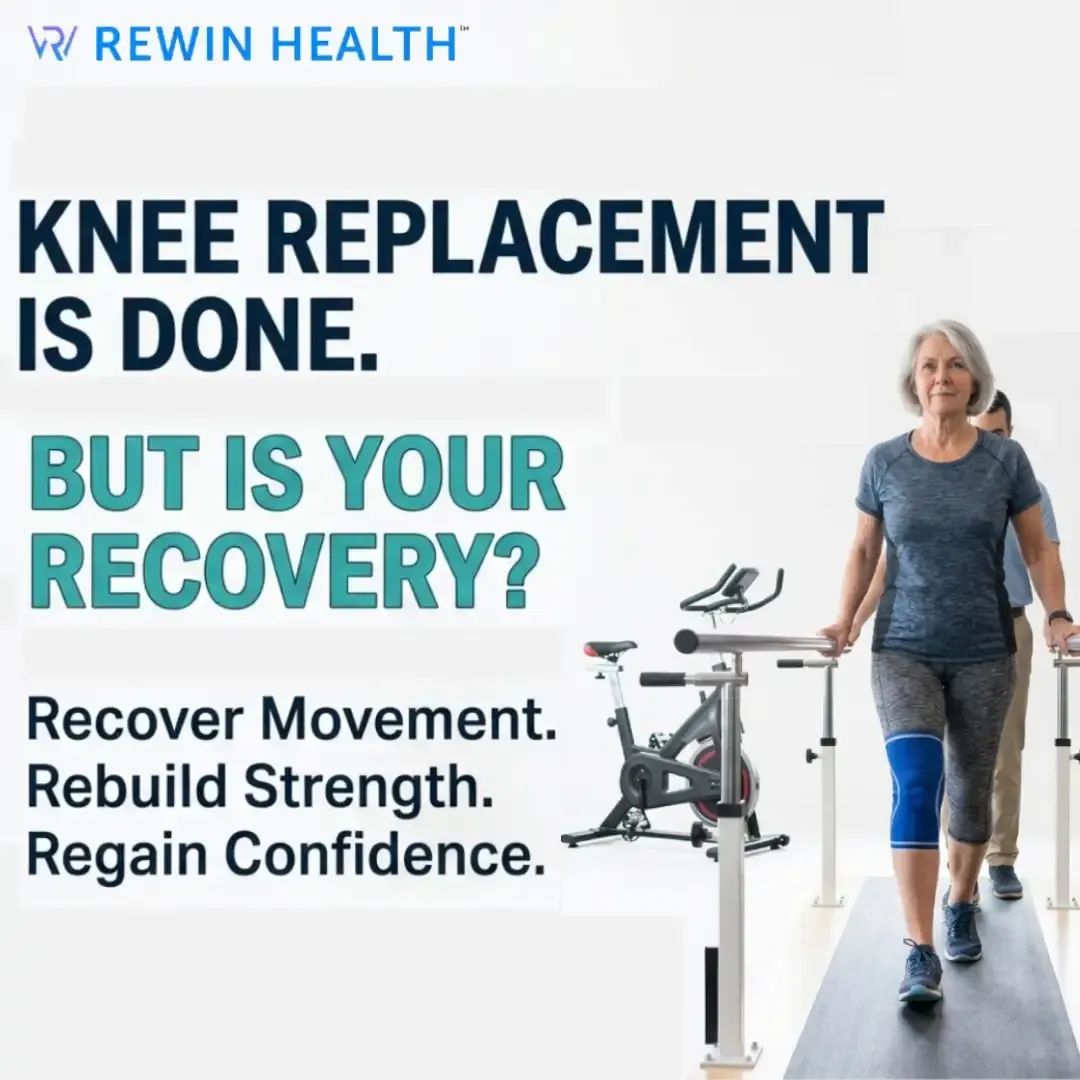
Knee replacement rehabilitation is an important part of recovery after knee replacement surgery. While the procedure replaces damaged parts of the knee joint, rehabilitation helps the person gradually restore movement, strength, balance, walking ability and confidence.
For many people, the goal after knee replacement is not simply to have a healed surgical wound or a new joint. It is to return to everyday activities with greater comfort and independence.
That may mean being able to get out of a chair more easily, walk without relying heavily on an assistive device, climb stairs, perform household activities or return to appropriate physical activities.
Recovery varies from person to person. Age, general health, fitness before surgery, the type of knee replacement, strength, mobility and individual rehabilitation needs can all influence the recovery process. Full recovery can take several months or longer.
This is where a structured, progressive physiotherapy programme becomes important.
What Is Knee Replacement Rehabilitation?
Knee replacement rehabilitation is the process of restoring physical function following knee replacement surgery.
A rehabilitation programme may focus on:
- Restoring knee range of motion
- Improving lower-limb strength
- Reducing movement-related limitations
- Improving balance and stability
- Retraining walking patterns
- Improving functional mobility
- Building confidence with movement
- Returning to appropriate daily activities
Rehabilitation is not identical for everyone. A physiotherapist evaluates the person’s current abilities, limitations, surgical status and functional goals before progressing exercises and activities.
Professional rehabilitation guidance emphasises individualised assessment and progressive loading following orthopaedic surgery.
Why Does Rehabilitation Matter After Knee Replacement?
Before surgery, people with severe knee problems may have spent months or years changing the way they walk or avoiding certain movements because of pain and stiffness.
After surgery, the knee may still feel sore, swollen or stiff, while the muscles around the hip, thigh and knee may be weak.
The body therefore needs time and appropriate training to adapt to the new joint and restore functional movement.
Physiotherapy can help guide this process through progressive exercises, mobility training, strengthening, balance work and functional activities. NHS guidance also recommends continuing prescribed exercises after discharge because they support longer-term strength and movement.
What Happens During Knee Replacement Rehabilitation?
Rehabilitation generally progresses through stages. However, these stages should not be treated as a fixed timetable.
The right progression depends on the individual and the guidance of their surgeon and physiotherapy team.
Stage 1: Early Rehabilitation — Getting Moving Safely
The early phase begins around the time of surgery and continues after discharge.
The initial focus may include:
- Safe bed and chair transfers
- Standing safely
- Walking with an appropriate aid
- Gentle knee movement
- Muscle activation
- Managing swelling as advised by the healthcare team
- Learning a home exercise programme
Physiotherapists may help patients begin walking soon after surgery and teach them how to use walking aids safely.
The purpose is not to push the knee aggressively.
The purpose is to restore safe movement while gradually increasing activity.
Stage 2: Restoring Knee Mobility and Strength
As early recovery progresses, rehabilitation can become more active.
The focus may include:
Knee mobility
Regaining appropriate knee flexion and extension is important for activities such as walking, sitting, standing and climbing stairs.
Muscle activation
The quadriceps and other muscles around the hip and leg may need progressive strengthening after surgery.
Functional movement
Exercises may progress from simple movements to activities such as:
- Sit-to-stand
- Supported squats
- Step exercises
- Walking practice
- Progressive resistance exercises
Strengthening the muscles that support the knee is an important part of restoring function after knee problems and surgery.
Stage 3: Balance, Walking and Functional Rehabilitation
Rehabilitation should not focus only on the knee joint.
A person may have adequate knee movement but still struggle with:
- Walking confidently
- Maintaining balance
- Climbing stairs
- Standing for longer periods
- Changing direction
- Getting up from a chair
- Performing household activities
This is why rehabilitation eventually needs to become more functional.
For example, a physiotherapist may progress from basic strengthening to:
Strength → Weight shifting → Balance → Walking → Stairs → Functional movement
The goal is to help the person use the improved knee function in real-life situations.
Some NHS rehabilitation guidance specifically includes progression of walking, balance, gait pattern and lower-limb strength as recovery continues.
Stage 4: Returning to Everyday Activities
As strength, mobility and confidence improve, rehabilitation can become increasingly focused on the person’s individual goals.
These might include:
- Walking outdoors
- Shopping
- Cooking
- Household activities
- Returning to work
- Using stairs
- Participating in appropriate recreational activities
- Maintaining long-term physical activity
The important point is that recovery is not simply about completing exercises.
It is about translating those exercises into useful movement.
A strong rehabilitation programme therefore connects exercises with the activities that matter to the individual.
Knee Replacement Recovery Timeline: What Should You Expect?
One of the most common questions people ask is:
“How long does it take to recover from knee replacement?”
There is no single answer.
Recovery can take several months or longer, and the pace varies according to individual health, age, fitness, type of surgery and rehabilitation progress.
A general framework may look like this:
| Rehabilitation phase | Typical focus |
|---|---|
| Early recovery | Safe mobility, basic exercises, knee movement and swelling management |
| Early weeks | Walking progression, strength, range of motion and functional mobility |
| Later rehabilitation | Balance, progressive strengthening, gait and stairs |
| Longer-term | Functional independence, conditioning and maintenance |
These are general stages, not fixed deadlines.
Some people progress quickly, while others require additional time or support.
The best rehabilitation programme is based on the individual’s actual function rather than simply the number of weeks since surgery.
What Exercises Are Commonly Used After Knee Replacement?
Exercises following knee replacement should be selected and progressed according to the person’s condition and clinical guidance.
Common categories may include:
1. Ankle Pumps
These involve moving the ankle up and down and may be included during early recovery.
2. Quadriceps Activation
Exercises that encourage activation of the thigh muscles can help address weakness following surgery.
3. Knee Range-of-Motion Exercises
Controlled exercises may be used to gradually improve knee bending and straightening.
4. Straight-Leg Exercises
When clinically appropriate, straight-leg exercises may be used to strengthen the leg.
5. Sit-to-Stand Training
This functional exercise helps practise a movement used repeatedly in everyday life.
6. Progressive Strengthening
Resistance exercises can gradually challenge the muscles around the hip and knee as appropriate.
7. Balance Training
Balance exercises can help develop stability and confidence during standing and movement.
8. Walking Practice
Walking progression can focus on safety, endurance and gradually improving movement quality.
9. Stair Training
Stair practice can help people regain confidence with an important everyday activity.
Rehabilitation resources from orthopaedic and NHS organisations emphasise gradual progression and recommend discussing exercises with a physiotherapist or healthcare professional to ensure they are appropriate.
Important: An exercise that is appropriate for one person may not be appropriate for another. Do not begin or progress exercises solely based on an online article. Follow the instructions of your surgeon and physiotherapist.
Why Is Strength Important After Knee Replacement?
Weakness after knee replacement can affect more than the knee itself.
Reduced leg strength can make it harder to:
- Stand from a chair
- Walk
- Climb stairs
- Maintain balance
- Perform household activities
- Return to recreational activities
This is why strengthening should gradually become an important part of rehabilitation.
The objective is not simply to make the muscles stronger.
It is to develop enough strength and control to support functional movement.
Why Are Balance and Walking Training Important?
Walking is a complex activity.
It requires:
Strength + Balance + Coordination + Mobility + Motor Control
After surgery, a person may develop compensatory movement patterns because of pain, weakness or limited mobility.
A physiotherapist can assess walking and identify areas that may require additional training.
Balance training can also become increasingly relevant as rehabilitation progresses.
This is particularly important for older adults, where confidence and stability can influence independence and participation in daily activities.
Is Physiotherapy Necessary After Knee Replacement?
Physiotherapy is an important component of post-operative rehabilitation for many people following knee replacement.
However, the exact amount and type of physiotherapy required will vary.
Some people may need more supervised support, while others may transition to independent exercise with periodic professional review.
The important principle is progressive rehabilitation based on individual needs.
Physiotherapy can help assess movement, establish appropriate goals, guide exercise progression and address functional limitations.
NHS guidance recommends following the exercises provided by the physiotherapy team and gradually increasing activity as recovery progresses.
Can Technology Support Knee Replacement Rehabilitation?
Rehabilitation is evolving beyond traditional exercise-based approaches.
Technology can provide additional tools to support assessment, exercise engagement, feedback and progress monitoring.
At ReWin Health, technology-assisted rehabilitation can include AI-assisted physiotherapy and immersive VR rehabilitation, depending on the individual’s clinical needs and treatment goals.
Technology may help create more engaging, structured and measurable rehabilitation experiences.
For example, technology-assisted rehabilitation may support:
- Repetition
- Movement practice
- Performance feedback
- Goal-oriented exercises
- Patient engagement
- Progress monitoring
But technology should not be viewed as a replacement for a physiotherapist.
Technology should support clinical expertise — not replace it.
The physiotherapist remains central to assessment, clinical reasoning, exercise selection, progression and patient safety.
How ReWin Health Approaches Knee Replacement Rehabilitation
At ReWin Health, rehabilitation is built around the principle that recovery should be goal-oriented, progressive and personalised.
The approach can be viewed as:
ASSESS
Understand movement, mobility, strength and functional limitations.
PLAN
Create rehabilitation goals based on the individual’s needs and daily activities.
TRAIN
Use progressive therapeutic exercises, strengthening, mobility, balance and functional training.
MONITOR
Track performance and response to rehabilitation.
PROGRESS
Gradually increase the challenge as the individual’s ability improves.
Where appropriate, technology-assisted rehabilitation can complement conventional physiotherapy.
ReWin Health combines AI-assisted physiotherapy and immersive VR rehabilitation to bring technology into rehabilitation in a clinically guided environment.
The objective is not to make rehabilitation complicated.
It is to make it more purposeful, engaging and measurable where appropriate.
Common Mistakes to Avoid After Knee Replacement
1. Doing Too Much Too Soon
More exercise does not automatically mean faster recovery.
Rehabilitation should progress gradually according to clinical advice.
2. Avoiding Movement Completely
Pain and swelling can make people hesitant to move.
However, appropriate movement and prescribed exercises are important parts of recovery.
3. Focusing Only on the Knee
Knee movement is important, but strength, balance, walking and functional movement matter too.
4. Stopping Rehabilitation Too Early
Being able to walk does not necessarily mean that all rehabilitation goals have been achieved.
Strength, balance, endurance and functional ability may continue to improve with appropriate training.
5. Comparing Your Recovery With Someone Else
Two people can have the same surgery and very different rehabilitation journeys.
Recovery should be measured against your own function and goals.
6. Progressing Exercises Without Guidance
Exercises should be progressed appropriately. A physiotherapist can help determine when and how to increase resistance, repetitions, difficulty or functional demands.
When Should You Contact Your Healthcare Team?
Some symptoms after knee replacement can be part of normal recovery, including pain, swelling, stiffness and fatigue.
However, certain symptoms require medical attention.
Contact your healthcare team promptly if you experience concerning symptoms such as:
- Increasing or severe pain
- Significant or worsening swelling
- Wound redness, heat or discharge
- Fever or signs of infection
- New or increasing calf pain or swelling
- Sudden difficulty with mobility
- Shortness of breath or other urgent symptoms
Do not attempt to diagnose a complication yourself.
If you are concerned about a symptom following surgery, contact your surgeon, physiotherapist or appropriate healthcare professional.
How Can You Improve Your Knee Replacement Recovery?
There is no single exercise or technique that guarantees recovery.
Instead, successful rehabilitation generally involves consistent, appropriately progressed training.
Some important principles include:
Follow your clinical team’s instructions
Your surgeon and physiotherapist understand your surgical procedure and individual circumstances.
Stay consistent
Rehabilitation is a process rather than a single treatment session.
Focus on function
Don’t only ask:
“How much can my knee bend?”
Also ask:
“Can I walk better?”
“Can I stand more easily?”
“Can I climb stairs?”
“Can I perform my daily activities?”
Progress gradually
As your ability improves, rehabilitation can become more challenging under appropriate guidance.
Communicate with your physiotherapist
Tell your therapist about your pain, difficulties, goals and activities you want to return to.
Frequently Asked Questions
How long does knee replacement rehabilitation take?
Recovery varies from person to person. Many people continue improving for several months, and some may require longer-term strengthening and conditioning.
When does physiotherapy start after knee replacement?
Physiotherapy often begins very soon after surgery, including while the person is still in hospital. The exact timing and subsequent outpatient programme depend on the individual and the surgical team’s protocol.
How often should I do physiotherapy after knee replacement?
There is no universal number of sessions. Frequency depends on your recovery, functional needs, home programme and clinical assessment.
When can I walk normally after knee replacement?
Walking progression varies. Many people initially use crutches or a walking frame and gradually reduce their reliance on walking aids as strength, balance and confidence improve.
What exercises are recommended after knee replacement?
Exercises may include range-of-motion work, muscle activation, strengthening, balance training, walking and functional exercises. Your physiotherapist should determine which exercises are appropriate for you.
How can I improve knee bending after knee replacement?
Knee bending can be addressed through appropriately prescribed range-of-motion exercises and progressive rehabilitation. The target and rate of improvement vary between individuals.
Is physiotherapy important after knee replacement?
Yes. Physiotherapy can help guide mobility, strengthening, balance, walking and functional recovery following surgery. The exact rehabilitation programme should be individualised.
Can VR be used during knee replacement rehabilitation?
Technology such as immersive VR may be incorporated into rehabilitation when clinically appropriate. It can provide engaging, goal-oriented therapeutic activities, but it should complement—not replace—professional physiotherapy.
Can AI support physiotherapy after knee replacement?
AI-assisted technology may provide additional tools for movement assessment, exercise guidance or performance monitoring, depending on the system and clinical setting. It should be used as part of a clinically supervised rehabilitation approach.
When can I return to normal activities after knee replacement?
This depends on the activity, your recovery and your healthcare team’s advice. Everyday activities are generally reintroduced progressively rather than on a single fixed date.
The Goal of Knee Replacement Rehabilitation Is Bigger Than the Knee
A knee replacement changes the structure of the joint.
But rehabilitation focuses on something bigger:
Movement.
It is about rebuilding the strength needed to stand.
The mobility needed to walk.
The balance needed to move safely.
The confidence needed to return to everyday life.
And the functional ability needed to participate in the activities that matter to you.
The goal isn’t simply to exercise the knee.
The goal is to help you move better in life.
At ReWin Health, advanced physiotherapy combines clinical rehabilitation with technology-assisted approaches such as AI-assisted physiotherapy and immersive VR rehabilitation, where appropriate.
Assess. Train. Monitor. Progress.
If you are recovering from knee replacement surgery, speak with a qualified physiotherapist for an individual assessment and rehabilitation plan.