Geriatric Post-Surgical Rehabilitation
Surgery may fix the medical problem. Recovery helps an older adult get back to living.
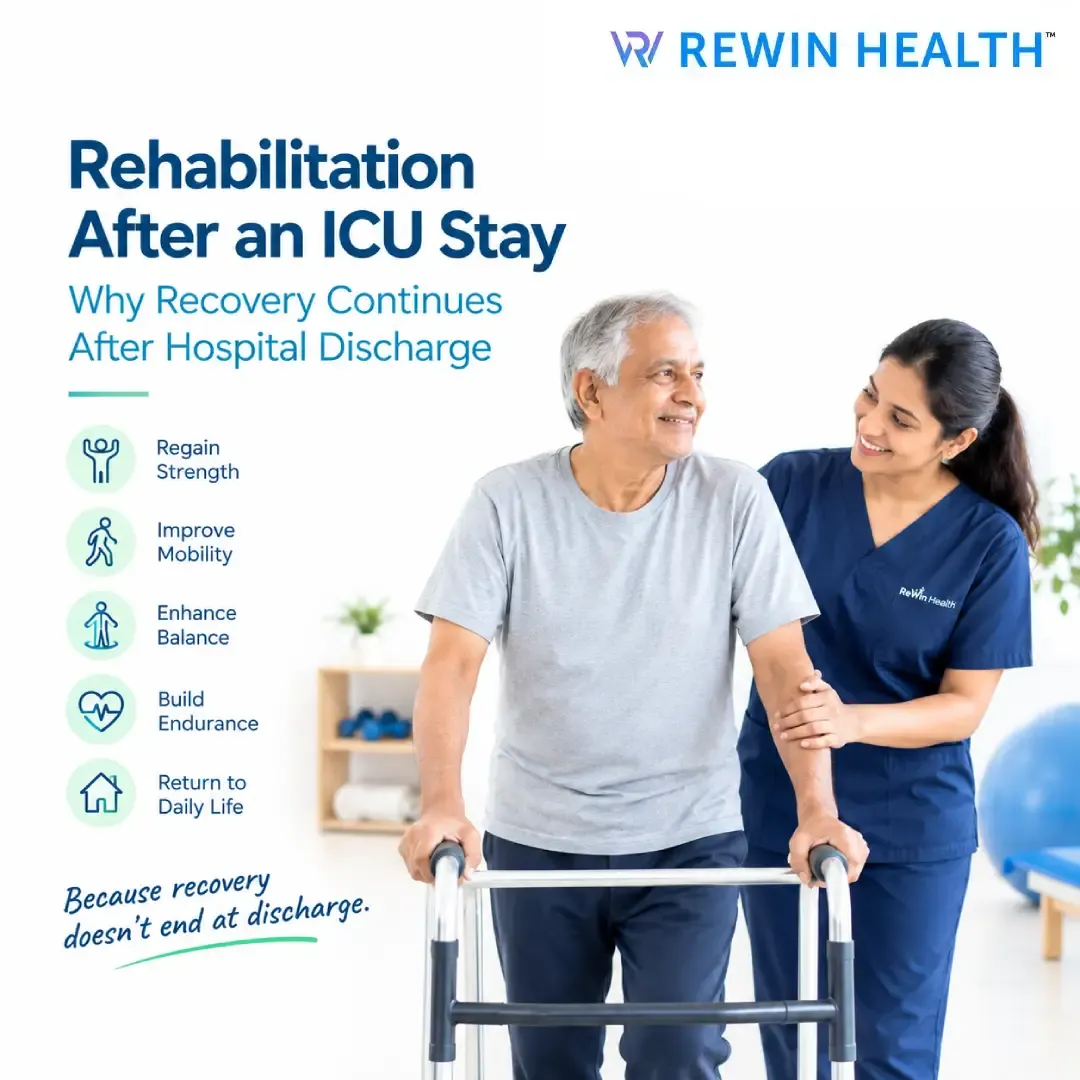
For older adults, recovering from major surgery can involve much more than allowing the surgical site to heal. After a hospital stay or prolonged period of rest, an elderly person may experience reduced muscle strength, difficulty walking, poor balance, fatigue, stiffness and fear of falling.
Simple activities that once felt routine — getting out of bed, standing from a chair, walking to the bathroom, climbing stairs or getting dressed — may suddenly require assistance.
This is where geriatric post-surgical rehabilitation becomes an important part of the recovery journey.
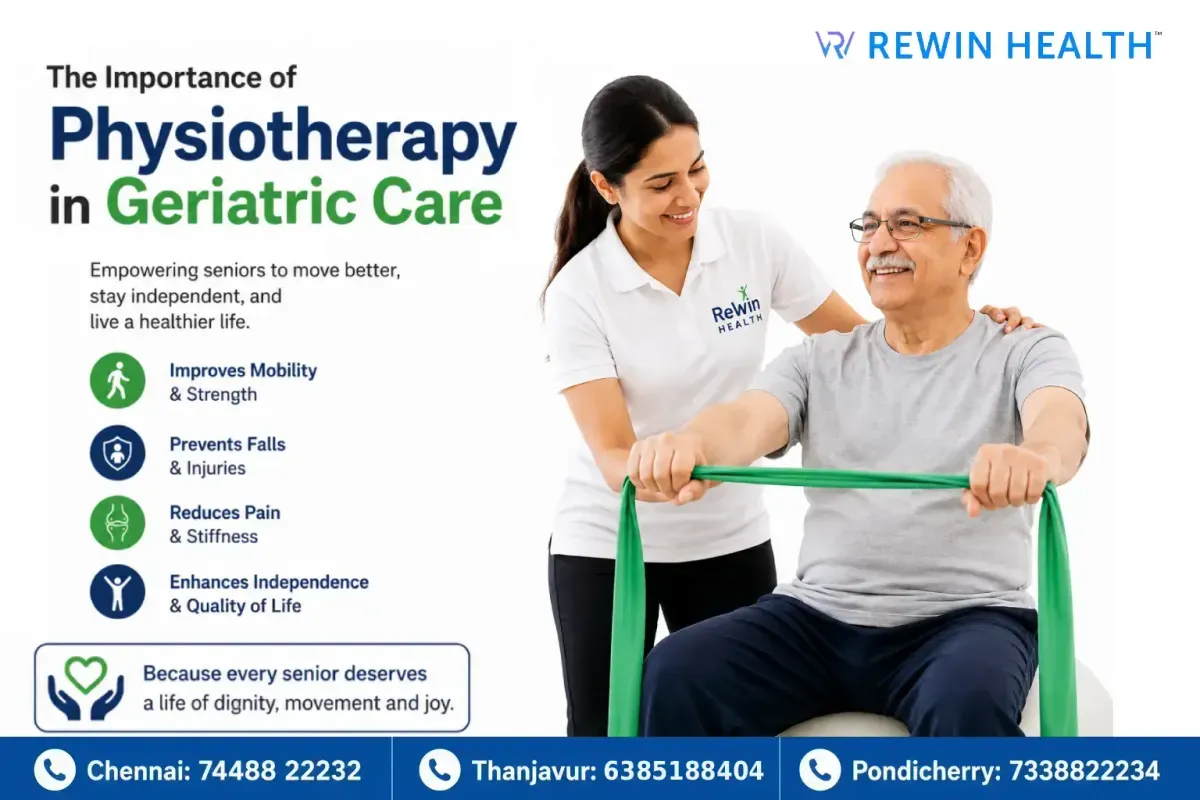
With the right rehabilitation plan, older adults can gradually work on strength, mobility, balance, walking ability and everyday functional skills, helping them move towards greater confidence and independence.
What Happens After Major Surgery in Older Adults?
Recovery can look different for every person. The type of surgery, age, existing health conditions, hospital stay and activity level before surgery can all influence recovery.
After surgery, an older adult may experience:
- Reduced muscle strength
- Difficulty standing or walking
- Reduced balance and coordination
- Stiffness and limited movement
- Increased fatigue
- Fear of falling
- Difficulty performing daily activities
- Greater dependence on family members or caregivers
For some seniors, even a short period of reduced activity can make everyday movement more difficult.
The goal of rehabilitation is not simply to make the person exercise. It is to help them rebuild the physical abilities needed for everyday life.
Why Is Rehabilitation Important After Surgery?
Healing and functional recovery are not always the same thing.
A surgical procedure may address the underlying medical problem, but an older adult may still need to rebuild the ability to move safely and perform daily activities.
For example, someone who was walking independently before surgery may temporarily need assistance after surgery. They may have enough healing to leave the hospital but still lack the strength or confidence to move around safely at home.
Post-operative rehabilitation helps bridge this gap between medical recovery and functional independence.
Depending on the person’s condition and surgical procedure, rehabilitation may focus on:
1. Strength Recovery
Reduced activity can contribute to muscle weakness. Rehabilitation can include appropriate strengthening exercises to help rebuild the muscles needed for standing, walking and daily movement.
2. Walking Retraining
An older adult may change the way they walk after surgery because of weakness, pain, stiffness or fear.
Walking retraining focuses on improving movement patterns and helping the person gradually become more confident with mobility.
3. Balance Training
Balance can be affected by weakness, reduced activity and changes in mobility.
Appropriate balance exercises can help an older adult improve stability during everyday movements such as standing, turning and walking.
4. Fall-Risk Reduction
Fear of falling can sometimes lead older adults to become less active, which can further reduce strength and confidence.
A rehabilitation programme can work on strength, balance, walking and functional movement to support safer mobility.
5. Functional Independence
The ultimate goal is not simply completing exercises inside a rehabilitation centre.
It is being able to do more of everyday life.
This may include:
- Getting in and out of a chair
- Walking safely around the home
- Using stairs
- Getting dressed
- Moving between rooms
- Going outside
- Participating in family activities
- Managing daily routines with less assistance
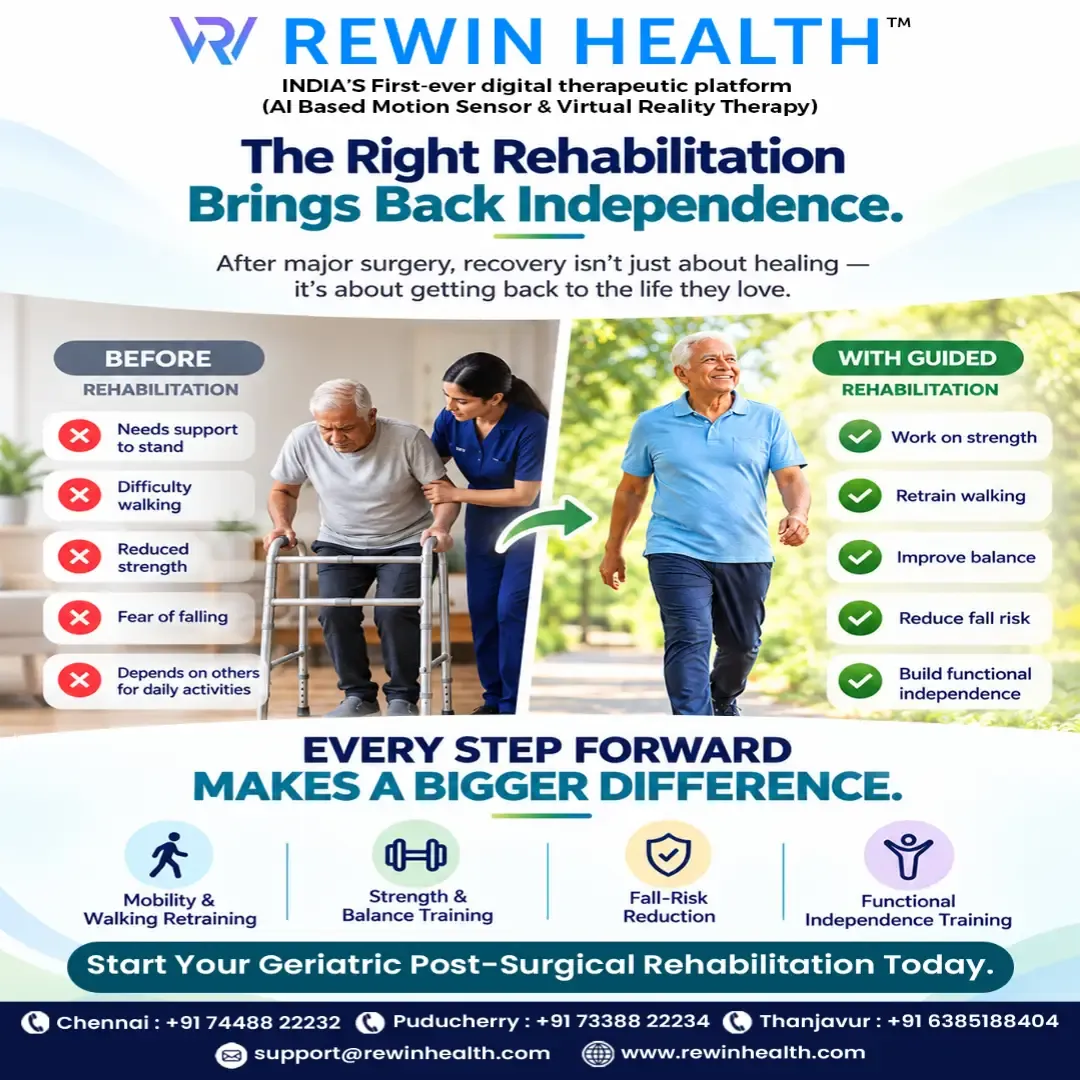
From Dependence to Independence: What Rehabilitation Can Work Towards
The recovery journey may begin with:
“I need help to stand.”
Then gradually move towards:
“I can stand with more confidence.”
From:
“I am afraid to walk.”
Towards:
“I can walk more safely.”
From:
“I need someone to help me with everything.”
Towards:
“I can do more for myself.”
This is why geriatric rehabilitation should be viewed as more than exercise.
It is about helping an older adult regain the ability and confidence to participate in everyday life.
What Does Geriatric Post-Surgical Rehabilitation Include?
A rehabilitation programme should be based on the individual’s condition, surgery, current abilities and functional goals.
A physiotherapist may assess areas such as:
- Strength
- Range of movement
- Balance
- Walking ability
- Transfers and functional mobility
- Endurance
- Pain or movement limitations
- Ability to perform everyday activities
- Fall risk
Based on the assessment, rehabilitation may include a combination of mobility training, strengthening, balance exercises, walking retraining and functional activity training.
The programme can then progress as the person’s abilities improve.
The Role of Family and Caregivers
Recovery does not happen only during a rehabilitation session.
For an older adult recovering from surgery, family members and caregivers can play an important role in creating a safe environment and supporting appropriate movement and activity.
However, caregivers should not have to guess what the person can safely do.
A physiotherapist can guide the family on appropriate activities, mobility support and progression based on the individual’s rehabilitation needs.
The aim should be to provide the right amount of support without unnecessarily taking away the person’s opportunity to do things independently.
When Should Post-Surgical Rehabilitation Begin?
The appropriate timing depends on the type of surgery, medical condition and the treating medical team’s advice.
In many cases, movement and rehabilitation are introduced progressively rather than waiting until the person feels completely recovered.
Early professional assessment can help identify mobility limitations and create an appropriate recovery plan.
The right time to begin rehabilitation should always be determined based on the individual’s medical status and surgical recovery.
Rehabilitation Is About More Than Getting Stronger
For an older adult, being stronger is valuable — but the bigger goal is what that strength allows them to do.
Strength can help with standing.
Balance can support safer walking.
Mobility can make daily activities easier.
Confidence can encourage participation.
And together, these can contribute to greater functional independence.
That is the difference between simply recovering from surgery and working towards getting back to everyday life.
How ReWin Health Supports Geriatric Rehabilitation
At ReWin Health, rehabilitation focuses on helping individuals work towards better movement and functional independence through personalised physiotherapy.
For older adults recovering after surgery, rehabilitation can focus on areas such as:
Mobility & Walking Retraining
Helping improve walking ability and movement confidence.
Strength & Balance Training
Working on the physical abilities required for safer everyday movement.
Fall-Risk Reduction
Identifying and addressing movement and balance challenges that may affect safe mobility.
Functional Independence Training
Working towards greater independence in everyday activities.
Every person’s recovery is different. Rehabilitation should therefore be guided by an assessment of the individual’s needs, abilities and recovery goals.
The Goal: Getting Back to Life
For an older adult, successful recovery is not simply about leaving the hospital or healing from surgery.
It can mean being able to stand without fear.
Walking to the next room.
Getting dressed independently.
Going downstairs.
Meeting family.
Returning to a familiar routine.
And gradually doing more without depending on someone for every movement.
Surgery may be the beginning of recovery. Rehabilitation helps turn recovery into everyday independence.
Ready to Begin the Recovery Journey?
Frequently Asked Questions
1. What is geriatric post-surgical rehabilitation?
Geriatric post-surgical rehabilitation is a personalised rehabilitation programme designed to help older adults regain strength, mobility, balance and functional independence after surgery. It may include walking retraining, strengthening, balance exercises and training for everyday activities.
2. Why is rehabilitation important for older adults after surgery?
After surgery, older adults may experience muscle weakness, reduced mobility, stiffness, poor balance and fear of falling. Rehabilitation helps address these challenges and supports a gradual return to safe movement and daily activities.
3. When should an elderly person start rehabilitation after surgery?
The appropriate time depends on the type of surgery, medical condition and the person’s recovery. Rehabilitation may begin progressively once the treating medical team considers movement appropriate. A physiotherapist can assess the individual’s condition and plan the next steps.
4. What does geriatric rehabilitation include?
Depending on the person’s needs, rehabilitation may include strength training, balance exercises, walking retraining, mobility exercises, fall-risk reduction and functional training for everyday activities.
5. Can physiotherapy help an elderly person walk again after surgery?
Physiotherapy can help an older adult work towards improved walking ability by addressing factors such as weakness, balance, mobility and movement confidence. The expected outcome varies depending on the person’s surgery, health and pre-existing conditions.
6. Can rehabilitation reduce the risk of falls after surgery?
Rehabilitation can address factors that contribute to falls, such as reduced strength, balance difficulties and changes in walking. A physiotherapist can assess these factors and develop an appropriate programme to support safer mobility.
7. How can rehabilitation help an elderly person become more independent?
Rehabilitation focuses not only on exercises but also on functional movements needed in everyday life. This may include standing from a chair, walking, using stairs, moving around the home and performing daily activities with less assistance.
8. Does an elderly person need rehabilitation even if the surgery was successful?
A successful surgery does not always mean that strength, balance and mobility have immediately returned to their previous level. Rehabilitation can help address these functional limitations and support the transition from medical recovery to everyday independence.
9. Can family members participate in the rehabilitation process?
Yes. Family members and caregivers can be involved when appropriate. A physiotherapist can guide them on safe support, suitable activities and ways to encourage independence without providing unnecessary assistance.
10. How long does geriatric post-surgical rehabilitation take?
There is no fixed recovery period. It depends on the type of surgery, age, overall health, strength, mobility and individual goals. Progress should be regularly assessed and the rehabilitation programme adjusted accordingly.
11. Is geriatric rehabilitation only for people who cannot walk?
No. Rehabilitation can benefit older adults with different levels of mobility. Even someone who can walk may need support with balance, strength, endurance, stairs or everyday activities after surgery.
12. What is the main goal of geriatric post-surgical rehabilitation?
The goal is to help the older adult move safely, rebuild physical abilities and work towards greater independence in everyday life — not simply to recover from surgery, but to get back to living.
Final Takeaway
If you or a loved one is recovering from major surgery and experiencing difficulty with strength, walking, balance or daily activities, a professional rehabilitation assessment can help identify the next steps.
Start Your Geriatric Post-Surgical Rehabilitation Journey with ReWin Health.
Better Function. Better Life