What are the Best Practices to Care for a Stroke Patient at Home?
Introduction
A stroke can significantly impact a person’s mobility, strength, communication, and ability to perform daily activities. While hospital treatment and professional rehabilitation are essential, recovery continues long after discharge. The support and care provided at home play a crucial role in helping stroke survivors regain independence and improve their quality of life.
Research consistently shows that a combination of structured rehabilitation, family support, safe home environments, and healthy lifestyle habits can contribute to better recovery outcomes. Understanding how to care for a stroke patient at home can make a meaningful difference in their physical, emotional, and cognitive recovery journey.
This comprehensive guide outlines evidence-based best practices for stroke home care and explains how advanced neuro rehabilitation can support long-term recovery.
Understanding Stroke Recovery
Every stroke survivor’s recovery journey is unique. Recovery depends on several factors, including:
Severity and location of the stroke
Time taken to receive medical treatment
Age and overall health
Consistency of rehabilitation
Family and caregiver support
Recovery may involve improving:
Walking and mobility
Hand and arm function
Balance and coordination
Speech and communication
Cognitive abilities
Daily living activities
The brain has an incredible ability called neuroplasticity, which allows it to reorganize and form new neural connections. Consistent rehabilitation and practice help stimulate this process, making ongoing recovery possible.
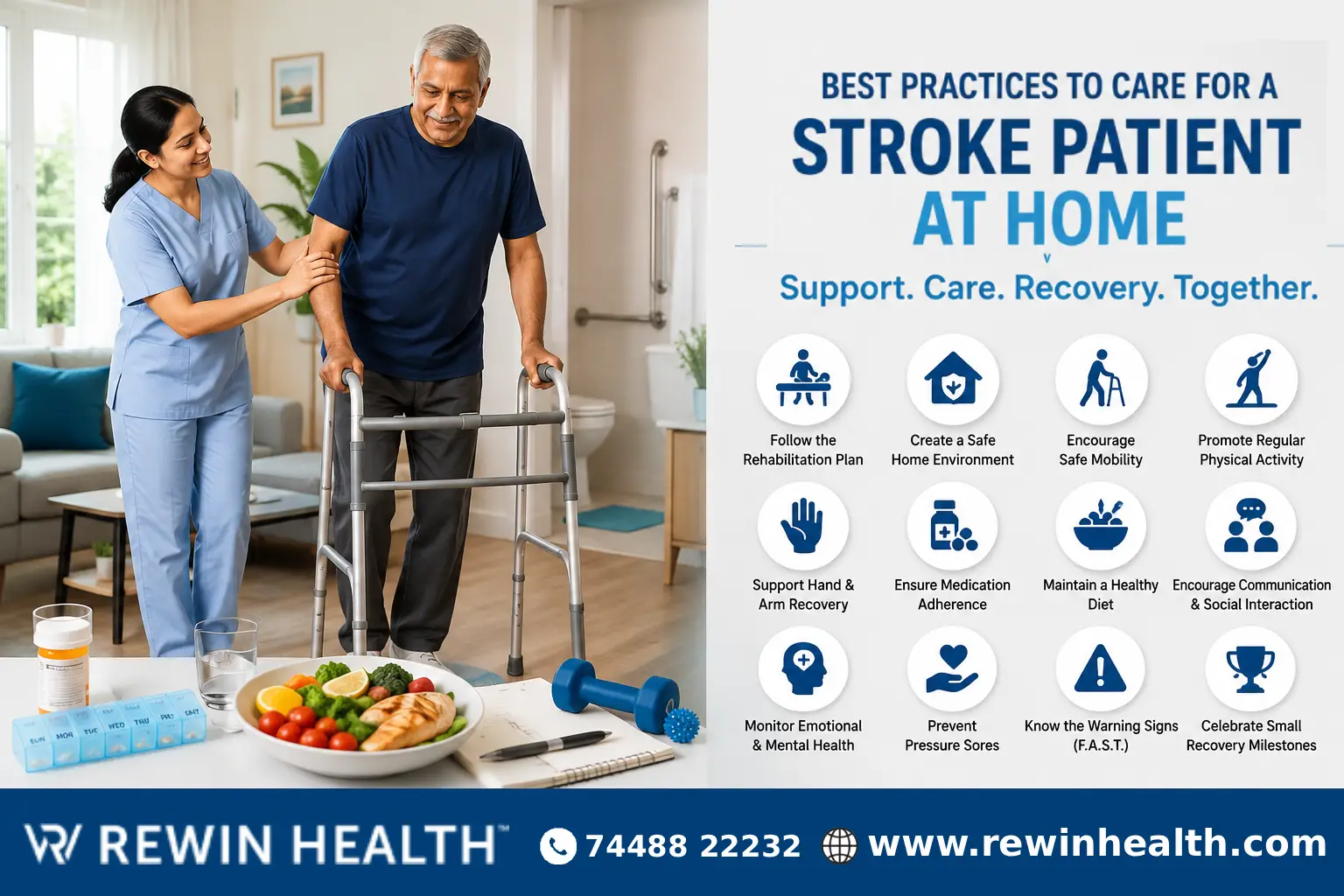
1. Follow the Rehabilitation Plan Consistently
One of the most important aspects of stroke recovery is adhering to the rehabilitation program prescribed by healthcare professionals.
This may include:
Physiotherapy exercises
Occupational therapy activities
Balance training
Strengthening exercises
Speech therapy sessions
Regular practice helps improve:
Muscle strength
Mobility
Coordination
Functional independence
Skipping therapy sessions or exercises can slow recovery progress. Caregivers should encourage and support patients in completing their recommended rehabilitation activities every day.
2. Create a Safe Home Environment
Falls are a common concern among stroke survivors due to weakness, balance problems, or impaired coordination.
To improve safety at home:
Remove loose rugs and floor obstacles
Keep walkways clutter-free
Install grab bars in bathrooms
Use non-slip mats
Ensure proper lighting throughout the home
Arrange furniture to allow easy movement
Keep frequently used items within reach
A safe environment reduces injury risk and helps patients move more confidently.
3. Encourage Safe Mobility
Many stroke survivors experience difficulty walking or transferring between beds, chairs, and bathrooms.
Caregivers should:
Follow therapist recommendations for mobility assistance
Use prescribed mobility aids such as walkers or canes
Encourage movement while ensuring safety
Avoid pulling on the affected arm during transfers
Proper mobility support helps prevent falls while promoting independence.
4. Promote Regular Physical Activity
Physical inactivity can lead to muscle stiffness, weakness, reduced circulation, and secondary complications.
Depending on the patient’s condition, daily activity may include:
Walking practice
Range-of-motion exercises
Seated exercises
Balance training
Gentle stretching
Benefits of regular physical activity include:
Improved circulation
Better muscle strength
Enhanced balance
Reduced stiffness
Improved cardiovascular health
Always consult rehabilitation professionals before starting new exercise routines.
5. Support Hand and Arm Recovery
Hand and arm weakness is one of the most common challenges after stroke.
Recovery can be encouraged through functional activities such as:
Reaching for objects
Picking up household items
Holding cups or utensils
Opening containers
Folding towels
Practicing grip exercises
Repetitive task-oriented practice helps stimulate brain pathways involved in movement recovery.
Advanced rehabilitation technologies, including virtual reality (VR)-based therapy and gamified exercises, can further enhance engagement and motor recovery.
6. Ensure Medication Adherence
Stroke survivors are often prescribed medications to prevent complications and reduce the risk of recurrent stroke.
Common medications may help manage:
High blood pressure
Diabetes
Cholesterol levels
Blood clot prevention
Caregivers should:
Maintain a medication schedule
Use pill organizers if necessary
Monitor for side effects
Attend follow-up appointments
Never stop medications without consulting a healthcare professional.
7. Maintain a Healthy and Balanced Diet
Nutrition plays a critical role in stroke recovery and long-term health.
A stroke-friendly diet should include:
Fruits and Vegetables
Rich in vitamins, minerals, and antioxidants that support overall health.
Whole Grains
Provide sustained energy and support heart health.
Lean Proteins
Help maintain muscle strength and aid tissue repair.
Healthy Fats
Sources such as nuts, seeds, and fish support cardiovascular health.
Adequate Hydration
Proper hydration helps maintain circulation and overall bodily function.
Patients should limit:
Excess salt
Processed foods
Sugary beverages
Saturated and trans fats
Healthy eating also helps manage stroke risk factors such as hypertension, diabetes, and obesity.
8. Encourage Communication and Social Interaction
Many stroke survivors experience communication difficulties, including aphasia, speech impairment, or cognitive challenges.
Caregivers can help by:
Speaking slowly and clearly
Allowing extra time for responses
Using simple sentences
Encouraging conversation
Engaging in family activities
Social interaction can improve emotional well-being and help prevent feelings of isolation.
9. Monitor Emotional and Mental Health
Emotional recovery is just as important as physical recovery.
Many stroke survivors may experience:
Depression
Anxiety
Frustration
Mood swings
Reduced confidence
Signs that professional support may be needed include:
Persistent sadness
Loss of interest in activities
Social withdrawal
Sleep disturbances
Family encouragement, counseling, and rehabilitation support can significantly improve emotional well-being.
10. Prevent Pressure Sores
Patients with limited mobility are at increased risk of pressure ulcers (bed sores).
To reduce this risk:
Reposition regularly
Use pressure-relieving cushions
Keep skin clean and dry
Inspect skin daily
Maintain proper nutrition and hydration
Early prevention helps avoid painful complications and hospital re admissions.
11. Know the Warning Signs of Another Stroke
Stroke survivors remain at risk for future strokes, making awareness of warning signs essential.
Remember the F.A.S.T. acronym:
F – Face Drooping
One side of the face appears uneven.
A – Arm Weakness
Difficulty raising one arm.
S – Speech Difficulty
Slurred speech or inability to speak clearly.
T – Time to Call Emergency Services
Immediate medical attention is critical.
Quick action can save brain cells and improve recovery outcomes.
12. Celebrate Small Recovery Milestones
Stroke recovery is often gradual. Progress may occur over weeks, months, or even years.
Celebrate achievements such as:
Standing independently
Walking short distances
Improving hand function
Completing daily activities
Better speech and communication
Recognizing progress helps maintain motivation and confidence throughout the recovery journey.
How Advanced Neuro Rehabilitation Supports Stroke Recovery
While home care provides a strong foundation, structured rehabilitation remains one of the most effective ways to maximize recovery potential.
Modern neuro rehabilitation programs focus on:
✅ Walking and gait training
✅ Balance and coordination improvement
✅ Hand and arm function recovery
✅ Strength and endurance development
✅ Functional independence training
✅ Cognitive and motor skill enhancement
Advanced approaches such as VR-based rehabilitation, task-specific training, and gamified therapy help increase patient engagement while promoting neuroplasticity and functional recovery.
At ReWin Health, our specialized neuro rehabilitation programs combine expert clinical care, advanced technology, virtual reality therapy, and personalized treatment plans to support stroke survivors throughout their recovery journey
Conclusion
Caring for a stroke patient at home requires patience, consistency, and a supportive environment. By following rehabilitation plans, ensuring home safety, promoting physical activity, supporting emotional well-being, and recognizing warning signs early, caregivers can significantly contribute to successful recovery.
Remember that recovery does not end after hospital discharge. With ongoing rehabilitation, family support, and the right care strategies, stroke survivors can continue making meaningful progress toward greater independence and a better quality of life.
If you or a loved one is recovering from a stroke, seeking professional neuro rehabilitation alongside home care can help unlock the fullest recovery potential and improve long-term outcomes.
About
Making Rehabilitation affordable, Accessible & Patient Centric for 2 Billion People