Why Rehabilitation Necessary After a Prolonged Hospital or ICU Stay?
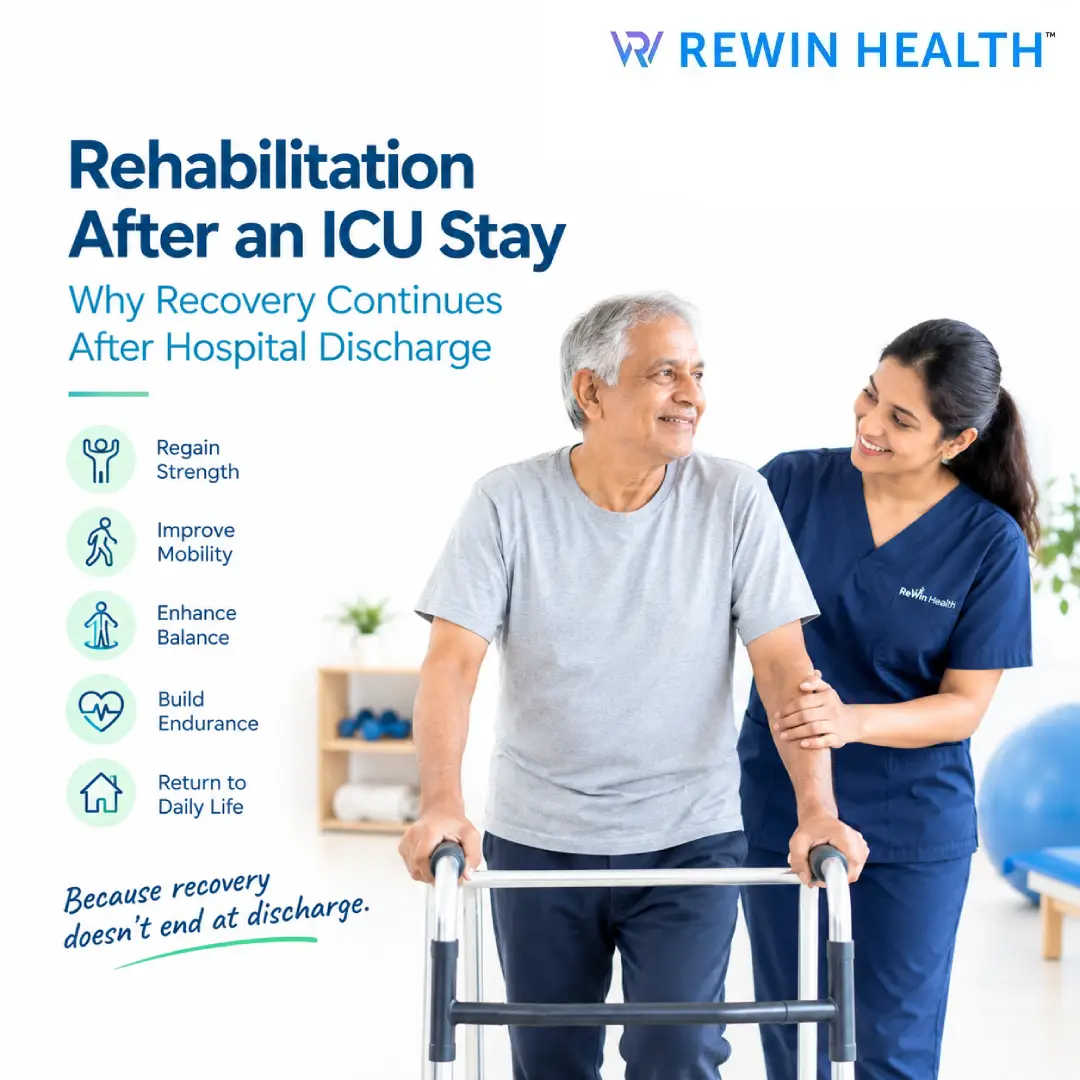
Rehabilitation After an ICU Stay
Coming home after a prolonged hospital or ICU stay can feel like a major milestone. But for many patients and families, discharge is not the end of recovery. It is the beginning of a different phase.
After spending days or weeks in bed, patients may experience muscle weakness, reduced stamina, difficulty walking, poor balance, stiffness, fatigue and increased dependence on family members.
These changes can make simple activities such as getting out of bed, standing, walking to the bathroom or dressing independently feel unexpectedly difficult.
This is where structured rehabilitation and physiotherapy can play an important role.
What Happens to the Body After a Prolonged Hospital or ICU Stay?
During a long hospital stay, physical activity is often significantly reduced. In the ICU, patients may spend extended periods in bed because of illness, medical treatment or the need for close monitoring.
As a result, the body may lose strength and physical capacity.
Some patients may experience:
- Muscle weakness
- Difficulty standing or walking
- Reduced balance and coordination
- Joint stiffness
- Reduced endurance
- Fatigue during everyday activities
- Difficulty transferring from bed to chair
- Increased dependence on caregivers
- Reduced confidence while moving
The extent of these difficulties can vary depending on the patient’s illness, length of hospitalisation, age, pre-existing conditions and overall health.
Why Does Weakness Happen After an ICU Stay?
One of the major reasons is prolonged inactivity.
When muscles are not used regularly, they can become weaker. Patients recovering from serious illness may also have reduced endurance and difficulty tolerating physical activity.
For some patients, the recovery process may therefore continue for weeks or months after leaving the hospital.
This is why post ICU recovery should not be viewed simply as returning home. It can involve gradually rebuilding movement, strength, balance and functional independence.
Common Signs That a Patient May Need Rehabilitation After Hospital Discharge
Families may notice that a patient:
- Needs help getting out of bed
- Struggles to stand for long
- Has difficulty walking
- Uses support while walking
- Gets tired quickly
- Finds stairs difficult
- Has trouble performing daily activities
- Avoids movement because of fear or weakness
- Depends more heavily on family members
These signs do not necessarily mean that recovery is not happening.
They may indicate that the patient needs a structured approach to rebuilding physical function.
What Is Physiotherapy After Hospital Discharge?
Physiotherapy after hospital discharge focuses on helping patients gradually regain physical function according to their individual condition and tolerance.
A physiotherapist may assess areas such as:
- Muscle strength
- Joint movement
- Balance
- Walking ability
- Functional mobility
- Endurance
- Transfers and positioning
- Ability to perform daily activities
Based on the assessment, a rehabilitation programme can be developed around the patient’s current abilities and recovery goals.
The aim is not simply to exercise.
The focus is on helping the patient safely work towards better movement, greater independence and improved participation in everyday activities.
How Can Physiotherapy Help After an ICU Stay?
A personalised rehabilitation programme may include different components depending on the patient’s needs.
1. Regaining Muscle Strength
After prolonged inactivity, strengthening exercises can help patients gradually rebuild their physical capacity.
Exercises are progressed according to the individual’s ability rather than following a one-size-fits-all routine.
2. Improving Mobility
Patients may initially struggle with basic movements such as turning in bed, sitting, standing or walking.
Physiotherapy can focus on progressing these movements step by step.
3. Improving Balance
Weakness and reduced activity can affect balance.
Balance-focused rehabilitation can help patients work towards safer movement and greater confidence during everyday activities.
4. Building Endurance
Some patients become tired after even a short period of activity.
A gradual rehabilitation programme can help improve tolerance for physical activity while considering the patient’s condition and recovery stage.
5. Working Towards Functional Independence
Recovery is not only about muscle strength.
Being able to stand from a chair, walk to the bathroom, dress, move around the home or perform other daily activities can be important milestones.
Functional rehabilitation focuses on these real-life movements.

Physiotherapy for Bedridden Patients
Patients who have spent a long time in bed may require a gradual transition back to movement.
Physiotherapy for bedridden patients may involve positioning, assisted movements, mobility exercises, strengthening, sitting tolerance and progressive functional activities, depending on the individual’s medical condition.
The rehabilitation plan should be determined after an appropriate assessment, particularly for patients who have recently experienced serious illness.
When Should Rehabilitation Begin After Hospital Discharge?
There is no single timeline that applies to every patient.
The appropriate time to begin and the intensity of rehabilitation depend on the patient’s medical condition, stability, diagnosis and discharge recommendations.
For some patients, rehabilitation may begin while they are still in the hospital. For others, structured physiotherapy continues after discharge through outpatient or home-based care.
The important point is that recovery should be actively supported rather than assuming that strength and mobility will automatically return with time.
Home Physiotherapy or Clinic-Based Rehabilitation?
The right setting depends on the patient’s mobility, medical needs and rehabilitation goals.
Home Physiotherapy
Home-based physiotherapy may be useful when a patient:
- Has difficulty travelling
- Is largely dependent on caregivers
- Is unable to walk safely outside the home
- Needs rehabilitation within their everyday environment
Clinic-Based Physiotherapy
Clinic-based rehabilitation may be appropriate when the patient can travel safely and would benefit from access to structured rehabilitation equipment, supervised exercises and progressive therapy.
At ReWin Health, rehabilitation can be planned according to the patient’s condition, functional limitations and recovery goals.
What Does Recovery After a Prolonged Hospital Stay Look Like?
Recovery is rarely a straight line.
A patient may first work towards sitting independently, then standing, followed by assisted walking and eventually greater independence in everyday activities.
Progress can be different for every individual.
Rather than focusing only on how quickly a patient recovers, rehabilitation should focus on measurable functional improvements and meaningful everyday goals.
Small improvements can matter:
Standing for longer.
Taking a few more steps.
Getting out of bed with less assistance.
Moving more confidently.
Doing more independently.
These can all be meaningful parts of recovery.
How ReWin Health Supports Post-Hospital Rehabilitation
At ReWin Health, physiotherapy and rehabilitation are designed around the individual’s functional needs.
Our approach can combine:
Personalised Physiotherapy
Therapy planned according to the patient’s condition, abilities and goals.
Neuro Rehabilitation
For patients recovering from neurological conditions that affect movement and function.
Functional Rehabilitation
Focused on improving the movements and activities patients need in everyday life.
AI & VR-Supported Rehabilitation
Technology-supported therapy can be incorporated where clinically appropriate to make rehabilitation more interactive and measurable.
Home Physiotherapy
For patients who may have difficulty travelling to a rehabilitation centre.
The goal is simple:
Better movement. Greater independence. Better quality of life.
When Should You Consider a Physiotherapy Assessment?
Consider discussing rehabilitation with a physiotherapist if a patient continues to experience significant weakness, mobility difficulties, balance problems, reduced endurance or increased dependence after hospital discharge.
An assessment can help identify the patient’s current functional limitations and determine what type of rehabilitation may be appropriate.
If the patient has ongoing medical concerns or has recently been discharged following a serious illness, rehabilitation should be coordinated with the treating medical team where appropriate.
Frequently Asked Questions
How long does it take to recover from an ICU stay?
Recovery varies significantly from person to person. The duration can depend on the severity of the illness, length of ICU stay, physical condition before hospitalisation and other medical factors.
Is weakness normal after an ICU stay?
Weakness and reduced physical capacity can occur after prolonged hospitalisation and critical illness. However, persistent or significant weakness should be discussed with a healthcare professional.
Can physiotherapy help with weakness after ICU?
Physiotherapy can help address areas such as strength, mobility, balance, endurance and functional independence, depending on the patient’s condition.
Is physiotherapy necessary after hospital discharge?
Not every patient requires the same level of rehabilitation. An individual assessment can help determine whether physiotherapy or another form of rehabilitation would be beneficial.
Can bedridden patients receive physiotherapy at home?
Yes. Home physiotherapy may be an option for patients who have difficulty travelling to a clinic, subject to an appropriate assessment and the patient’s medical condition.
How can I find physiotherapy after hospital discharge in Chennai?
Patients and families looking for physiotherapy in Chennai, home physiotherapy in Chennai or neuro rehabilitation in Chennai can consider a rehabilitation provider based on the patient’s condition, therapist expertise, accessibility and individual rehabilitation needs.
Take the Next Step After Hospital Discharge
Leaving the hospital is an important milestone.
But for many patients, the next phase is rebuilding strength, movement and independence.
If you or your family member is experiencing weakness or difficulty moving after a prolonged hospital or ICU stay, a personalised physiotherapy assessment can help identify the next steps.
ReWin Health
Personalised Physiotherapy | Neuro Rehabilitation | Functional Recovery | AI & VR-Supported Rehabilitation
Clinic Care & Home Care Available
Book a Physiotherapy Assessment with ReWin Health.
About
Making Rehabilitation affordable, Accessible & Patient Centric for 2 Billion People