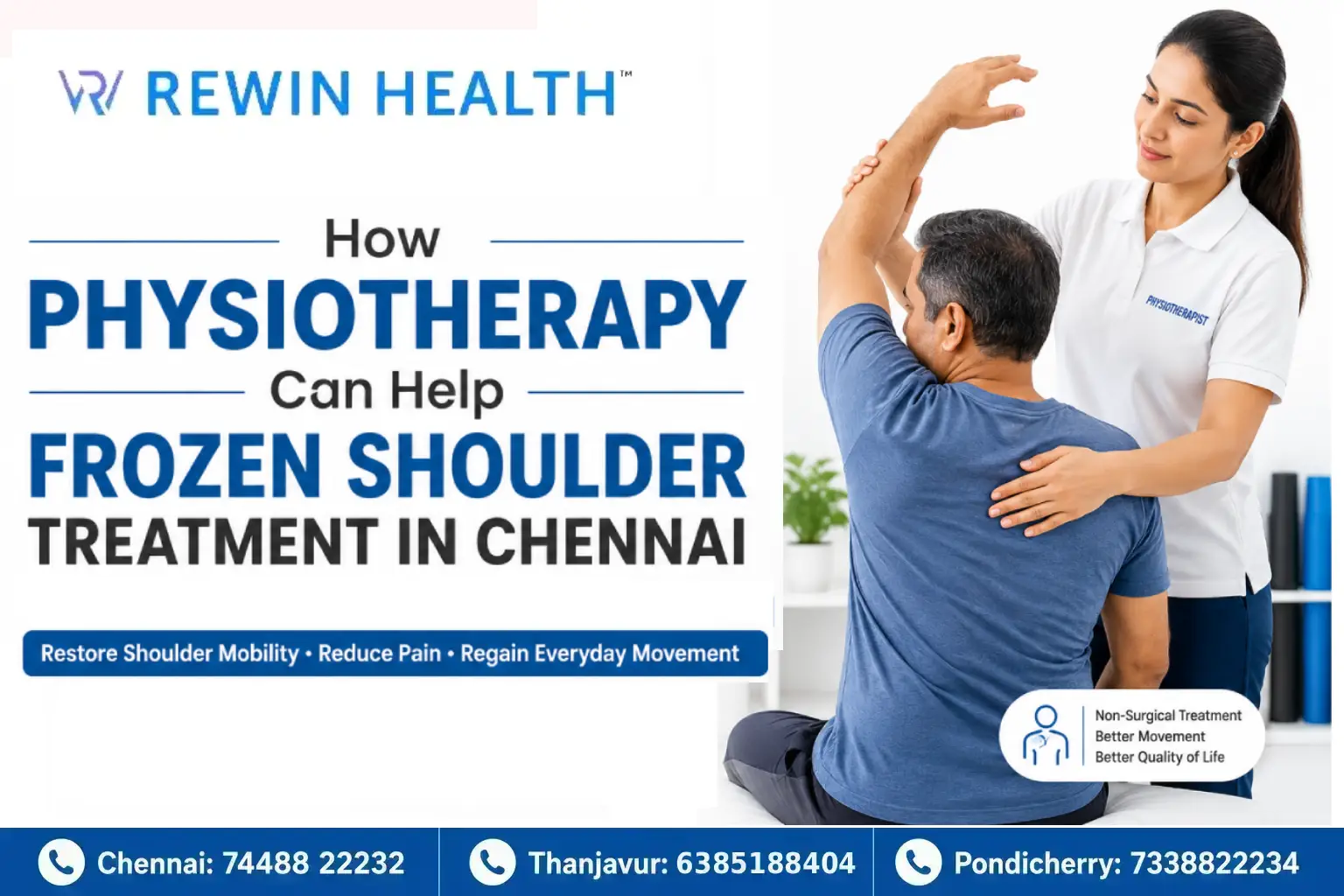
How Physiotherapy Can Help Frozen Shoulder Treatment in Chennai
Frozen Shoulder Treatment
Shoulder pain that refuses to go away can make even the simplest daily activities challenging. If you’ve noticed increasing stiffness, difficulty lifting your arm, or pain while dressing, reaching overhead, or sleeping on one side, you may be experiencing Frozen Shoulder, medically known as Adhesive Capsulitis.
Frozen shoulder is more than ordinary shoulder pain. It is a condition where the connective tissue (capsule) surrounding the shoulder joint becomes inflamed, thickened, and tight, leading to restricted movement and persistent pain. Left untreated, it can significantly affect your independence and quality of life.
The good news is that most people recover without surgery when they receive early diagnosis and appropriate physiotherapy. In this guide, you’ll learn everything you need to know about frozen shoulder, including its causes, symptoms, stages, treatment options, recovery timeline, and how physiotherapy plays a key role in restoring movement
What Is Frozen Shoulder?
Frozen shoulder, or Adhesive Capsulitis, is a condition in which the capsule surrounding the shoulder joint becomes inflamed and gradually tightens. Scar tissue may develop, reducing the amount of space inside the joint and making shoulder movement painful and difficult.
Unlike a muscle strain or temporary injury, frozen shoulder develops gradually over weeks or months and can worsen if not treated early.
People with frozen shoulder often find everyday tasks difficult, such as:
Lifting the arm overhead
Combing or washing hair
Wearing or removing clothes
Reaching behind the back
Driving
Sleeping comfortably on the affected side
The condition usually affects one shoulder, although in some cases it can develop in both shoulders over time.
What Causes Frozen Shoulder?
The exact cause of frozen shoulder is not always clear. However, it usually occurs when inflammation causes the shoulder capsule to thicken and tighten.
Several factors increase the risk of developing frozen shoulder.
1. Diabetes
People with diabetes are significantly more likely to develop frozen shoulder than the general population. High blood sugar levels can affect connective tissues, increasing stiffness and inflammation.
2. Shoulder Injury
After fractures, rotator cuff injuries, or shoulder trauma, reduced movement during recovery may contribute to frozen shoulder.
3. Surgery
Patients recovering from shoulder surgery, breast surgery, or other upper-body procedures may experience prolonged shoulder immobility, increasing the risk.
4. Prolonged Immobilization
Keeping the shoulder still for an extended period due to injury, illness, or pain can lead to tightening of the joint capsule.
5. Age
Frozen shoulder is most common between 40 and 60 years of age.
6. Hormonal and Medical Conditions
Certain health conditions can increase the likelihood of frozen shoulder, including:
Thyroid disorders
Parkinson’s disease
Stroke
Heart disease
What Are the Symptoms of Frozen Shoulder?
Symptoms usually develop slowly and progress through different stages.
Common symptoms include:
Persistent shoulder pain
Increasing stiffness
Difficulty lifting the arm
Pain while sleeping
Limited range of motion
Difficulty reaching behind the back
Pain during daily activities
Reduced shoulder flexibility
Unlike temporary muscle soreness, frozen shoulder symptoms continue to worsen if left untreated.
The Three Stages of Frozen Shoulder
Stage 1: Freezing Stage
This is the painful stage.
Symptoms include:
Increasing shoulder pain
Gradual loss of movement
Pain at night
Difficulty performing daily activities
This phase can last several weeks to months.
Stage 2: Frozen Stage
Pain may reduce slightly, but stiffness becomes much worse.
Patients often struggle with:
Dressing
Grooming
Driving
Cooking
Reaching overhead
The shoulder becomes increasingly restricted
Stage 3: Thawing Stage
Movement slowly begins to return.
With proper physiotherapy and rehabilitation, patients gradually regain strength, flexibility, and function.
Recovery can take several months depending on the severity of the condition and how early treatment began.
How Is Frozen Shoulder Diagnosed?
A healthcare professional diagnoses frozen shoulder through:
Medical history
Physical examination
Assessment of shoulder movement
Comparison of active and passive range of motion
In some cases, imaging such as X-rays or MRI scans may be recommended to rule out other shoulder conditions like arthritis or rotator cuff tears.
Can Frozen Shoulder Be Treated Without Surgery?
Yes. Most cases of frozen shoulder improve without surgery through conservative treatment, especially when started early.
The goals of treatment are to:
Reduce pain
Improve flexibility
Restore shoulder movement
Strengthen surrounding muscles
Prevent long-term stiffness
Physiotherapy: The Gold Standard for Frozen Shoulder Recovery
Physiotherapy is one of the most effective treatments for frozen shoulder because it addresses both pain and movement limitations.
A personalized physiotherapy program may include:
Gentle Stretching Exercises
Controlled stretching helps improve shoulder flexibility and gradually increases range of motion.
Joint Mobilization
Hands-on techniques performed by a physiotherapist can help improve joint mobility and reduce stiffness.
Strengthening Exercises
Once movement improves, strengthening exercises help restore shoulder stability and function.
Pain Management
Treatment may include heat therapy, cold therapy, therapeutic modalities, and manual techniques to reduce pain and muscle tension.
Functional Training
Patients practice everyday movements such as reaching, lifting, dressing, and overhead activities to regain independence.
Consistency is essential. Regular physiotherapy sessions combined with a home exercise program often produce the best outcomes
Advanced Rehabilitation for Better Recovery
Modern rehabilitation has introduced technologies that can enhance patient engagement and monitor progress.
At ReWin Health, rehabilitation programs may include advanced technologies such as:
AI-assisted rehabilitation
Motion tracking for movement analysis
Virtual Reality (VR)-based therapeutic exercises (where clinically appropriate)
Personalized digital progress monitoring
These tools are used alongside evidence-based physiotherapy to support recovery and improve treatment adherence.
Can Frozen Shoulder Heal on Its Own?
Some people experience gradual improvement over time, but relying on natural recovery alone may mean living with pain and restricted movement for months or even years.
Without appropriate treatment:
Shoulder stiffness can worsen.
Muscles may weaken due to lack of use.
Daily activities become increasingly difficult.
Recovery may take much longer.
Early physiotherapy can help reduce pain, improve mobility, and support a faster return to normal activities.
Tips to Prevent Frozen Shoulder
While not all cases can be prevented, you can reduce your risk by:
Keeping your shoulder active after an injury (as advised by your healthcare provider)
Following rehabilitation plans after surgery
Managing diabetes effectively
Maintaining good posture
Performing regular shoulder mobility exercises
Seeking medical advice if shoulder pain persists for more than a few weeks
Early attention to shoulder stiffness can prevent progression to more severe stages.
Why Choose ReWin Health for Frozen Shoulder Rehabilitation?
At ReWin Health, we provide personalized, evidence-based physiotherapy programs designed to help patients recover safely and effectively from frozen shoulder.
Our rehabilitation approach includes:
Comprehensive shoulder assessment
Individualized treatment plans
Manual therapy and therapeutic exercises
Pain management strategies
Progressive strengthening and mobility training
AI-assisted and technology-enabled rehabilitation where appropriate
Guidance on home exercises and long-term shoulder care
Our goal is to restore movement, reduce pain, and help patients return to their daily activities with confidence.

Frequently Asked Questions
1. What is frozen shoulder?
Frozen shoulder, also called adhesive capsulitis, is a condition where the shoulder joint capsule becomes inflamed and stiff, causing pain and limited movement.
2. What causes frozen shoulder?
Common causes include diabetes, shoulder injuries, surgery, prolonged immobilization, thyroid disorders, and age-related changes.
3. Can frozen shoulder be treated without surgery?
Yes. Most patients recover with physiotherapy, stretching exercises, pain management, and rehabilitation without needing surgery.
4. How long does frozen shoulder take to recover?
Recovery varies from person to person. Many patients improve over several months with consistent physiotherapy and home exercises.
5. Is frozen shoulder more common in people with diabetes?
Yes. People with diabetes have a higher risk of developing frozen shoulder and may experience a longer recovery period.
6. When should I see a physiotherapist for shoulder pain?
If shoulder pain and stiffness persist for more than a few weeks or begin limiting daily activities, it is advisable to seek a professional assessment promptly.
Conclusion
Frozen shoulder can make everyday tasks frustrating and painful, but it is a treatable condition. Understanding the causes, recognizing the early symptoms, and seeking timely physiotherapy are essential for achieving the best recovery.
Most people can regain shoulder function without surgery through a structured rehabilitation program that combines pain management, stretching, strengthening, and functional training.
If you’re experiencing persistent shoulder pain or stiffness, don’t ignore it. Early intervention can make a significant difference in your recovery journey.
About
Making Rehabilitation affordable, Accessible & Patient Centric for 2 Billion People