


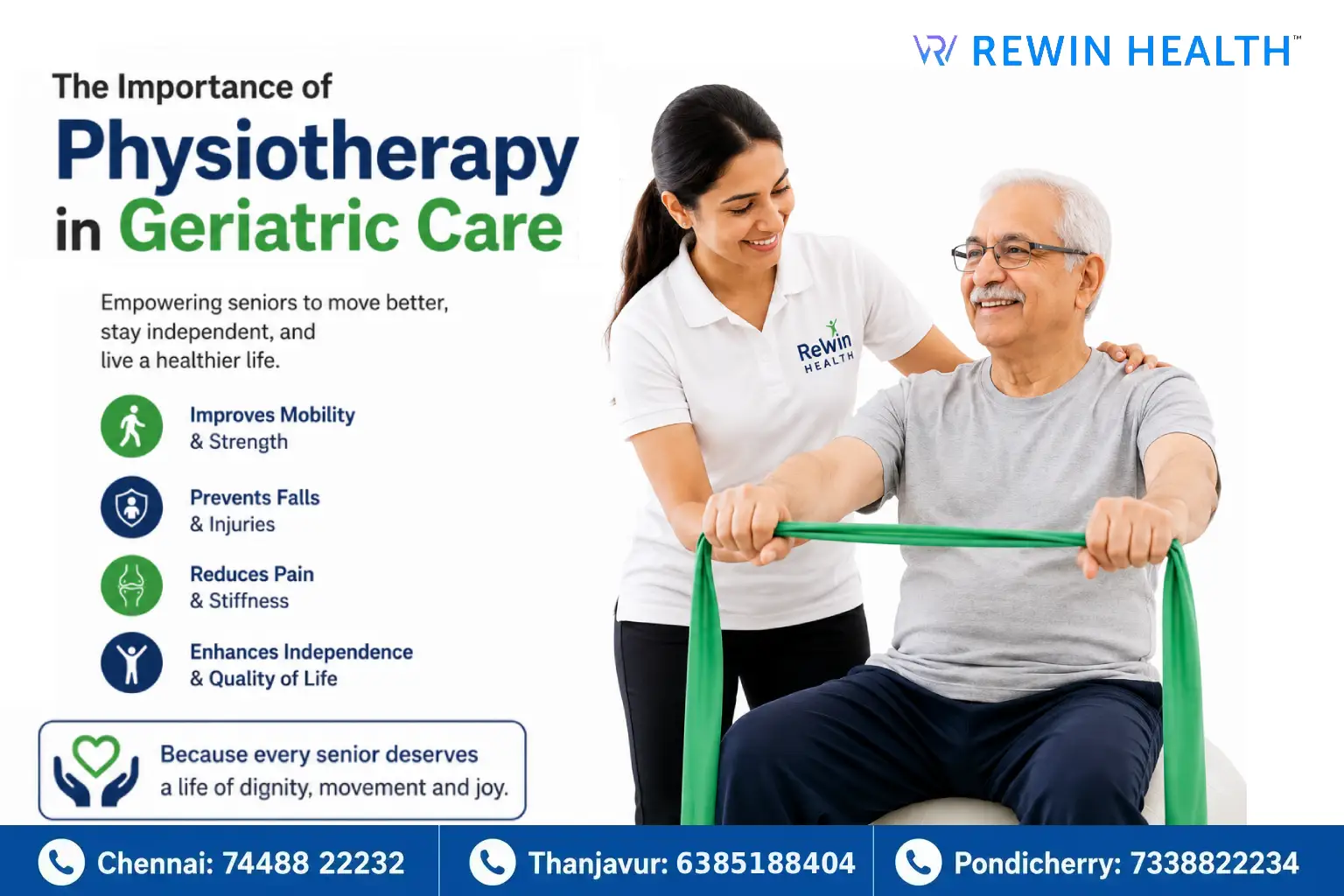
Physiotherapy in Geriatric Care
Growing older is a natural part of life, but aging often brings challenges such as reduced mobility, muscle weakness, joint pain, balance problems, and an increased risk of falls. While these changes are common, they should never be accepted as unavoidable limitations.
This is where physiotherapy in geriatric care plays a vital role.
Geriatric physiotherapy helps older adults maintain independence, improve mobility, manage chronic conditions, reduce pain, and enjoy a better quality of life. Whether someone is recovering from a stroke, living with arthritis, experiencing Parkinson’s disease, or simply facing age-related weakness, physiotherapy provides evidence-based treatments that support healthy aging.
At ReWin Health, we believe that every senior deserves the opportunity to move confidently, stay independent, and continue enjoying daily activities with dignity. Through personalized rehabilitation programs, advanced neuro rehabilitation techniques, and home care services, physiotherapy empowers older adults to age actively rather than passively.
What Is Geriatric Physiotherapy?
Geriatric physiotherapy is a specialized branch of physiotherapy that focuses on evaluating, treating, and preventing physical conditions affecting older adults.
Unlike general physiotherapy, geriatric rehabilitation addresses the unique physical, neurological, and functional challenges that occur with aging.
These include:
- Muscle weakness
- Joint stiffness
- Arthritis
- Osteoporosis
- Parkinson’s disease
- Stroke recovery
- Balance disorders
- Difficulty walking
- Chronic pain
- Reduced flexibility
- Post-surgical rehabilitation
- Age-related mobility decline
The primary goal is not just pain relief but helping seniors remain active, safe, and independent for as long as possible.
Why Is Physiotherapy Important for Older Adults?
As people age, several physiological changes naturally occur:
- Muscle mass decreases.
- Bone density reduces.
- Balance becomes less stable.
- Joint flexibility declines.
- Reflexes become slower.
- Cardiovascular endurance decreases.
Without proper intervention, these changes can lead to reduced independence and increased dependence on caregivers.
Physiotherapy slows down this decline through structured exercise programs, functional training, balance exercises, strength development, and mobility restoration.
Instead of simply treating symptoms, physiotherapy addresses the root causes of movement limitations.
Top Benefits of Physiotherapy in Geriatric Care
1. Improves Mobility and Walking Ability
One of the biggest concerns among older adults is difficulty walking.
Physiotherapists assess gait patterns and identify factors contributing to poor mobility, such as muscle weakness, joint stiffness, neurological disorders, or balance deficits.
Treatment may include:
- Walking retraining
- Gait correction
- Strength exercises
- Mobility drills
- Functional movement practice
Improved mobility enables seniors to perform daily activities more confidently and safely.
2. Prevents Falls and Injuries
Falls are among the leading causes of hospitalization in older adults.
A single fall can result in fractures, head injuries, prolonged hospitalization, and loss of independence.
Physiotherapy significantly reduces fall risk through:
- Balance training
- Coordination exercises
- Strengthening weak muscles
- Improving reaction time
- Walking stability exercises
- Functional movement practice
Fall prevention programs are one of the most valuable components of geriatric physiotherapy.
3. Reduces Joint Pain
Age-related conditions like arthritis often cause persistent pain and stiffness.
Physiotherapy helps relieve pain using:
- Therapeutic exercises
- Joint mobilization
- Stretching techniques
- Manual therapy
- Heat and cold therapy
- Posture correction
Many seniors experience improved comfort without relying solely on long-term pain medication.
4. Builds Muscle Strength
Muscle loss, known as sarcopenia, is a common consequence of aging.
Reduced muscle strength affects:
- Standing from a chair
- Climbing stairs
- Walking
- Lifting objects
- Maintaining balance
Strength training designed specifically for older adults improves functional independence while reducing injury risk.
5. Supports Stroke Rehabilitation
Many older adults require physiotherapy after a stroke.
Stroke rehabilitation focuses on restoring:
- Walking ability
- Hand function
- Balance
- Coordination
- Muscle control
- Functional independence
Early physiotherapy can significantly improve recovery outcomes by encouraging neuroplasticity and repetitive functional training.
6. Enhances Balance and Coordination
Balance problems often develop gradually and may go unnoticed until a fall occurs.
Physiotherapists assess:
- Static balance
- Dynamic balance
- Walking stability
- Vestibular function
- Functional movements
Customized balance exercises improve confidence and reduce fear of falling.
7. Promotes Healthy Aging
Healthy aging means staying active physically, mentally, and socially.
Physiotherapy encourages:
- Regular movement
- Better posture
- Increased endurance
- Improved flexibility
- Greater confidence
- Enhanced independence
Remaining active also supports cardiovascular health and overall well-being.
Common Conditions Treated Through Geriatric Physiotherapy
Older adults may benefit from physiotherapy for numerous conditions, including:
- Stroke recovery
- Parkinson’s disease
- Osteoarthritis
- Rheumatoid arthritis
- Osteoporosis
- Hip replacement rehabilitation
- Knee replacement rehabilitation
- Chronic back pain
- Neck pain
- Frozen shoulder
- Balance disorders
- Neurological disorders
- Peripheral neuropathy
- Muscle weakness
- Age-related mobility decline
Each treatment plan is tailored according to the individual’s goals, medical history, and physical abilities.
What Does a Geriatric Physiotherapy Session Include?
A comprehensive physiotherapy session begins with a detailed assessment.
The physiotherapist evaluates:
- Medical history
- Pain levels
- Joint movement
- Muscle strength
- Balance
- Walking pattern
- Functional abilities
- Risk of falls
- Daily activity limitations
Based on this assessment, a personalized rehabilitation plan may include:
- Strengthening exercises
- Flexibility training
- Balance exercises
- Gait training
- Functional movement practice
- Breathing exercises
- Neurological rehabilitation
- Home exercise programs
- Caregiver education
Treatment progresses gradually to match the patient’s recovery and physical capacity.
Can Physiotherapy Be Done at Home for Seniors?
Yes.
Many elderly individuals find it difficult to travel regularly due to mobility limitations, neurological conditions, or transportation challenges.
Home physiotherapy offers several advantages:
- Comfortable familiar environment
- Reduced travel stress
- Personalized one-on-one care
- Functional training using home surroundings
- Better caregiver involvement
- Improved treatment adherence
Home rehabilitation is particularly beneficial after stroke, surgery, fractures, or during advanced neurological recovery.
How Often Should Seniors Attend Physiotherapy?
The frequency depends on:
- Medical condition
- Functional limitations
- Rehabilitation goals
- Recovery stage
- Overall health
Some individuals benefit from two to three sessions per week, while others may require more intensive rehabilitation following surgery or neurological conditions.
Your physiotherapist develops an individualized schedule based on clinical assessment.
When Should Older Adults Consider Physiotherapy?
Early intervention often leads to better outcomes. Seniors should consult a physiotherapist if they experience:
- Frequent falls
- Difficulty walking
- Reduced balance
- Joint stiffness
- Muscle weakness
- Chronic pain
- Stroke recovery needs
- Parkinson’s symptoms
- Difficulty climbing stairs
- Reduced independence in daily activities
- Fear of falling
- Recovery after orthopedic surgery
Seeking physiotherapy early can prevent minor mobility issues from progressing into significant functional limitations.
Why Choose ReWin Health for Geriatric Physiotherapy?
At ReWin Health, we understand that every older adult has unique rehabilitation needs. Our multidisciplinary team provides personalized geriatric physiotherapy programs designed to improve mobility, restore function, and enhance quality of life.
Our approach combines evidence-based physiotherapy with advanced rehabilitation technologies, neurological expertise, functional exercise programs, and compassionate care. Whether treatment is delivered at our clinic or through home rehabilitation services, our goal is to help seniors regain confidence, reduce dependency, and continue living active, meaningful lives.
Frequently Asked Questions (FAQ)
Is physiotherapy safe for older adults?
Yes. Geriatric physiotherapy is specifically designed around an individual’s age, health condition, mobility level, and medical history. Treatment is personalized to ensure safety and effectiveness.
Can physiotherapy help prevent falls in seniors?
Absolutely. Balance training, strength exercises, gait retraining, and functional mobility programs significantly reduce the risk of falls and related injuries.
Does physiotherapy help seniors with arthritis?
Yes. Physiotherapy helps reduce pain, improve joint mobility, strengthen supporting muscles, and make everyday movements easier for individuals with arthritis.
Can elderly stroke patients recover through physiotherapy?
Many older adults regain mobility, balance, strength, and independence through structured stroke rehabilitation. Early and consistent therapy often leads to better outcomes.
Is home physiotherapy effective for seniors?
Yes. Home physiotherapy provides individualized treatment in a familiar environment, making it an excellent option for seniors with mobility limitations, neurological conditions, or post-surgical recovery needs.
Conclusion
Aging does not have to mean losing independence or giving up the activities you enjoy. Physiotherapy is a cornerstone of geriatric care because it helps older adults maintain mobility, manage chronic conditions, reduce pain, prevent falls, and improve overall quality of life.
Whether the goal is recovering from a stroke, managing arthritis, improving balance, or simply staying active, geriatric physiotherapy provides practical, evidence-based solutions tailored to individual’s needs. With early intervention, personalized rehabilitation, and ongoing support, seniors can continue living healthier, safer, and more fulfilling lives.If you or a loved one is experiencing age-related mobility challenges, seeking professional physiotherapy can be an important step toward preserving independence and promoting healthy aging. At ReWin Health, our specialized geriatric rehabilitation programs are designed to support every stage of the aging journey through compassionate, patient-centered care.