Rewin Health

Types of Stroke: Everything You Need to Know About Stroke and Recovery


Stroke Types


Every second counts when someone experiences a stroke. A stroke is one of the leading causes of long-term disability worldwide, but many people are unaware that not all strokes are the same. Understanding the different types of stroke can help you recognize symptoms early, seek emergency treatment quickly, and improve recovery outcomes.


A stroke occurs when the brain does not receive enough oxygen-rich blood. Since brain cells depend on a constant supply of oxygen and nutrients, even a few minutes without adequate blood flow can result in permanent damage.


The good news is that advances in emergency medicine, stroke care, and neuro rehabilitation have significantly improved survival and recovery. The earlier treatment begins, the greater the chance of reducing brain damage and restoring function.


At ReWin Health, we specialize in neuro rehabilitation, helping stroke survivors regain movement, independence, and confidence through personalized physiotherapy programs.


What Is a Stroke?


A stroke is a medical emergency that occurs when blood flow to part of the brain is interrupted or when a blood vessel in the brain bursts.

Without oxygen and nutrients, brain cells begin to die within minutes, affecting functions such as movement, speech, memory, balance, and coordination.

The area of the brain affected determines which body functions are impacted.

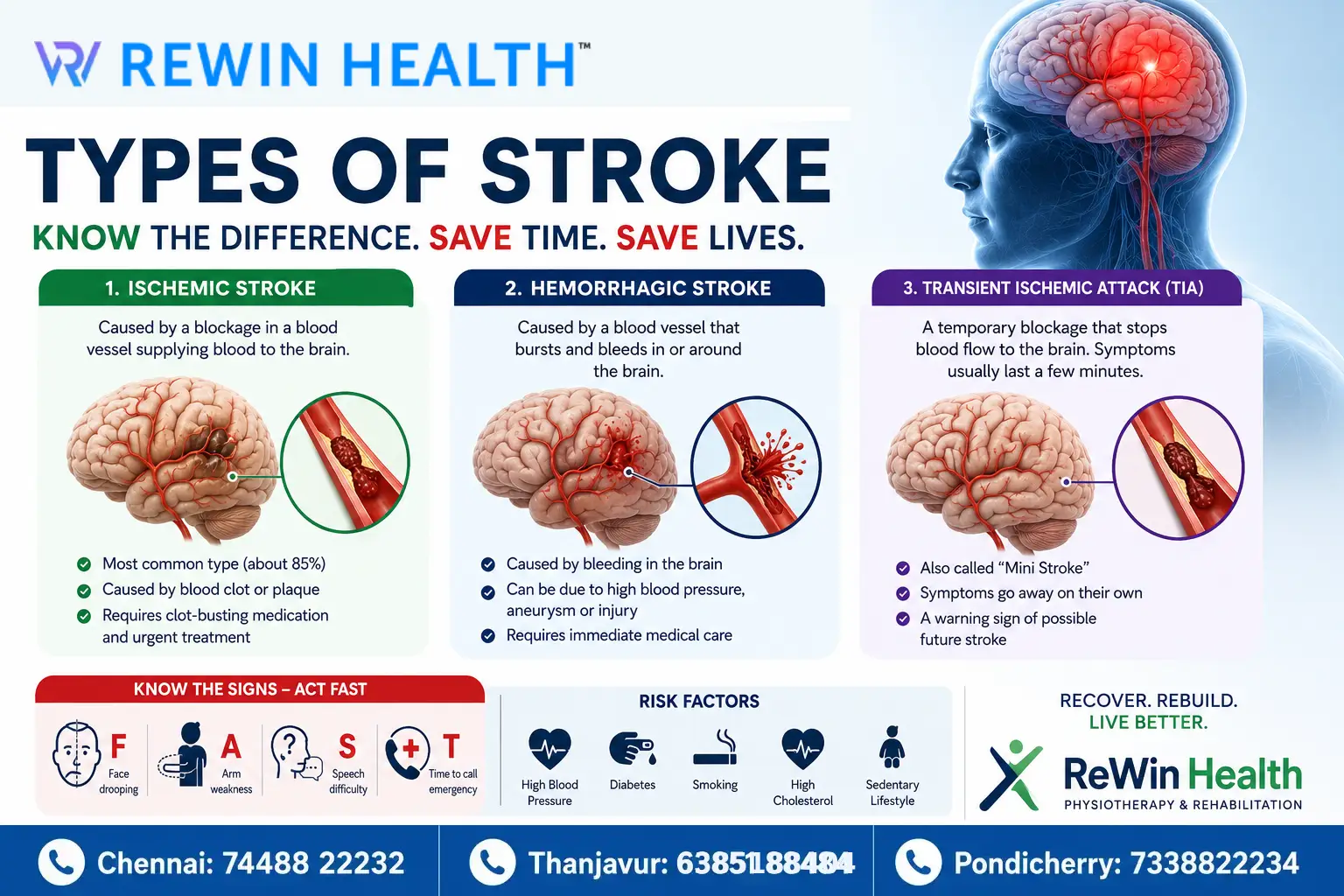
There are three primary types of stroke:

  • Ischemic Stroke
  • Hemorrhagic Stroke
  • Transient Ischemic Attack (TIA)

Each has different causes and treatment approaches, but all require immediate medical attention.

1. Ischemic Stroke – The Most Common Type  


Approximately 85% of all strokes are ischemic strokes, making this the most common form.

An ischemic stroke occurs when a blood clot blocks an artery supplying blood to the brain. Without blood flow, brain tissue begins to die rapidly.

Common Causes

Several conditions increase the risk of ischemic stroke, including:


  • Atherosclerosis (narrowing of arteries due to plaque buildup)
  • Blood clots forming in brain arteries
  • Blood clots traveling from the heart (embolism)
  • Atrial fibrillation (irregular heartbeat)
  • High blood pressure
  • Diabetes
  • High cholesterol
  • Smoking


Symptoms


Symptoms appear suddenly and may include:

  • Weakness or numbness on one side of the body
  • Drooping of one side of the face
  • Difficulty speaking or understanding speech
  • Vision problems
  • Sudden dizziness
  • Loss of balance
  • Confusion


Treatment


Emergency treatment aims to restore blood flow as quickly as possible.

Depending on the patient’s condition, treatment may include:

  • Clot-dissolving medication (thrombolysis)
  • Mechanical thrombectomy to remove the clot
  • Blood-thinning medications
  • Long-term management of stroke risk factors

After emergency treatment, rehabilitation becomes an essential part of recovery.


2. Hemorrhagic Stroke – When a Blood Vessel Bursts


A hemorrhagic stroke occurs when a blood vessel ruptures, causing bleeding inside or around the brain.

The bleeding increases pressure inside the skull and damages surrounding brain tissue.

Although less common than ischemic stroke, hemorrhagic strokes are often more severe.


Common Causes

Risk factors include:

  • Uncontrolled high blood pressure
  • Brain aneurysm
  • Arteriovenous malformation (AVM)
  • Head injury
  • Certain bleeding disorders
  • Blood-thinning medications in some patients


Symptoms

Symptoms may include:

  • Sudden severe headache
  • Vomiting
  • Seizures
  • Weakness on one side
  • Difficulty speaking
  • Blurred vision
  • Loss of consciousness


Treatment

Treatment focuses on controlling bleeding and reducing pressure within the brain.

This may involve:

  • Blood pressure management
  • Medications
  • Emergency neurosurgery when necessary
  • Intensive medical monitoring

Once medically stable, rehabilitation helps patients regain lost physical and functional abilities.


3. Transient Ischemic Attack (TIA) – A Warning You Should Never Ignore


A Transient Ischemic Attack (TIA) is often called a “mini stroke.”

Unlike other strokes, the blockage is temporary, and blood flow returns before permanent brain damage occurs.

Symptoms typically last only a few minutes or hours and resolve completely.

However, this does not mean the condition is harmless.

A TIA is often the body’s warning sign that a major stroke could happen in the near future if risk factors are not addressed.

Symptoms

Symptoms are similar to those of a stroke and may include:

  • Temporary weakness
  • Temporary speech difficulty
  • Vision loss
  • Numbness
  • Dizziness
  • Loss of balance

Even if symptoms disappear, immediate medical evaluation is essential.

Treatment

Doctors focus on identifying the cause and preventing future strokes through:

  • Blood-thinning medication when appropriate
  • Blood pressure control
  • Cholesterol management
  • Diabetes management
  • Lifestyle modifications

Recognizing Stroke Quickly: Remember FAST

Recognizing stroke symptoms early can save brain function and improve recovery.

Use the FAST method:

F – Face Drooping
Ask the person to smile. Is one side of the face drooping?

A – Arm Weakness
Ask them to raise both arms. Does one arm drift downward?

S – Speech Difficulty
Is speech slurred or difficult to understand?

T – Time to Call Emergency Medical Services
Every minute counts. Immediate treatment can reduce brain damage.


Life After Stroke: Common Challenges

Stroke recovery is different for every individual.

Some patients recover quickly, while others require months of rehabilitation.

Common challenges include:

  • Difficulty walking
  • Balance problems
  • Muscle weakness
  • Hand weakness
  • Spasticity
  • Difficulty speaking
  • Swallowing problems
  • Fatigue
  • Memory issues
  • Emotional changes such as anxiety or depression

These challenges can affect a person’s ability to perform everyday activities independently.


How Physiotherapy Helps Stroke Survivors Recover

Emergency treatment saves lives, but rehabilitation helps people rebuild their lives.

Neuro physiotherapy focuses on restoring movement, improving strength, and helping patients regain independence.

Improve Walking

Gait training helps patients walk more safely and confidently.

Restore Balance

Balance exercises reduce the risk of falls and improve stability.

Improve Hand Function

Targeted exercises help restore arm and hand movement needed for dressing, eating, and writing.

Increase Strength

Strength training improves muscle function and supports daily activities.

Improve Coordination

Functional exercises help patients perform everyday tasks with greater ease.

Promote Independence

The ultimate goal is to help stroke survivors return to meaningful daily activities and improve their quality of life.


How ReWin Health Supports Stroke Recovery


At ReWin Health, we understand that stroke recovery is more than improving movement—it’s about restoring confidence and independence.

Our personalized neuro rehabilitation programs are designed around each patient’s needs and recovery goals.

Our rehabilitation approach may include:

  • Comprehensive physiotherapy assessment
  • Personalized exercise programs
  • Gait and balance training
  • Hand function rehabilitation
  • Strength and endurance exercises
  • Functional mobility training
  • Caregiver education
  • Goal-oriented recovery plans

Our experienced rehabilitation team works closely with patients and families to support every stage of recovery.


Can Stroke Be Prevented?

Although not every stroke can be prevented, many risk factors can be managed.

Healthy habits include:

  • Controlling blood pressure
  • Managing diabetes
  • Maintaining healthy cholesterol levels
  • Quitting smoking
  • Exercising regularly
  • Eating a balanced diet
  • Maintaining a healthy weight
  • Limiting alcohol intake
  • Attending regular health check-ups

Preventive care plays a significant role in reducing stroke risk.

Frequently Asked Questions  

Which type of stroke is most common?

Ischemic stroke accounts for approximately 85% of all strokes.

Is a TIA a real stroke?

A TIA does not usually cause permanent brain damage, but it is a serious warning sign that should never be ignored.

Can stroke survivors recover completely?

Recovery depends on several factors, including the type of stroke, severity, treatment timing, and rehabilitation. Many people make significant improvements with structured rehabilitation.

Why is physiotherapy important after stroke?

Physiotherapy helps improve strength, walking, balance, coordination, and functional independence, supporting patients as they return to daily life.

Conclusion

Understanding the different types of stroke can help you recognize warning signs, seek emergency treatment without delay, and improve recovery outcomes.

Whether it is an Ischemic Stroke, Hemorrhagic Stroke, or Transient Ischemic Attack (TIA), every stroke is a medical emergency that requires immediate attention.

Recovery does not end after hospital treatment. Through timely neuro rehabilitation and personalized physiotherapy, many stroke survivors can regain mobility, confidence, and independence.

At ReWin Health, we are committed to helping every stroke survivor achieve the best possible recovery through evidence-based neuro rehabilitation and compassionate care.

If you or a loved one is recovering from a stroke, book a consultation with ReWin Health and take the first step toward a stronger recovery.

Chennai: 74488 22232

Thanjavur: 63851 88404

Pondicherry: 73388 22234

About

Rewin Health Logo: Gamification in Physical Therapy

Making Rehabilitation affordable, Accessible & Patient Centric for 2 Billion People

Featured Blogs