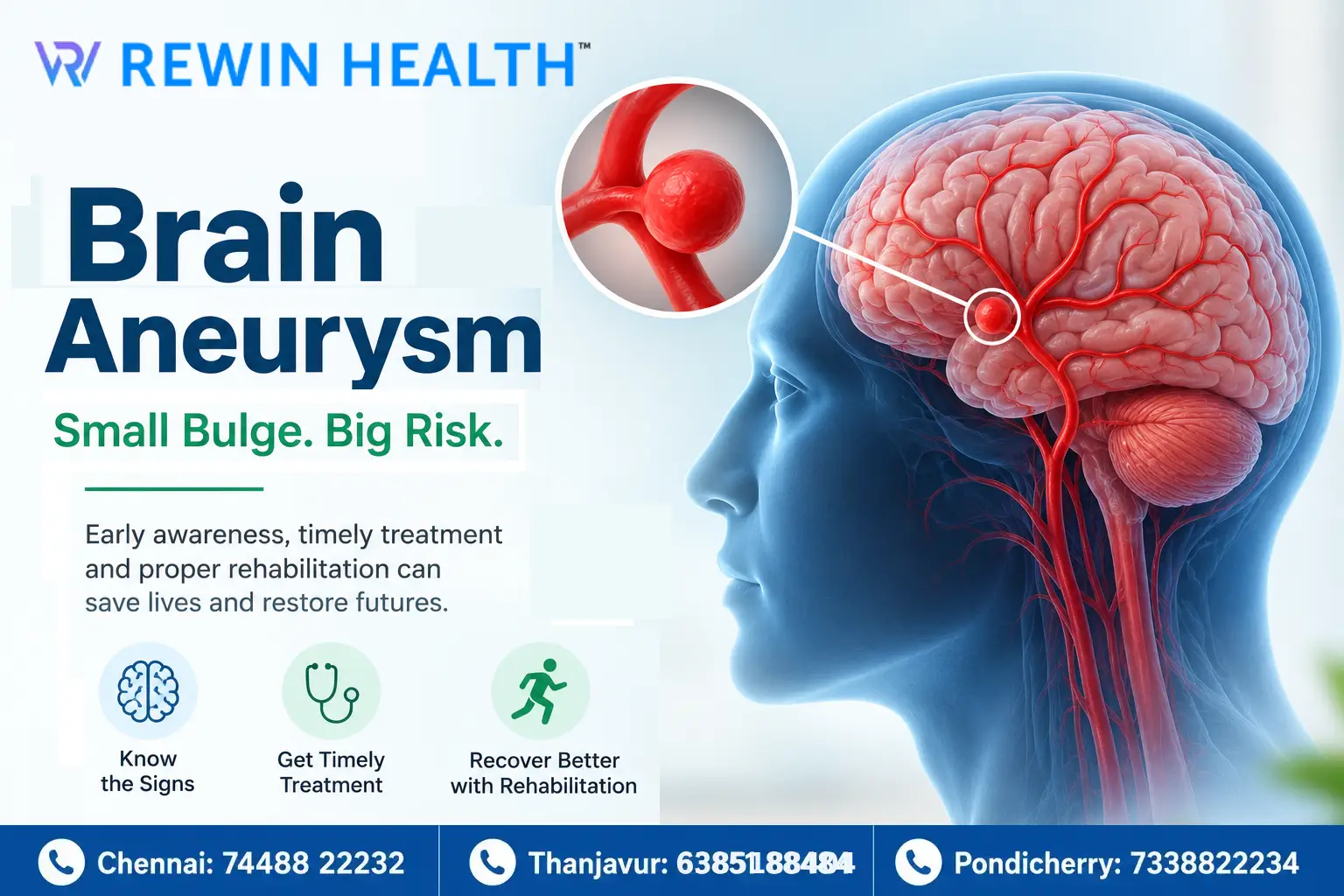
Brain Aneurysm: Symptoms, Causes, Treatment, and the Role of Rehabilitation in Recovery
Brain Aneurysm
A sudden, severe headache unlike anything you’ve experienced before should never be ignored. While many headaches are harmless, an intense “thunderclap” headache can sometimes be the first warning sign of a brain aneurysm—a serious condition that requires immediate medical attention.
A brain aneurysm can occur without symptoms and remain undetected for years. However, if it ruptures, it can lead to life-threatening bleeding in the brain, causing permanent neurological damage or even death if not treated quickly.
The good news is that advances in emergency care, neurosurgery, and rehabilitation have significantly improved outcomes. With timely treatment and comprehensive neuro rehabilitation, many patients can regain mobility, independence, and quality of life.
At ReWin Health, we understand that recovery doesn’t end after surgery or hospital discharge. Through personalized neuro physiotherapy and rehabilitation, we help patients rebuild strength, improve movement, and regain confidence after neurological conditions.
What Is a Brain Aneurysm?
A brain aneurysm, also called a cerebral aneurysm or intracranial aneurysm, is a weakened area in the wall of a blood vessel in the brain. Over time, blood pressure causes this weak spot to bulge outward, forming a balloon-like swelling.
Many aneurysms remain small and never rupture. Some people may never know they have one. However, if the aneurysm grows or bursts, it becomes a medical emergency.
When a brain aneurysm ruptures, blood leaks into the space surrounding the brain, causing a condition called subarachnoid hemorrhage (SAH). This type of bleeding can rapidly increase pressure inside the skull and damage brain tissue, making immediate treatment essential.
What Causes a Brain Aneurysm?
The exact cause is not always known, but several factors can weaken blood vessel walls over time.
Common risk factors include:
- High blood pressure (Hypertension)
- Smoking
- Family history of brain aneurysms
- Increasing age, especially after 40
- Excessive alcohol consumption
- Certain inherited connective tissue disorders
- Drug abuse, particularly cocaine
- Head trauma (in some cases)
Maintaining healthy blood pressure and avoiding tobacco are among the most effective ways to reduce risk.
Symptoms of an Unruptured Brain Aneurysm
Most unruptured aneurysms cause no symptoms. However, if they become larger, they may press on nearby nerves and brain structures.
Possible symptoms include:
- Persistent headaches
- Pain above or behind one eye
- Blurred or double vision
- Dilated pupil
- Drooping eyelid
- Facial numbness or weakness
Because these symptoms can resemble other neurological conditions, medical evaluation is important.
Symptoms of a Ruptured Brain Aneurysm
A ruptured aneurysm is a medical emergency.
The most common symptom is a sudden, severe headache, often described as “the worst headache of my life.”
Other symptoms include:
- Sudden severe headache
- Nausea and vomiting
- Stiff neck
- Sensitivity to light
- Blurred vision
- Difficulty speaking
- Seizures
- Confusion
- Loss of consciousness
- Weakness on one side of the body
Anyone experiencing these symptoms should seek emergency medical care immediately. Early treatment can save lives and reduce the risk of permanent disability.
How Is a Brain Aneurysm Diagnosed?
Doctors use advanced imaging techniques to confirm the presence of a brain aneurysm and determine its size and location.
Common investigations include:
- CT Scan
- MRI Scan
- CT Angiography (CTA)
- MR Angiography (MRA)
- Cerebral Angiography
Early diagnosis allows doctors to assess the risk of rupture and recommend appropriate treatment.
Treatment Options
Treatment depends on several factors, including the size and location of the aneurysm, the patient’s age, overall health, and whether the aneurysm has ruptured.
Treatment may include:
- Careful monitoring with regular imaging
- Blood pressure control
- Medications to manage symptoms
- Surgical clipping
- Endovascular coiling
- Flow-diverting stents in selected cases
The primary goal is to prevent rupture or stop bleeding while protecting brain function.
Life After a Brain Aneurysm
Surviving a brain aneurysm is only the beginning of recovery.
Many patients experience physical, cognitive, and emotional challenges after treatment, especially if the aneurysm ruptured.
Common difficulties include:
- Muscle weakness
- Difficulty walking
- Poor balance
- Hand weakness
- Reduced coordination
- Fatigue
- Memory problems
- Difficulty concentrating
- Speech difficulties
- Anxiety and depression
These challenges can make everyday tasks such as dressing, cooking, or climbing stairs difficult.
How Physiotherapy Helps After a Brain Aneurysm
Rehabilitation plays an essential role in helping patients regain independence.
A neuro physiotherapy program focuses on improving movement, strength, and function through individualized treatment plans.
Physiotherapy can help:
Improve Mobility
Walking exercises and gait training help patients regain confidence while moving safely.
Restore Strength
Targeted strengthening exercises rebuild muscles weakened after prolonged hospitalization or neurological injury.
Improve Balance
Balance training reduces fall risk and helps patients perform daily activities more safely.
Recover Hand Function
Fine motor exercises improve hand coordination and support activities such as writing, eating, and dressing.
Enhance Functional Independence
Therapy focuses on practical activities like standing, transferring, climbing stairs, and walking to improve quality of life.
How ReWin Health Supports Recovery
At ReWin Health, we believe neurological recovery should focus on restoring independence—not just movement.
Our neuro rehabilitation programs are designed to address each patient’s individual needs through evidence-based physiotherapy and functional rehabilitation.
Our approach may include:
- Personalized neuro physiotherapy
- Balance and gait training
- Functional mobility exercises
- Strength and endurance training
- Hand function rehabilitation
- Coordination exercises
- Education for patients and caregivers
- Goal-based rehabilitation plans
Every recovery journey is unique, and our team works closely with patients to help them achieve meaningful improvements in mobility and daily function.
Can Brain Aneurysms Be Prevented?
Although not all brain aneurysms can be prevented, healthy lifestyle habits may reduce your risk.
These include:
- Keeping blood pressure under control
- Quitting smoking
- Limiting alcohol consumption
- Exercising regularly
- Following a balanced diet
- Managing diabetes and cholesterol
- Attending regular health check-ups
Preventive care plays an important role in protecting long-term brain and cardiovascular health.

Frequently Asked Questions
Is a brain aneurysm the same as a stroke?
No. A brain aneurysm is a weakened blood vessel that may rupture. A ruptured aneurysm can cause a type of hemorrhagic stroke, but not all strokes are caused by aneurysms.
Can someone recover completely after a brain aneurysm?
Recovery varies depending on the severity of the bleed, the area of the brain affected, and how quickly treatment begins. Many patients improve significantly with comprehensive rehabilitation.
Is physiotherapy necessary after a brain aneurysm?
Many patients benefit from neuro physiotherapy to improve strength, mobility, balance, coordination, and independence, particularly if neurological deficits remain after treatment.
Conclusion
A brain aneurysm is a serious condition, but timely diagnosis, expert medical treatment, and structured rehabilitation can make a significant difference in recovery.
While emergency treatment focuses on saving lives, rehabilitation focuses on restoring lives. Through personalized neuro physiotherapy, patients can regain movement, rebuild confidence, and return to meaningful daily activities.
At ReWin Health, we’re committed to helping patients recover better through compassionate, evidence-based neuro rehabilitation designed to improve mobility, function, and quality of life.
If you or a loved one is recovering from a brain aneurysm or another neurological condition, our team is here to support every step of your recovery journey.
📞 Book your geriatric rehabilitation consultation today and help your loved ones move with confidence.
Chennai: 74488 22232
Thanjavur: 63851 88404
Pondicherry: 73388 22234
About
Making Rehabilitation affordable, Accessible & Patient Centric for 2 Billion People