Rewin Health

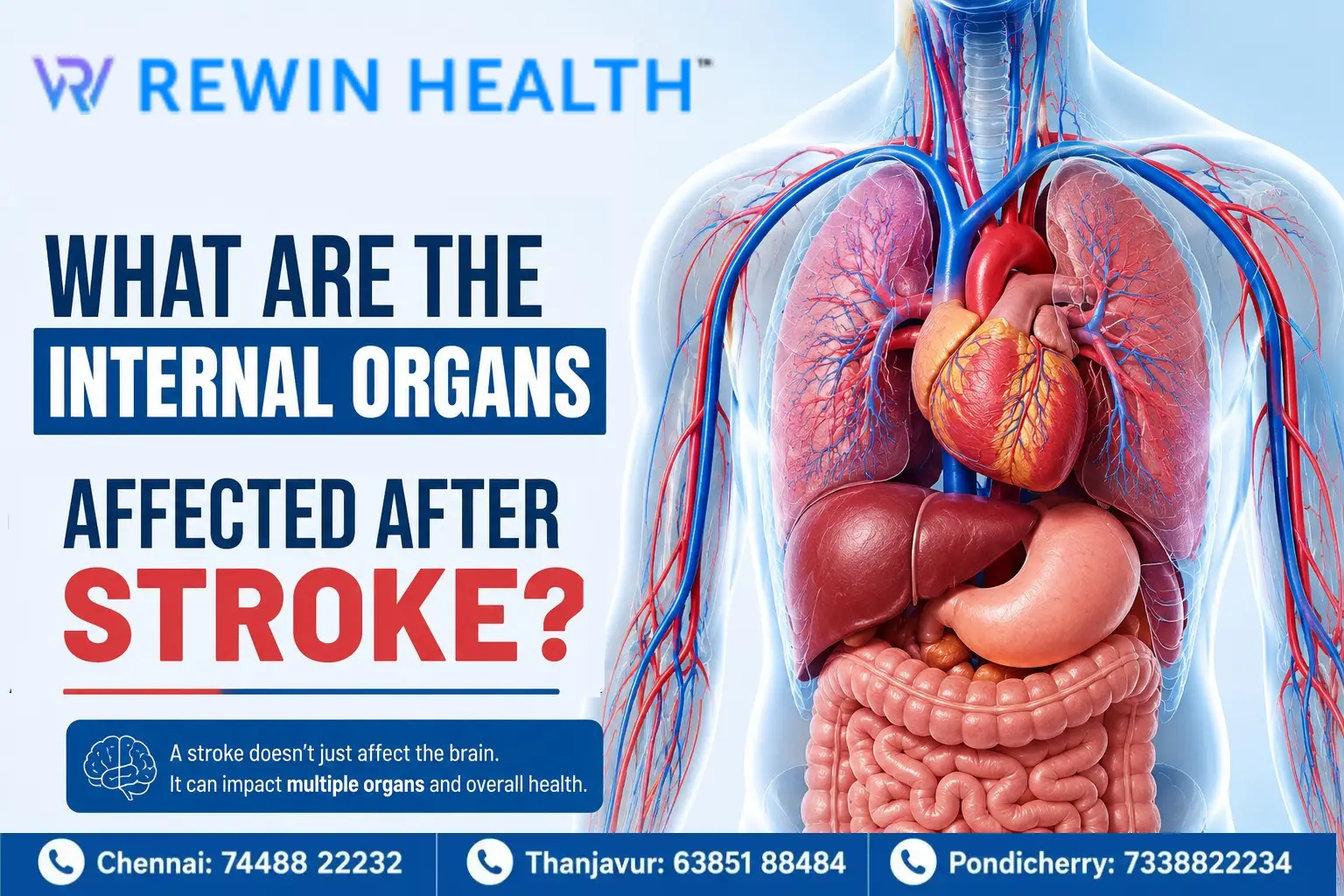
What Internal Organs Can Be Affected After a Stroke?

What Internal Organs Can Be Affected After a Stroke?  

When most people think about stroke, they associate it only with the brain. While the brain is the organ directly affected, a stroke can have widespread consequences throughout the body. Because the brain controls movement, sensation, breathing, swallowing, heart function, bladder control, and many automatic body processes, damage to the brain can indirectly affect several other organs and body systems.

Understanding these effects is essential for stroke survivors, caregivers, and healthcare professionals. Early recognition and comprehensive rehabilitation can significantly reduce complications, improve recovery, and enhance quality of life.

At ReWin Health, we believe stroke recovery is about treating the whole person—not just the brain. Our multidisciplinary rehabilitation approach focuses on restoring independence while preventing complications that affect multiple organs.

How Does a Stroke Affect Other Organs?  

A stroke occurs when blood flow to part of the brain is interrupted or when a blood vessel ruptures, depriving brain cells of oxygen and nutrients. Depending on the location and severity of the stroke, communication between the brain and different organs may be disrupted.

This can lead to:

  • Reduced muscle activity

  • Difficulty swallowing

  • Poor circulation

  • Changes in heart rhythm

  • Bladder and bowel dysfunction

  • Increased infection risk

  • Reduced mobility

These complications often develop during the recovery period, making early rehabilitation essential.

1. Brain – The Primary Organ Affected  

The brain is responsible for controlling every voluntary and involuntary function in the body. Damage caused by a stroke depends on which brain region is affected.

Common Brain-Related Effects  

  • Weakness or paralysis on one side of the body

  • Difficulty speaking or understanding language (Aphasia)

  • Memory loss

  • Reduced concentration

  • Emotional changes

  • Vision disturbances

  • Poor coordination

  • Difficulty swallowing

  • Loss of balance

Without proper rehabilitation, these impairments may lead to long-term disability.

Rehabilitation Focus  

  • Neuro physiotherapy

  • Occupational therapy

  • Speech and language therapy

  • Cognitive rehabilitation

  • Balance and gait training

  • Functional electrical stimulation when appropriate

2. Heart – The Brain and Heart Work Together  

The brain and heart maintain constant communication through the autonomic nervous system. Following a stroke, this communication can become disrupted.

Possible Heart Complications  

  • Irregular heartbeat (Atrial fibrillation or other arrhythmias)

  • Blood pressure instability

  • Reduced heart pumping efficiency

  • Stress-induced cardiomyopathy

  • Increased risk of heart attack

  • Higher risk of recurrent stroke

Research shows cardiovascular disease remains one of the leading causes of death after stroke, highlighting the importance of comprehensive cardiac monitoring.

Prevention  

  • Blood pressure control

  • Cholesterol management

  • Heart rhythm monitoring

  • Lifestyle modification

  • Regular physical rehabilitation

3. Lungs – One of the Most Commonly Affected Organs  

Lung complications are among the leading causes of hospitalization after stroke.

Because many stroke survivors develop swallowing difficulties (dysphagia), food or liquids may accidentally enter the lungs instead of the stomach.

Lung Complications Include  

  • Aspiration pneumonia

  • Chest infections

  • Reduced lung expansion

  • Weak cough

  • Difficulty clearing mucus

  • Reduced oxygen levels

Patients with severe mobility limitations are particularly vulnerable.

How Rehabilitation Helps  

  • Respiratory physiotherapy

  • Breathing exercises

  • Swallowing therapy

  • Early mobilization

  • Chest clearance techniques

4. Kidneys – Often Overlooked After Stroke  

The kidneys regulate fluid balance, blood pressure, and waste removal.

Stroke survivors may experience kidney problems because of:

  • Poor hydration

  • Blood pressure fluctuations

  • Diabetes

  • Reduced circulation

  • Certain medications

Reduced kidney function can slow recovery and increase medical complications.

Protecting Kidney Health  

  • Adequate hydration

  • Blood pressure monitoring

  • Blood sugar management

  • Regular kidney function assessment

5. Bladder – Loss of Normal Bladder Control  

Bladder problems affect many stroke survivors, especially during the early recovery stage.

Common Symptoms  

  • Urinary incontinence

  • Difficulty emptying the bladder

  • Urinary retention

  • Frequent urinary tract infections

  • Increased urgency

  • Night-time urination

These problems may occur because the brain can no longer properly coordinate bladder function.

Treatment May Include  

  • Bladder retraining

  • Pelvic floor rehabilitation

  • Timed toileting

  • Fluid management

  • Medication when necessary

6. Bowels and Digestive System  

Digestive problems are extremely common but often receive less attention.

Reduced physical activity, medications, dehydration, and neurological changes all contribute.

Common Bowel Problems  

  • Constipation

  • Slow bowel movements

  • Difficulty controlling bowel movements

  • Reduced appetite

  • Poor digestion

Proper nutrition and hydration are essential for recovery.

Prevention Strategies  

  • Fibre-rich diet

  • Adequate water intake

  • Daily physical activity

  • Scheduled bowel routine

  • Medical review of medications

7. Muscles and Bones – Secondary Effects of Stroke  

Although muscles and bones are not internal organs, stroke significantly affects the musculoskeletal system.

Without movement, muscles rapidly weaken.

Common Problems  

  • Muscle weakness

  • Muscle wasting (atrophy)

  • Joint stiffness

  • Contractures

  • Shoulder pain

  • Osteoporosis

  • Increased fracture risk

These complications reduce independence and increase fall risk.

Rehabilitation Focus  

  • Strength training

  • Functional exercises

  • Range-of-motion exercises

  • Weight-bearing activities

  • Balance rehabilitation

  • Hand function rehabilitation

8. Blood Vessels – Stroke Is a Sign of Vascular Disease  

A stroke usually indicates underlying disease affecting blood vessels throughout the body.

This means stroke survivors have a higher risk of:

  • Second stroke

  • Heart attack

  • Peripheral artery disease

  • Vascular dementia

Long-term prevention is just as important as immediate treatment.

Risk Reduction  

  • Smoking cessation

  • Healthy diet

  • Exercise

  • Blood pressure management

  • Diabetes control

  • Cholesterol management

  • Prescribed medications

9. Swallowing Muscles and the Esophagus  

Swallowing involves more than 50 muscles working together under brain control.

Damage from stroke often disrupts this process.

Dysphagia Can Lead To  

  • Choking

  • Aspiration pneumonia

  • Dehydration

  • Malnutrition

  • Weight loss

  • Reduced quality of life

Every stroke patient should undergo a swallowing assessment before resuming a normal diet.

Rehabilitation Includes  

  • Speech and swallowing therapy

  • Texture-modified diets

  • Safe swallowing techniques

  • Oral motor exercises

Can Stroke Affect Multiple Organs at the Same Time?  

Yes.

Many stroke survivors experience complications involving several organs simultaneously.

For example:

  • Brain injury causes swallowing difficulty.

  • Swallowing problems increase pneumonia risk.

  • Reduced mobility weakens muscles.

  • Immobility causes constipation.

  • Poor circulation increases blood clot risk.

  • Heart rhythm abnormalities increase the chance of another stroke.

This is why comprehensive stroke rehabilitation requires a multidisciplinary team rather than treating each complication separately.

How Rehabilitation Protects the Whole Body  

Modern stroke rehabilitation extends far beyond helping patients walk again.

An effective rehabilitation programme helps maintain the health of multiple organs while restoring physical and cognitive function.

Comprehensive rehabilitation may include:

  • Physiotherapy

  • Occupational therapy

  • Speech and swallowing therapy

  • Cardiorespiratory rehabilitation

  • Balance and gait training

  • Hand function recovery

  • Cognitive rehabilitation

  • Nutritional counselling

  • Family education

  • Home exercise programmes

Early rehabilitation has consistently been shown to improve functional outcomes and reduce complications.

Healthy Habits That Support Recovery  

Recovery continues long after hospital discharge. Stroke survivors can improve outcomes by adopting healthy daily habits.

Recommended Lifestyle Practices  

  • Stay physically active within medical advice

  • Eat a balanced diet rich in vegetables, fruits, whole grains, and lean protein

  • Stay hydrated

  • Take prescribed medications consistently

  • Attend follow-up rehabilitation sessions

  • Control blood pressure, cholesterol, and diabetes

  • Stop smoking and limit alcohol intake

  • Maintain a healthy weight

  • Prioritize quality sleep

  • Seek emotional and psychological support when needed

Frequently Asked Questions  

Can a stroke damage organs other than the brain?  

Yes. Although the brain is directly affected, stroke can indirectly impact the heart, lungs, kidneys, bladder, digestive system, muscles, blood vessels, and swallowing function.

Which organ is most affected after the brain?  

The lungs are among the most commonly affected due to swallowing difficulties and reduced mobility, while the heart is also at increased risk because of the close connection between the brain and cardiovascular system.

Can these complications be prevented?  

Many complications can be reduced through early rehabilitation, regular medical monitoring, proper nutrition, physical activity, medication adherence, and management of underlying conditions such as hypertension and diabetes.

Why is early rehabilitation important?  

Early rehabilitation helps restore function, prevents complications such as muscle wasting and pneumonia, improves independence, and reduces the risk of recurrent stroke.

Why Choose ReWin Health for Comprehensive Stroke Rehabilitation?  

Recovery from stroke requires more than treating symptoms—it requires restoring function across the entire body. At ReWin Health, we provide evidence-based neurorehabilitation designed to address the physical, cognitive, and functional challenges that follow a stroke.

Our multidisciplinary team combines advanced rehabilitation technologies with personalized therapy plans to support recovery at every stage.

Our comprehensive stroke rehabilitation services include:

  • Stroke and Neuro Rehabilitation

  • Hand Function Recovery Programs

  • AI-Powered Physiotherapy

  • Immersive VR-Based Rehabilitation

  • Balance and Gait Training

  • Occupational Therapy

  • Speech and Swallowing Rehabilitation

  • Home-Based Rehabilitation Programs

  • Functional Independence Training

  • Long-Term Recovery and Wellness Support

With patient-centered care, innovative technology, and experienced rehabilitation professionals, ReWin Health is committed to helping stroke survivors regain independence and improve their quality of life.

Final Thoughts  

A stroke affects far more than the brain. It can influence the heart, lungs, kidneys, bladder, digestive system, blood vessels, muscles, and swallowing function. Recognizing these interconnected effects allows patients and caregivers to seek timely treatment and reduce the risk of long-term complications.

Recovery is a journey that requires comprehensive rehabilitation, ongoing medical care, and lifestyle changes. With the right support, many stroke survivors can regain function, improve independence, and enjoy a better quality of life.

At ReWin Health, our integrated stroke rehabilitation programs combine clinical expertise, advanced rehabilitation technologies, and personalized care to help every patient achieve the best possible recovery. Book a consultation today and take the next step toward a stronger, healthier future

About

Rewin Health Logo: Gamification in Physical Therapy

Making Rehabilitation affordable, Accessible & Patient Centric for 2 Billion People

Featured Blogs