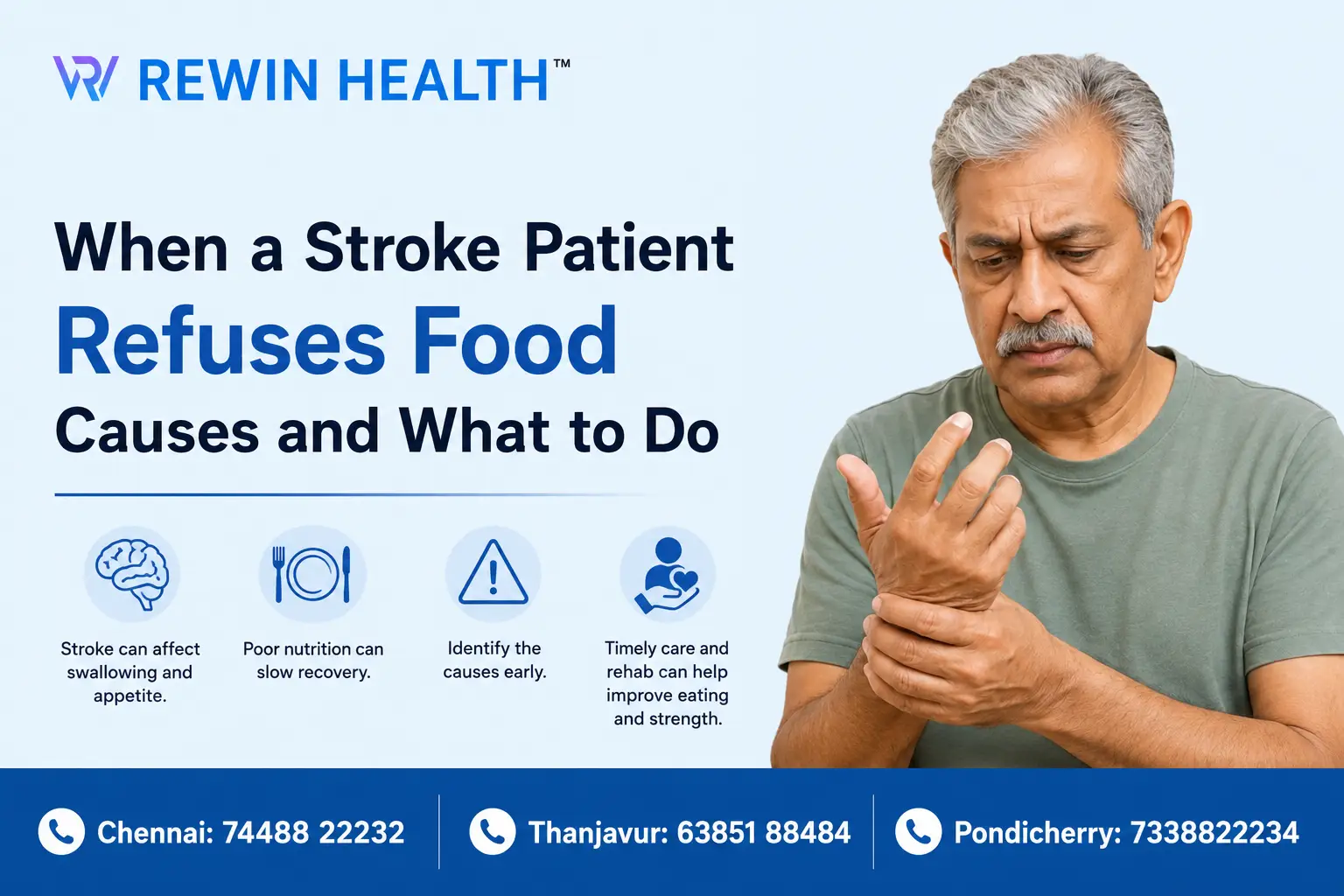
When a Stroke Patient Refuses Food- Causes and What to Do
Why Do Stroke Patients Stop Eating?
After a stroke, families often notice one concerning change—their loved one suddenly refuses food, eats very little, or completely loses interest in meals.
Many caregivers assume the patient is simply being stubborn or has lost the desire to recover. In reality, stopping eating after a stroke is often a symptom of the stroke itself, not a personal choice.
A stroke can affect the brain’s ability to control swallowing, movement, appetite, memory, emotions, and coordination. Even something as simple as taking a bite of food may become physically exhausting or unsafe.
The good news is that, in many cases, these challenges can improve with early assessment, advanced neuro rehabilitation, swallowing therapy, physiotherapy, occupational therapy, and nutritional support.
In this guide, you’ll learn:
Why stroke patients stop eating
The most common medical reasons
Warning signs you should never ignore
How rehabilitation helps patients regain safe eating and independence
Understanding How a Stroke Affects Eating
Eating is one of the most complex activities the human body performs. It requires:
- Brain coordination
- Muscle strength
- Swallowing reflexes
- Hand and arm control
- Balance and posture
- Memory
- Sensation
- Vision
- Attention
When a stroke damages the brain, any of these functions may be affected.
This explains why some stroke survivors:
- Stop eating completely
- Take hours to finish a meal
- Frequently cough while eating
- Lose weight rapidly
- Become fearful of swallowing
Understanding the underlying cause is the first step toward effective treatment.
1. Difficulty Swallowing (Dysphagia) – The Most Common Reason
One of the leading reasons stroke patients stop eating is dysphagia, a condition in which swallowing becomes difficult or unsafe.
A stroke can weaken or paralyze the muscles involved in swallowing, making it difficult for food or liquids to move safely from the mouth to the stomach.
Symptoms include:
- Coughing during meals
- Choking while drinking water
- Wet or gurgly voice after swallowing
- Food remaining in the mouth
- Pain while swallowing
- Taking a long time to finish meals
- Avoiding certain foods
Many patients become afraid of choking and begin refusing food altogether.
Without treatment, dysphagia can lead to:
- Aspiration pneumonia
- Malnutrition
- Dehydration
- Weight loss
- Longer recovery times
Early swallowing assessment and therapy can significantly improve swallowing safety and reduce complications.
2. Loss of Appetite After Stroke
Some stroke survivors simply don’t feel hungry anymore.
This may happen because of:
- Brain injury affecting appetite regulation
- Side effects of medications
- Reduced physical activity
- Pain or discomfort
- Infections
- Fatigue
Even when food is available, patients may eat only a few bites before feeling full.
Persistent poor appetite can slow healing and increase muscle loss, making rehabilitation more difficult.
3. Depression After Stroke
Depression is one of the most common but often overlooked complications after a stroke.
Many survivors experience:
- Sadness
- Hopelessness
- Anxiety
- Lack of motivation
- Withdrawal from daily activities
Food may no longer seem enjoyable.
Instead of saying they’re depressed, some patients simply stop eating.
Treating emotional health is an important part of stroke rehabilitation and recovery
4. Weakness or Paralysis Makes Eating Difficult
A stroke frequently affects one side of the body.
Simple activities such as:
- Holding a spoon
- Gripping a glass
- Cutting food
- Bringing food to the mouth
can become frustrating.
Patients may become embarrassed or exhausted and eventually stop trying to eat independently.
Occupational therapy helps rebuild these daily living skills through task-specific training and adaptive techniques.
5. Cognitive Problems Affect Eating
Stroke can impair thinking and memory.
Patients may:
- Forget to eat
- Forget they have already eaten
- Not recognize food
- Become distracted during meals
- Be unable to follow eating steps
These cognitive changes often require structured rehabilitation and caregiver support.
6. Changes in Taste and Smell
Some stroke survivors notice that food tastes different after the stroke.
Foods they once loved may:
- Taste bland
- Taste metallic
- Smell unpleasant
- Lose their flavor
Reduced enjoyment naturally decreases appetite.
Dietitians can recommend food modifications that improve taste while maintaining nutritional value.
7. Fatigue Makes Eating Exhausting
Post-stroke fatigue is extremely common.
Even chewing and swallowing require energy.
Patients may:
- Sleep frequently
- Stop eating halfway through meals
- Feel exhausted after only a few bites
Managing fatigue is an important part of rehabilitation.
8. Communication Difficulties
Patients with aphasia may struggle to communicate basic needs.
They may be unable to explain:
- Hunger
- Pain
- Difficulty swallowing
- Food preferences
This can make caregivers mistakenly believe the patient simply doesn’t want to eat.
Speech and language therapy helps improve communication while also addressing swallowing disorders.
9. Medical Conditions That Reduce Food Intake
Several additional medical problems can contribute to poor eating after stroke.
These include:
- Mouth ulcers
- Dental pain
- Poorly fitting dentures
- Constipation
- Medication side effects
- Infections
- Chronic pain
- Acid reflux
Identifying and treating these issues can significantly improve nutritional intake.

Warning Signs That Need Immediate Medical Attention
Nutrition plays a vital role in recovery because the brain and muscles require energy and nutrients to heal.
Poor nutrition can lead to:
- Delayed recovery
- Muscle weakness
- Increased infection risk
- Poor wound healing
- Reduced participation in rehabilitation
- Increased hospital readmissions
Ensuring adequate nutrition is an essential part of stroke rehabilitation.
How Rehabilitation Helps Stroke Patients Eat Again
The encouraging news is that many stroke survivors regain safer swallowing and improved eating ability through a comprehensive rehabilitation program.
Swallowing Therapy
Speech-language pathologists assess swallowing function and teach exercises and techniques to improve safety during meals.
Physiotherapy
Physiotherapists improve posture, trunk control, neck stability, and upper-limb strength, making eating safer and more comfortable.
Occupational Therapy
Occupational therapists retrain patients in self-feeding skills, recommend adaptive utensils, and promote independence during meals.
Nutritional Support
Dietitians develop individualized meal plans that provide adequate calories, protein, hydration, and appropriate food textures based on the patient’s swallowing ability.
Neuro Rehabilitation
Advanced neuro rehabilitation combines evidence-based therapies to improve brain function, motor control, coordination, and daily living activities—including eating.
The earlier rehabilitation begins, the better the chances of regaining safe swallowing and independent eating.
Tips for Caregivers
If your loved one has stopped eating after a stroke:
- Never force food or liquids if swallowing is unsafe.
- Encourage small, frequent meals instead of large portions.
- Ensure the patient sits upright during and after meals.
- Follow the recommended food texture and liquid consistency.
- Watch for coughing, choking, or changes in voice during meals.
- Keep meals calm and free from distractions.
- Seek professional help if eating difficulties persist.
ReWin Health: Comprehensive Stroke Rehabilitation That Supports Recovery
At ReWin Health, we understand that recovery after a stroke extends beyond walking again—it also includes restoring the ability to eat safely, maintain good nutrition, and regain independence in daily life.
Our multidisciplinary stroke rehabilitation team provides:
- Advanced Neuro Rehabilitation
- Physiotherapy for Stroke Recovery
- Speech and Swallowing Therapy
- Occupational Therapy
- Personalized Nutrition Guidance
- Home-Based Stroke Rehabilitation
- Comprehensive Functional Assessments
Every rehabilitation plan is tailored to the individual’s condition, recovery goals, and progress, helping patients maximize their recovery potential in a safe and supportive environment.
If your loved one has difficulty eating, swallowing, or performing daily activities after a stroke, early rehabilitation can make a meaningful difference. Contact ReWin Health today to schedule a stroke rehabilitation assessment and begin the journey toward safer swallowing, improved nutrition, and greater independence.
Frequently Asked Questions
Is it normal for stroke patients to stop eating?
Yes. Many stroke survivors experience reduced food intake due to swallowing difficulties, weakness, fatigue, depression, cognitive changes, or changes in taste. The cause should always be evaluated by a healthcare professional.
Can swallowing improve after a stroke?
Yes. Many people regain safer swallowing through swallowing therapy, rehabilitation, and targeted exercises. Recovery varies depending on the severity and location of the stroke.
Can physiotherapy help with eating?
Yes. Physiotherapy improves posture, balance, trunk control, and upper-limb function, all of which contribute to safer and more independent eating.
When should I worry if a stroke patient won’t eat?
Seek medical attention if the patient has frequent choking, persistent coughing while eating, dehydration, significant weight loss, or refuses food for an extended period.
Can stroke patients regain independent eating?
Many stroke survivors can regain partial or complete independence in eating through a personalized rehabilitation program that includes physiotherapy, occupational therapy, speech and swallowing therapy, and nutritional support.
About
Making Rehabilitation affordable, Accessible & Patient Centric for 2 Billion People